
Key takeaways
- Target Audience: Adult
- Recommended Uses For Product: Endurance, Exercise and Fitness, Speed
- Item Length: 280 Centimeters
Two ropes can look nearly identical and produce completely different workouts. A 2 mm coated steel cable spinning on sealed bearings is a coordination and cadence tool: it rewards fast wrists, punishes hesitation, and drives your heart rate through sheer rotation speed. A one-pound weighted cable is a strength-endurance tool: it turns slowly, loads the shoulders and forearms, and makes three minutes feel long for reasons that have nothing to do with your lungs. Buying the wrong one for your goal is the most common mistake in this category.
The muddle happens because both are sold under the same heading. If you want to raise conditioning in a small room, cable weight and cadence are the two dials you can turn, and they do not do the same thing. This comparison sorts the six ropes below into what they actually train, so you can pick based on whether you are chasing footwork speed, upper-body endurance, or simply the shortest route to a hard fifteen-minute session in a garage.
Our top picks
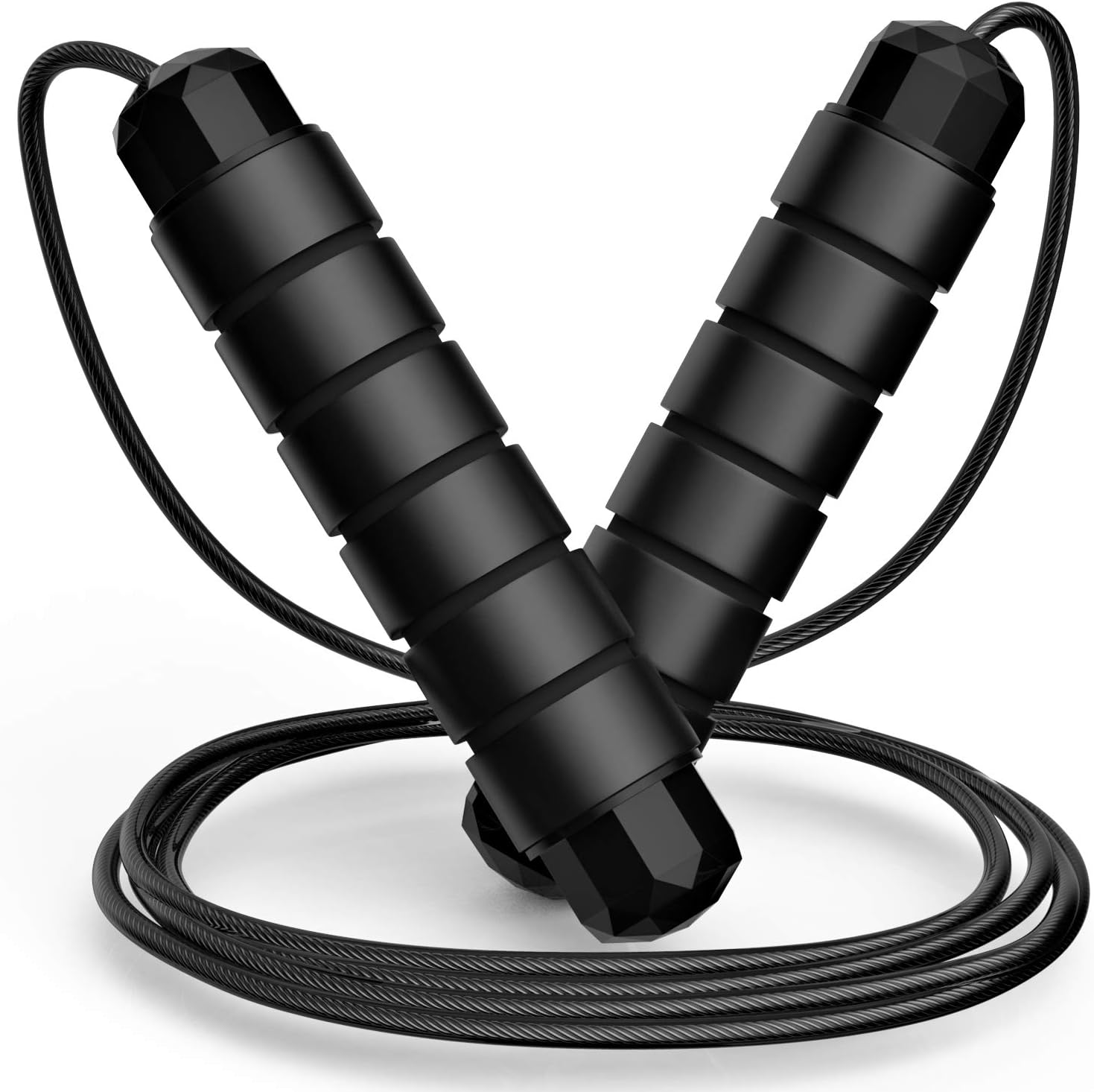 Jump Rope
- Target Audience: Adult
- Recommended Uses For Product: Endurance, Exercise and Fitness, Speed
- Item Length: 280 Centimeters
Ball bearings help the rope spin smoothly and tangle-free
Foam handles add a non-slip, moisture-wicking grip
Adjustable length suits kids, teens, and adults alike
Steel-wire PVC rope is firmer than fabric speed ropes
Portable design means a thinner build than weighted ropes
 BOOMIBOO Jump Rope
- Target Audience: Adult, Kid
- Recommended Uses For Product: Exercise and Fitness
- Item Length: 9.2 Feet
Ball bearings aid smooth, tangle-free rotation
Foam handles stay non-slip and moisture-wicking during use
Adjustable 9.2-foot rope suits both kids and adults
Steel-core PVC rope feels firmer than fabric ropes
Fixed foam handle design offers no weighted option
 Adjustable Jump Rope for Fitness
- Target Audience: Adult
- Recommended Uses For Product: Speed and Endurance
- Item Length: 9.2 Feet
| Product | Key specs | |
|---|---|---|
| Jump Rope | Target Audience: Adult Recommended Uses For Product: Endurance, Exercise and Fitness, Speed Item Length: 280 Centimeters | Check price |
| BOOMIBOO Jump Rope | Target Audience: Adult, Kid Recommended Uses For Product: Exercise and Fitness Item Length: 9.2 Feet | Check price |
| Adjustable Jump Rope for Fitness | Target Audience: Adult Recommended Uses For Product: Speed and Endurance Item Length: 9.2 Feet | Check price |
 SPORTBIT Adjustable Jump Rope for Fitness and SPORTBIT Adjustable Jump Rope for Fitness and | Check price | |
 Jump Rope Jump Rope | Check price | |
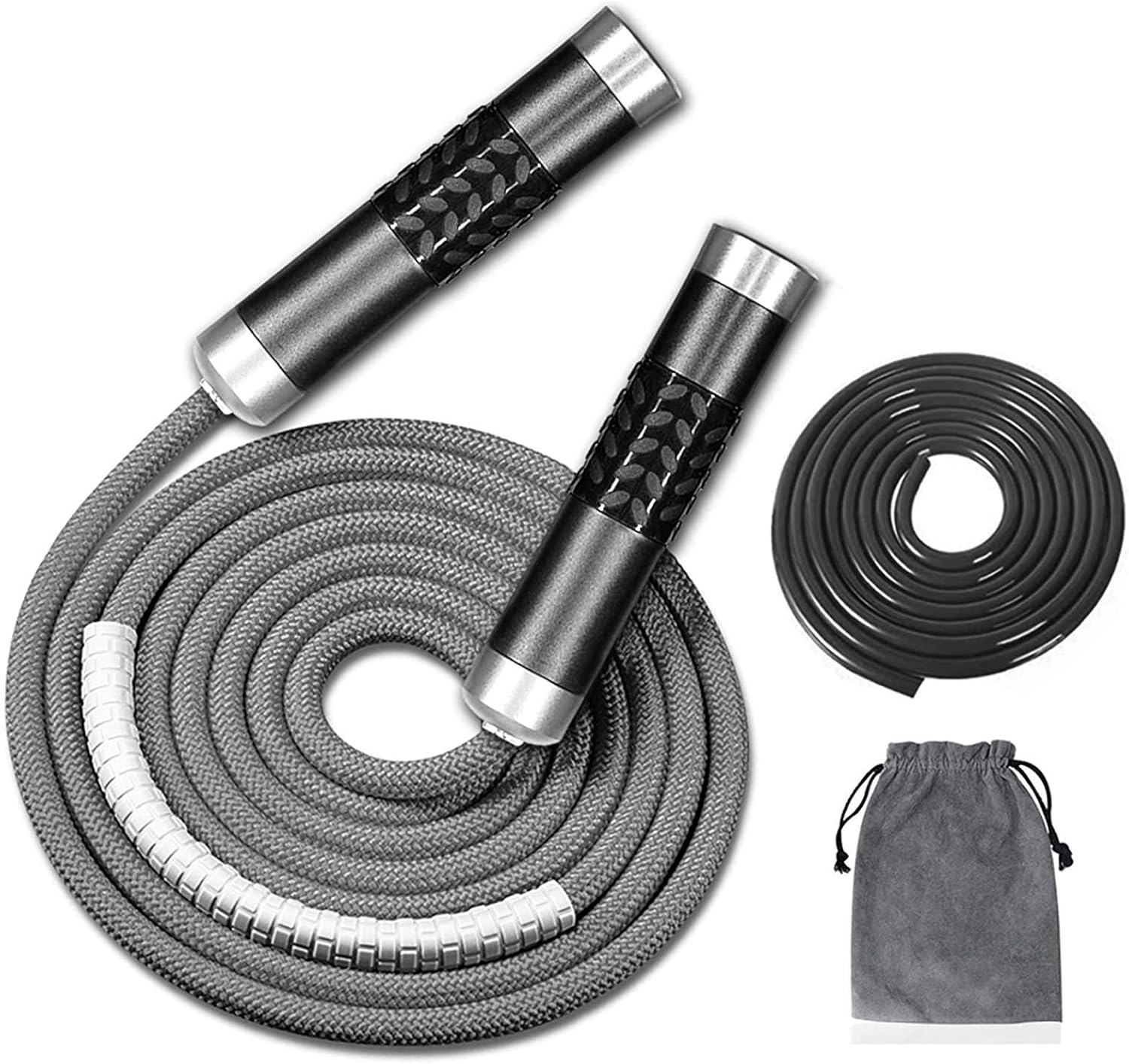 Redify Weighted Jump Rope for Workout Fitness Redify Weighted Jump Rope for Workout Fitness | Target Audience: Adult Item Length: 120 Inches Handle Diameter: 1 inches | Check price |
 12 Pieces Jump Rope for Fitness with 12 Pieces Jump Rope for Fitness with | Target Audience: Adult Recommended Uses For Product: Exercise and Fitness Item Length: 110 Inches | Check price |
 SPORTBIT Adjustable Jump Rope for Fitness and SPORTBIT Adjustable Jump Rope for Fitness and | Target Audience: Adult Recommended Uses For Product: Exercise and Fitness Item Length: 124 Inches | Check price |
As an Amazon Associate we earn from qualifying purchases at no extra cost to you.
Quick Comparison
| Product | Best For | Standout Feature | Watch Out For |
|---|---|---|---|
| Tangle-Free Speed Rope | Cadence, footwork and double-unders | Bearings sustain very high rotation rates | Minimal upper-body training effect |
| BOOMIBOO Adjustable Rope | Mixed sessions across both styles | Length tuning changes the effort curve | Middling at either extreme |
| 40-Piece Bulk PVC Set | Steady moderate-intensity group work | Predictable, forgiving rotation speed | Caps out well below speed-rope cadence |
| SPORTBIT Adjustable Rope | General cardio without a specific goal | Balanced feel for continuous skipping | Swivel limits sustained top-end speed |
| High Speed Weighted Rope | Time-efficient hard sessions | Weight raises intensity at the same cadence | Grip fatigue arrives before leg fatigue |
| Redify Weighted Rope (1 lb) | Boxing rounds and shoulder endurance | Heaviest load here for upper-body work | Not suitable for speed or agility drills |
How to Choose
- Define the target quality first: Cadence work trains foot speed and cardiovascular output. Weighted work trains shoulder and grip endurance under a moderate heart rate. Very few ropes do both well, so pick the one that matches your priority this training block.
- Understand what weight actually adds: A one-pound cable does not double the workout; it raises the sustained tension through the arms and slows rotation. Expect higher perceived effort at a lower jump count, not a faster session.
- Use cable diameter as a proxy: Around 2 to 3 mm coated steel is speed territory. Anything above 5 mm, or a rope advertising weight in the cable rather than the handles, is conditioning territory.
- Note where the weight sits: Weighted handles load the wrists and change nothing about the rope’s arc. Weighted cable loads the whole shoulder girdle through the full rotation, which is a substantially harder and more useful stimulus.
- Structure by intervals: For speed ropes, 30 seconds hard and 30 easy repeated ten times works well. For weighted ropes, three-minute rounds with a minute of rest mirrors how boxing gyms actually use them.
Top Picks Reviewed
Best for Pure Speed: Tangle-Free Speed Rope
Sealed bearings and a thin cable allow rotation rates that make double-unders and high-cadence intervals realistic. Heart rate climbs fast, and the footwork demand improves agility in a way that heavier ropes never will.
It contributes almost nothing to upper-body strength. If your goal is shoulder endurance for fight training, this rope will leave you fresh in exactly the places you were trying to fatigue.
Best Overall Conditioning: High Speed Weighted Rope
Adding cable weight raises intensity without needing more time, more space or more skill. For a fifteen-minute garage session that genuinely leaves you breathing hard, this is the efficient choice, and the screw-free lock makes length changes trivial.
Grip endurance becomes the limiting factor before your legs do, at least initially. Plan for shorter working intervals in the first few weeks or the technique degrades badly at the end of each set.
Best Upper-Body Load: Redify Weighted Rope
A full pound through the cable produces the deep forearm and deltoid burn that boxers use to build round-after-round durability. Three minutes of steady turning is a legitimate strength-endurance stimulus.
Agility drills are off the table. The rope simply cannot be turned fast enough for crossovers or double-unders, so treat it as a supplement rather than a replacement for a speed cable.
Best All-Rounder: BOOMIBOO Adjustable Rope
Because length has a large effect on effort, an easily adjustable rope lets you run a fast, short setting one day and a longer, more relaxed rhythm the next. One rope, two training flavors.
It is a compromise at both ends. It will never spin like a dedicated speed cable, and it will never load the shoulders like a weighted one.
Best Steady-State Option: SPORTBIT Adjustable Rope
For continuous moderate skipping as part of a general fitness routine, the balanced feel and comfortable handles are more than sufficient, and nothing about it demands technical skill.
The plastic swivel caps your maximum cadence. Once you are consistently trying to go faster, that becomes the ceiling rather than your ability.
Best for Group Conditioning: 40-Piece Bulk PVC Set
Predictable, moderate rotation speed makes these ideal for circuits where a whole group needs to work at a similar intensity without anyone struggling with a technical rope.
Serious cadence work is not possible with a thick PVC cable at 9.2 feet. Skilled jumpers in the group will find the ceiling almost immediately.
Frequently Asked Questions
Does a weighted rope burn more calories?
It raises perceived effort and recruits more upper-body muscle, but a fast light rope at high cadence can produce a comparable or higher heart rate. The bigger difference is which muscles fatigue, not total energy cost.
How heavy should a weighted rope be?
A quarter to half a pound is a good introduction. One pound is a serious conditioning load and is best approached after you can already skip continuously for several minutes.
Can I do double-unders with a weighted rope?
Rarely, and not well. The cable cannot accelerate fast enough between ground contacts. Use a thin bearing-mounted cable for anything that requires two rotations per jump.
Should I alternate between rope types?
Yes, and most experienced jumpers do. Speed work on two days and weighted rounds on another gives you cadence and shoulder endurance without either dominating the week.
Final Thoughts
Decide what you want to get better at, then buy the tool that trains it. Bearings and a thin cable for footwork and cadence; a weighted cable for shoulder endurance and time-efficient intensity. If the budget stretches to both, keep them for different days rather than trying to make one rope do everything and getting a mediocre version of each.
Write Your Review
No reviews yet. Be the first to share your experience!