Our Top Picks
The best weight sleds are chosen by matching load capacity, steel construction, friction or wheel design, harness setup, training surface, and storage space—not simply by buying the heaviest sled available.
Quick picks by training situation
| Situation | Best sled type | Useful specification | Why it fits |
|---|---|---|---|
| Outdoor strength work on grass or turf | Two- or three-post friction sled | 35–70 lb sled, 400–500 lb rated load | Simple, durable, and capable of heavy pushes and drags |
| Garage or compact home gym | Short-base friction sled with removable posts | Under 30 in. long when stored; 200–300 lb practical load | Uses less floor space and is easier to hang or stand upright |
| Hard floors or mixed surfaces | Wheeled resistance sled or tank-style trainer | Adjustable magnetic or friction resistance; non-marking wheels | Rolls without scraping concrete, rubber flooring, or finished surfaces |
| Partner training or change-of-direction drills | Harness-compatible sled with multiple attachment points | Two front and two rear tow points; 20–30 ft strap | Supports forward, backward, lateral, and resisted sprint work |
| Maximum-load strength training | Heavy-duty plate sled | 500–1,000 lb stated capacity; 3–4 in. posts | Stays stable under heavy plates and low-speed pushes |
What separates the best weight sleds
Capacity is more than the advertised maximum
Manufacturers may list a maximum load of 500 or 1,000 pounds, but your usable capacity depends on the surface, sled weight, athlete strength, and exercise. A 250-pound load can be demanding on artificial turf but relatively manageable on smooth concrete with wheels.
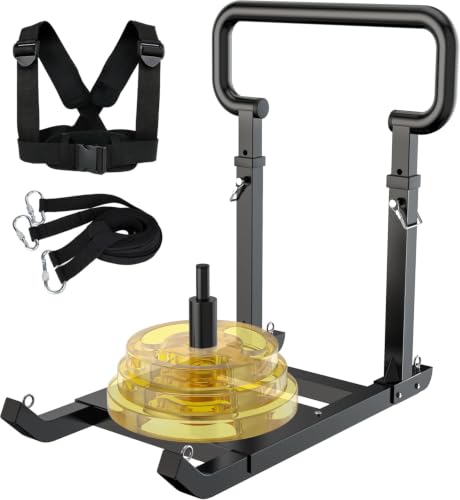
GanFindX Adjustable Weight Sled 5-Level Handle for Push Pull Training Dark
Picked as a relevant option in this category; details come from the product listing.
View on Amazon
GanFindX Workout Weight Sled for Speed & Athletic Strength Training
Picked as a relevant option in this category; details come from the product listing.
View on Amazon
TEDEUM Weight Sled, Fitness Strength Speed Training Sled, Steel Power Sled Workout Equipment for Athletic Exercise and Speed Improvement, Only Suitable for 2" Weight Plate, Standard
Included for 'Best Weight Sleds for Strength and Conditioning' because the listing specifies Fitness Strength Speed Training Sled and Only Suitable for 2" Weight Plate, details this guide uses to compare options.
View on Amazon
GanFindX Weight Sled, Workout Sled for Athletic Fitness Strength Training
Included for 'Best Weight Sleds for Strength and Conditioning' because the listing specifies Workout Sled for Athletic Fitness Strength Training, details this guide uses to compare options.
View on AmazonFor general strength and conditioning, a sled that accepts 200–400 pounds of plates is sufficient for most home users. Athletes training heavy drags, strongman events, or team-sport acceleration may benefit from a 500-pound-plus rating. Leave a safety margin: regularly loading a sled to its published limit can increase bending, weld, and attachment-point stress.
Check whether the rating includes the sled itself. A 40-pound frame carrying 300 pounds of plates creates a different training load from a 15-pound frame carrying the same plates. Also verify the diameter and height of the loading posts. Olympic plates fit most standard sled posts, but a tall post may be inconvenient in a low-ceiling storage area.
Steel construction and finish
Look for welded steel tubing or plate, reinforced tow points, and a powder-coated finish. A heavier frame usually tracks better during slow pushes and is less likely to twist when pulled from an angle. Gussets around the upright posts and tow eyes are particularly valuable because these areas receive repeated shock loading.
Thinner steel can be perfectly adequate for sprint drills and moderate home use, while heavy-gauge tubing is preferable for frequent outdoor sessions and high loads. The trade-off is portability: a 60-pound sled is more durable and stable than a 20-pound model, but it is less convenient to carry through a house or apartment.
| Construction choice | Typical practical range | Main advantage | Trade-off |
|---|---|---|---|
| Compact steel friction sled | 15–35 lb frame; 200–300 lb load | Easy to store and carry | May move or yaw under very heavy or angled pulls |
| Heavy welded steel sled | 35–70 lb frame; 400–1,000 lb load | Stable and durable under high loads | Awkward to move and needs more storage room |
| Wheeled resistance sled | 40–100 lb frame; resistance varies by mechanism | Works on hard surfaces without scraping | More parts to maintain and often costs more |
| Tank-style push trainer | Resistance set by magnetic or mechanical levels | Precise, repeatable resistance with no plates required | Usually bulkier and less suitable for rough outdoor terrain |
Friction sleds versus wheels
Friction sleds: best for simplicity and heavy drags
A traditional friction sled uses a steel ski or skid plate that contacts the ground. Adding plates increases the force needed to push or pull it. This design is mechanically simple, has few failure points, and provides strong feedback during short acceleration efforts.
The surface matters enormously. Bare steel can damage finished concrete, wood, tile, and some rubber gym floors. A UHMW plastic, replaceable plastic, or protective skid pad is gentler, but it can still leave marks when grit becomes trapped underneath. Friction sleds perform best on outdoor grass, rubberized turf, or a dedicated sled lane.
Wheeled sleds: best for indoor versatility
Wheels reduce scraping and make a sled practical on concrete, rubber flooring, and smooth pavement. Resistance comes from magnetic drag, adjustable brakes, fan resistance, wheel friction, or a combination of mechanisms. Wheeled models typically provide a smoother start and more consistent resistance, although the training feel differs from dragging a loaded steel plate.
Choose wide, non-marking wheels for concrete and rubber floors. Small narrow wheels can catch in seams, cracks, or thick turf. Four-wheel designs tend to track predictably, while two-wheel or pivoting designs can turn more easily but may require greater control during lateral work.
Harnesses, straps, and attachment points
A short nylon strap is enough for a forward pull, but a versatile setup should include a tow strap at least 20 feet long. Longer straps keep the athlete away from the sled during backward drags and allow a training partner to control the sled from a safer distance.
- Waist belt: useful for backward walks and moderate resisted running because it leaves the hands free.
- Shoulder harness: distributes the load across the torso and works well for forward marches and heavy pulls.
- Hand straps: useful for rows and upper-body drags, but they should not replace a proper harness for maximal loads.
- Multiple tow points: front, rear, and side attachment points make lateral and reverse work possible.
- Carabiners and loops: choose rated hardware with a secure gate; avoid improvised knots around sharp steel edges.
Inspect the strap first, since webbing can fray faster than the frame wears out. Replace it if stitching separates, edges become fuzzy across a large area, or the attachment loop has been cut by a metal eyelet.
Surface compatibility and noise
Before choosing a sled, identify where it will actually be used. Grass and outdoor turf tolerate friction sleds well, although wet ground increases resistance and can accelerate corrosion. Indoor turf is also suitable when the sled has a smooth skid or replaceable plastic base.
For a garage with rubber flooring, use a wheeled design or a sled with a manufacturer-approved protective base. Even a thin layer of dust under a steel skid can act like sandpaper. On finished flooring, a loaded friction sled is usually the wrong tool, regardless of how carefully it is moved.
Noise is another practical issue. Steel-on-concrete dragging creates vibration that can travel through a building, while wheels are quieter but still produce rolling and strap noise. Apartment users should prioritize a wheeled resistance model, and should not assume that rubber mats make heavy dragging silent.
Storage, moving, and durability realities
Measure the storage route, not only the spot where the sled will sit. A loaded or assembled sled may need to pass through a 30-inch doorway, turn in a hallway, and clear furniture. Many compact models fit under a workbench or can stand vertically, but heavy sleds with fixed posts may require 36 inches or more of maneuvering width.
Allow approximately 3 by 4 feet of clear storage space for a compact friction sled and about 4 by 6 feet for a larger wheeled or tank-style unit. Remove weight plates before moving any sled. Carrying a 50-pound frame through a doorway is manageable; carrying it with another 200 pounds attached is an avoidable injury risk.
After outdoor use, wipe off moisture and grit, inspect welds and tow points, and store plates separately. The parts most likely to wear are plastic skids, wheel bearings, straps, carabiners, and adjustment pins—not the main steel frame. Replaceable skids and standard hardware are therefore more valuable than decorative features.
How to choose the right model
- Set your real load target. Choose a 200–300-pound capacity for general home conditioning, or 400 pounds and above for heavy strength work.
- Measure the training surface. Select friction for grass or turf and wheels for hard or finished flooring.
- Check the frame dimensions. Confirm doorway clearance, storage footprint, post height, and whether posts or handles can be removed.
- Confirm the attachment system. Look for a rated tow point, compatible strap or harness, and attachment options for reverse and lateral work.
- Plan maintenance. Prefer replaceable skids, accessible wheel bearings, corrosion-resistant hardware, and a finish suitable for outdoor storage conditions.
FAQ
How much weight should a beginner put on a sled?
Start with the empty sled or a light load that allows controlled steps without leaning excessively. Add weight in small increments. The correct load depends on surface friction, distance, and whether the goal is speed, conditioning, or maximal strength.
Can a weight sled be used on artificial turf?
Yes, provided the base is smooth and the turf manufacturer permits sled work. A replaceable plastic skid reduces snagging and wear. Test an unloaded sled first, because some turf systems are more vulnerable to pulled seams than others.
Are wheeled sleds better than friction sleds?
Neither is universally better. Friction sleds are usually simpler and better suited to heavy outdoor drags. Wheeled sleds are better for indoor surfaces, quieter operation, and repeatable resistance without loading multiple plates.
Does a sled need Olympic plates?
Most plate-loaded sleds use Olympic-sized plates, but compatibility should be confirmed before purchase. If you already own standard plates, choose a model with matching posts or use a resistance design that does not require plates.