Key takeaways
- Tooth count: A 20- to 30-tooth blade generally clears chips efficiently during ripping, while 40- to 60-tooth designs trade speed for a smoother edge.
- Kerf width: Thin-kerf blades remove less wood and can reduce motor strain, particularly on compact or underpowered saws, but they must remain rigid enough to resist deflection.
- Tooth geometry: Flat-top grind teeth are useful when a flat-bottomed groove or clean rip shoulder matters; combination and alternate-top bevel profiles offer broader versatility.
- Blade fit: Confirm the diameter and arbor size before ordering. A 10-inch blade is not interchangeable with an 8-1/4-inch model, even when both use a 5/8-inch arbor.
- Durability: Carbide quality, plate stiffness, expansion slots, and the ability to resharpen all affect long-term value more than tooth count alone.
What's inside
A table saw rip blade has one job: move through the grain cleanly, predictably, and without making the saw work harder than necessary. Yet buyers often face confusing tooth counts, thin-kerf claims, inconsistent product descriptions, and blades designed for framing rather than accurate furniture work.
This guide evaluates the leading options from an ergonomics-and-durability perspective. The focus is on feed effort, cut control, tooth geometry, vibration, material compatibility, and how well each blade suits repeated ripping in a home workshop.
As an Amazon Associate we earn from qualifying purchases.

🛒 Best Price Today on Amazon
Prime members get fast, free shipping on everything above, plus member-only deals. New members get a 30-day free trial — cancel anytime.
How to Choose a Table Saw Rip Blade (2026)
- Tooth count: A 20- to 30-tooth blade generally clears chips efficiently during ripping, while 40- to 60-tooth designs trade speed for a smoother edge.
- Kerf width: Thin-kerf blades remove less wood and can reduce motor strain, particularly on compact or underpowered saws, but they must remain rigid enough to resist deflection.
- Tooth geometry: Flat-top grind teeth are useful when a flat-bottomed groove or clean rip shoulder matters; combination and alternate-top bevel profiles offer broader versatility.
- Blade fit: Confirm the diameter and arbor size before ordering. A 10-inch blade is not interchangeable with an 8-1/4-inch model, even when both use a 5/8-inch arbor.
- Durability: Carbide quality, plate stiffness, expansion slots, and the ability to resharpen all affect long-term value more than tooth count alone.
The Best Table Saw Rip Blades (2026) Reviewed
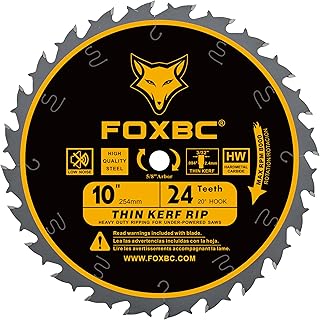
FOXBC 10-Inch Flat Tooth Ripping Blade
This 24-tooth thin-kerf FOXBC blade is purpose-built for fast, straightforward ripping in solid wood. Its flat-tooth profile is especially appealing for furniture makers who want a clean, level-bottomed cut, while the reduced kerf can make feeding easier on smaller saws. Keep the stock firmly supported, since lightweight thin-kerf blades can be less forgiving when material twists.
Amana Tool 610301 Glue-Line Ripping Blade
The Amana Tool 610301 is the precision-oriented choice in this group, using 30 carbide-tipped TCG teeth for a refined glue-line rip. It is well suited to edge-joint preparation and repeatable cabinet work, where a straight, low-tear cut can reduce hand-planing and sanding. Its heavier-duty construction makes it a strong option for users who value stability and longevity over the lowest possible feed resistance.
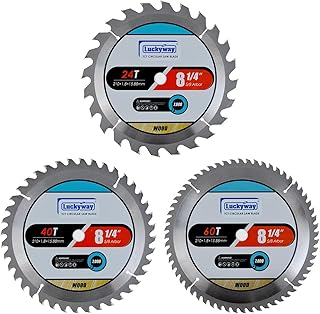
Luckyway 8-1/4-Inch Multi-Purpose Blade Set
Luckyway’s three-pack covers framing, ripping/crosscutting, and finer finishing, making it practical for a compact table saw used across several projects. The 24-tooth blade is the relevant rip-focused option, clearing waste quickly without demanding excessive pushing force. This is a flexible value set rather than a specialist furniture blade, so expect to choose the correct blade for each operation instead of leaving one installed permanently.
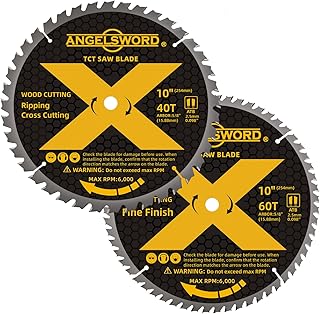
ANGELSWORD 10-Inch 40T/60T Blade Pack
This ANGELSWORD two-pack gives users a 40-tooth general-purpose blade and a 60-tooth finishing blade for a 10-inch saw. The 40-tooth option should handle moderate ripping while remaining useful for crosscutting, whereas the 60-tooth blade is better reserved for cleaner exposed edges and thinner stock. It is a sensible setup for a home workshop, provided the operator accepts that neither blade is as aggressively optimized for deep ripping as a dedicated 24-tooth model.
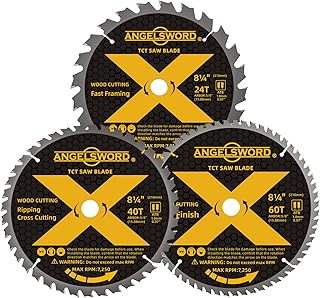
ANGELSWORD 8-1/4-Inch 24T/40T/60T Set
Designed for compact saws, this three-piece ANGELSWORD set offers a 24-tooth framing blade, a 40-tooth combination blade, and a 60-tooth finish blade. The range helps reduce unnecessary blade changes between rough sizing, ordinary furniture cuts, and visible-edge work. For ergonomic use, the 24-tooth blade should provide the easiest feed through thicker stock, while the finer blades are better when surface quality matters more than cutting speed.
Frequently Asked Questions
What tooth count is best for ripping furniture stock?
A 20- to 30-tooth blade is usually the most efficient choice for long rips in solid wood. For plywood, veneered panels, or cuts that will remain visible, a 40-tooth combination blade can offer a better balance between speed and edge quality.
Is a thin-kerf blade safer or easier to use?
Thin-kerf blades often require less power, which can reduce feed effort and help smaller saws maintain speed. They are not automatically safer, however; accurate alignment, a sharp blade, proper stock support, and a correctly set riving knife remain essential.
Can a ripping blade be used for crosscutting?
It can, but the result may be rougher and more prone to tear-out than a combination or crosscut blade. Use the appropriate tooth geometry when appearance, end-grain quality, or controlled cutting pressure is important.
When should a table saw blade be replaced?
Replace or service the blade when cuts begin to burn, the saw requires noticeably more force, edges wander, or carbide teeth are damaged. Cleaning pitch from the teeth may restore performance, but sharpening is preferable to continued use when the carbide is merely dull rather than chipped.
Final Thoughts
For dedicated, efficient ripping, the FOXBC 10-Inch Flat Tooth blade is a practical choice, while the Amana Tool 610301 is the stronger precision pick for glue-ready furniture joints. Owners of compact saws should consider the Luckyway or ANGELSWORD 8-1/4-Inch sets for useful blade coverage without overburdening the machine.