Key takeaways
- Grip system over stretch alone: On leather, elasticity only pulls fabric taut — it doesn’t anchor it. Look for a silicone or TPR dot backing, non-slip foam strips, or supplied grip rods that wedge into the seat-to-back crevice. Elastic hems help at the skirt but do nothing for lateral slide across the seat deck.
- Measure the seat span, not the sofa: Manufacturers list cushion width (for example 27.6″ x 59″ or 27.6″ x 70.9″). Measure each cushion’s usable width and the front-to-back depth, then compare against the stated range rather than trusting a “3-seater” label. Undersized covers stretch thin and lose recovery; oversized ones pool.
- Fabric weight and recovery: Knits in the 200-320 gsm range with roughly 5-10% spandex hold tension without feeling like a compression bandage. Thin high-stretch blends look sharp on day one and go slack after four or five washes. Quilted and plush constructions trade some contour precision for far better abrasion resistance.
- Seam placement and reinforcement: The highest-stress zones are the front seat edge and the arm-to-back transition. Double-stitched or serged seams positioned away from where your legs pivot last far longer than decorative topstitching placed across the load path.
- Wash tolerance and drying behavior: Cold machine wash and low-heat drying is the realistic standard. Heat is what kills elastane. Water-repellent finishes are worth having for households with pets or young kids, but expect the coating to fade gradually with laundering.
What's inside
Leather rewards you with a decade of service and punishes you daily with one flaw: it has almost no friction. A woven or knit cover laid over a slick hide behaves like a sail, migrating a few millimeters with every sit-down until the fabric bunches under your thighs and hamstrings. That ridge is not just untidy — it tilts the pelvis, shortens effective seat depth, and pushes the lumbar spine out of contact with the backrest. Add claw punctures, sunbleached panels along one arm, and cracking at the seat bolster, and most owners end up covering a sofa they are simultaneously trying to preserve.
This guide looks at leather-specific covers through two lenses: how the cover holds its geometry under load, and how the materials survive repeated wash cycles. I’ve weighted grip systems, elastane recovery, seam placement, and hem tensioning over color options, because a cover that stays put is the only one that actually protects anything. Below are the picks worth your money in 2026, followed by a buying framework and answers to the questions that come up most.
As an Amazon Associate we earn from qualifying purchases.


🛒 Best Price Today on Amazon
Prime members get fast, free shipping on everything above, plus member-only deals. New members get a 30-day free trial — cancel anytime.
How to Choose a Sofa Cover for Leather Sofas (2026)
- Grip system over stretch alone: On leather, elasticity only pulls fabric taut — it doesn’t anchor it. Look for a silicone or TPR dot backing, non-slip foam strips, or supplied grip rods that wedge into the seat-to-back crevice. Elastic hems help at the skirt but do nothing for lateral slide across the seat deck.
- Measure the seat span, not the sofa: Manufacturers list cushion width (for example 27.6″ x 59″ or 27.6″ x 70.9″). Measure each cushion’s usable width and the front-to-back depth, then compare against the stated range rather than trusting a “3-seater” label. Undersized covers stretch thin and lose recovery; oversized ones pool.
- Fabric weight and recovery: Knits in the 200-320 gsm range with roughly 5-10% spandex hold tension without feeling like a compression bandage. Thin high-stretch blends look sharp on day one and go slack after four or five washes. Quilted and plush constructions trade some contour precision for far better abrasion resistance.
- Seam placement and reinforcement: The highest-stress zones are the front seat edge and the arm-to-back transition. Double-stitched or serged seams positioned away from where your legs pivot last far longer than decorative topstitching placed across the load path.
- Wash tolerance and drying behavior: Cold machine wash and low-heat drying is the realistic standard. Heat is what kills elastane. Water-repellent finishes are worth having for households with pets or young kids, but expect the coating to fade gradually with laundering.
The Best Sofa Covers for Leather Sofas (2026), Reviewed
Leather Look 3-Seater 1-Piece Stretch Sofa Cover (Coffee)
The strongest option if you want the sofa to still read as leather: the faux-leather-look face keeps the visual language of the original while the stretch body and elastic bottom handle the fit. Side pockets and a single-piece design mean fewer panels to realign, which matters on a daily-use sofa.
Non-Slip Plush Couch Cover for 2-Cushion Sofas (Chocolate)
Built for dogs first, and it shows in the dense plush pile that shrugs off claw drag and hides shed hair between washes. At 27.6″ x 59″ it targets loveseats and two-cushion sofas specifically, so the deck coverage is generous rather than stretched thin across a span it wasn’t cut for.
MYSKY HOME 3-Cushion Couch Cover (Cream)
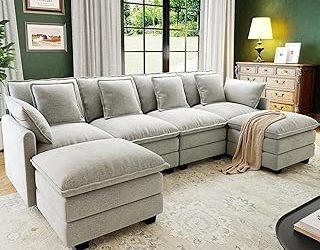
A well-judged balance of grip and softness, with a 27.6″ x 70.9″ footprint that suits three-cushion and L-shaped sectional seats. The non-slip backing does real work on leather decks, and the cream colorway holds up better than expected given how washable it is.
Quilted Grand Sofa Cover, Water-Repellent (Ivory White, 88″)
For oversized and four-cushion grand sofas, quilting is the right structural answer — the stitch grid stops the batting from shifting and keeps the surface flat under distributed weight. The water-repellent finish buys you time on spills, which is the failure mode most leather owners actually face.
ANARACHON Leather Look Cushion Covers (3-Cushion, Brown)
A per-cushion approach that suits sofas whose frames are still pristine but whose seats have taken the wear. Stretch spandex wraps each cushion individually, preserving the original sit geometry and seat depth better than any single-piece cover can.
Frequently Asked Questions
Will any cover really stay put on leather?
Yes, but only with mechanical help. Combine a grip-backed or non-slip cover with the supplied foam rods or twisted fabric tucked deep into the seat crevice, and re-tuck weekly. Elastic alone will not hold on a smooth hide.
How do I size a cover for a leather sofa?
Measure cushion width across the widest point and depth from the front edge to the backrest, then check the listing’s inch range. For sectionals, treat each section separately. When you’re between sizes, size down slightly for tension — unless the fabric has minimal stretch.
Can I machine wash these?
Nearly all of these are washable. Use cold water, a gentle cycle, and either air dry or tumble on low. High heat degrades spandex and shortens water-repellent finishes faster than anything else you’ll do to the cover.
Will a cover damage or dry out the leather underneath?
Covering leather reduces UV exposure and abrasion, which is a net benefit. The one caveat is moisture: if a spill soaks the cover, remove it and let the leather breathe. Condition the hide two or three times a year regardless.
Final Thoughts
For most households, the MYSKY HOME 3-Cushion Cover is the best all-round pick — correct grip, sensible sizing, easy laundering. If pets are your main concern, the plush non-slip cover in Chocolate handles claws and hair better than anything else here, and owners of oversized frames should go straight to the Quilted Grand Sofa Cover for its structural stability and water-repellent surface.