Key takeaways
- Match height to your cushion, not the catalog: Sectional seats often compress to 15–17 inches. Aim for a tabletop within an inch or two of that compressed height so your forearm stays neutral instead of dropping into a shoulder-shrugging reach.
- Protect the reach envelope: Leave 14–18 inches between the sectional edge and the table on every seating side. Closer than 14 and you clip shins; farther than 18 and you recruit your spine to close the gap.
- Scale the shape to the L: Squares and oval-cornered rectangles serve corner sectionals far better than long, narrow rectangles, which strand the chaise seat with no usable surface at all.
- Interrogate the moving parts: Lift tops live or die on their gas struts and hinge plates; drawers live or die on their glides. Look for smooth-riding rails, stated load capacity, and struts that hold position rather than drifting shut.
- Read the durability details: Thicker tops with wrapped or banded edges resist the chipping that kills laminated panels. On the base, corner blocks, a solid plinth, or a wide-stance frame beat four slim splayed legs for tip resistance.
What's inside
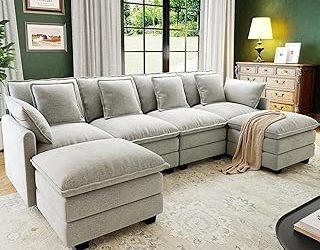
Sectionals break the rules that ordinary coffee tables were designed around. Instead of one straight seating edge, you get an L or a U, a chaise that juts into the walkway, and cushions that sit lower and deeper than a standard sofa. Drop a conventional 48-inch rectangle into that footprint and you end up reaching across dead space, knocking shins on a corner return, or shuffling sideways every time you cross the room. From an ergonomics standpoint, the failure is measurable: if a surface sits more than a few inches below your seated elbow or farther than a comfortable forearm reach, you will lean, twist, and load your lower back every single time you set down a mug.
This guide approaches the problem the way a furniture engineer would. We look at working height relative to deep sectional cushions, reach envelopes for L-shaped layouts, and the hardware that actually determines whether a table survives five years of feet, laptops, and toddlers, including lift mechanisms, drawer glides, edge banding, and base geometry. Below are six current options worth your attention, followed by selection criteria and honest notes on where each one earns its keep.
As an Amazon Associate we earn from qualifying purchases.


🛒 Best Price Today on Amazon
Prime members get fast, free shipping on everything above, plus member-only deals. New members get a 30-day free trial — cancel anytime.
How to Choose a Coffee Table For Sectional (2026)
- Match height to your cushion, not the catalog: Sectional seats often compress to 15–17 inches. Aim for a tabletop within an inch or two of that compressed height so your forearm stays neutral instead of dropping into a shoulder-shrugging reach.
- Protect the reach envelope: Leave 14–18 inches between the sectional edge and the table on every seating side. Closer than 14 and you clip shins; farther than 18 and you recruit your spine to close the gap.
- Scale the shape to the L: Squares and oval-cornered rectangles serve corner sectionals far better than long, narrow rectangles, which strand the chaise seat with no usable surface at all.
- Interrogate the moving parts: Lift tops live or die on their gas struts and hinge plates; drawers live or die on their glides. Look for smooth-riding rails, stated load capacity, and struts that hold position rather than drifting shut.
- Read the durability details: Thicker tops with wrapped or banded edges resist the chipping that kills laminated panels. On the base, corner blocks, a solid plinth, or a wide-stance frame beat four slim splayed legs for tip resistance.
The Best Coffee Table For Sectional (2026)s Reviewed
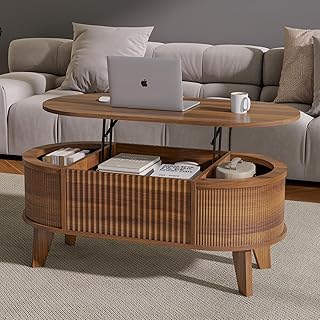
LYNCOHOME 43.3″ Fluted Lift Top Table
The soft oval footprint is the quiet ergonomic win here: no hard corners to catch a shin where a sectional turns, and 43 inches of usable surface that stays within arm’s reach from both legs of an L. The lift top raises the working plane to a genuine laptop or dinner height, and the fluted walnut panels hide the minor scuffs that flat slabs advertise.
SEDETA 31.5″ Square Lift Top Table
A compact square is the most reach-efficient shape for a tight corner sectional, since every seat gets equal access without anyone stretching across dead center. Adjustable interior shelving plus a deep hidden compartment make this the pick for small rooms where the table has to double as storage.
47″ High-Gloss LED Table with Sliding Drawers
The double-layer build gives you a lower shelf for remotes and books so the primary surface stays clear, which matters more than it sounds when a sectional wraps three sides of a table. Gloss finishes show fingerprints readily, so treat this as a style-forward choice for lower-traffic living rooms rather than a family command center.
47.2″–81.8″ Extendable Table with Hidden Storage
Sliding to nearly seven feet, this is the answer for long chaise sectionals where a fixed 47-inch top leaves half the seating unserved. Silent glide rails and a floor-contact base keep the extension stable instead of wobbly, and the divided compartments stop the interior becoming one large junk drawer.
Tribesigns Extendable Dual-Tone Table
Two drawers plus a sliding top give you flexible surface area without a permanently oversized footprint, so walkways stay clear until you need them closed. The walnut-and-oak contrast reads warmer than most flat-pack pieces, and the rectangular geometry suits sectionals with a long primary run.
Frequently Asked Questions
How far should a coffee table sit from a sectional?
Between 14 and 18 inches on every side people actually sit. That range keeps drinks inside a relaxed forearm reach while leaving room to pass without turning sideways.
Is a square or rectangular table better for a sectional?
Squares and near-squares suit L-shaped and U-shaped sectionals because they serve both legs equally. Reserve long rectangles for sectionals with one dominant straight run.
Are lift-top tables durable enough for daily use?
Quality varies with the hardware. Look for gas struts that hold position mid-travel and steel hinge plates fastened into a reinforced panel rather than thin backing board, and avoid sitting or standing on any lift top.
What size table works with a large sectional?
Target roughly two-thirds the length of your longest seating run. For sprawling sectionals, an extendable top or a pair of smaller tables often beats one oversized slab.
Final Thoughts
For most corner sectionals, the LYNCOHOME 43.3″ fluted lift top hits the best balance of reach-friendly oval geometry, adjustable working height, and finish durability. Choose the 47.2″–81.8″ extendable table if a long chaise leaves seats stranded, and the SEDETA 31.5″ square when floor space is tight and storage matters more than surface area.