Key takeaways
- Keep a dry microfiber cloth in the room and wipe headrests and arm tops weekly. Sixty seconds of dry wiping removes skin oil before it sets and eliminates most deep cleans.
- Rotate and flip cushions monthly so compression, abrasion, and sun exposure distribute evenly instead of concentrating in one favorite seat.
- Position the sofa out of direct sunlight or use UV-protective window film. White leather does not fade so much as yellow, and photodegradation also embrittles the topcoat.
- Blot spills with a dry cloth immediately, then clean the full panel rather than the spot. Spot-cleaning is what creates visible rings on white.
What's inside
White leather reads as effortless in a showroom and behaves like a wear indicator in a living room. That is not a flaw so much as physics: pale pigmented hide shows every deposit that darker finishes hide, and the deposits themselves are concentrated in a few predictable places. Skin oils migrate into the headrest crown. Indigo from jeans transfers along the front seat edge. Hand grease builds where fingers grip the arm roll on the way up. A sofa that looks “dirty” all over is usually clean across 80% of its surface and heavily loaded across the contact zones your body actually touches.
That distinction changes how you clean. Instead of scrubbing an entire sofa on a Saturday, you learn to read the wear map, treat each zone with the right amount of moisture and mechanical action, and protect the topcoat that carries the color. Below you will find how to identify your leather type, the step order that avoids tide lines, which contact points deserve weekly attention, how to handle dye transfer and scuffs before they become permanent, and how to keep the finish flexible so the seat deck does not crack where it folds.
As an Amazon Associate we earn from qualifying purchases.





🛒 Best Price Today on Amazon
Prime members get fast, free shipping on everything above, plus member-only deals. New members get a 30-day free trial — cancel anytime.
Identify the finish before anything touches it
Nearly all white upholstery leather is pigmented (also called finished or protected) leather: a hide sealed under a thin polymer topcoat that carries the pigment. Test it by placing a single drop of water on an inconspicuous panel, such as the outside back. If the drop beads and wipes away with no darkening, you have a topcoat and can clean with confidence. If it soaks in and leaves a temporary dark ring, you are dealing with aniline or semi-aniline leather, which absorbs everything including cleaner, and should be treated with minimal moisture and professional help for stains. Faux leather and polyurethane behave like the first category and tolerate the same products. A general-purpose formula such as Leather Honey Leather Cleaner is safe across all three of those surface types, which is useful when a sofa mixes real hide on the seating surfaces with a matched vinyl on the outside back.
Dry removal comes first, always
Grit is the durability problem nobody talks about. Sand, crumbs, and pet dander collect in the seam gutters and under the cushions, and every time someone sits down, that debris is pressed against the topcoat and abraded across it in tiny arcs. Over a few years this is what dulls a white finish from crisp to chalky. Pull the cushions, vacuum the deck and every seam with a soft brush attachment, and wipe the whole surface with a dry microfiber cloth. Cleaning a gritty sofa with a wet cloth simply turns the grit into a polishing compound.
Work in panels, low moisture, no tide lines
Apply cleaner to the cloth, never directly to the leather, and work one complete panel at a time from seam to seam. Panels are your natural boundaries because they hide the transition. Use light circular pressure, then immediately follow with a second dry cloth to lift the suspended soil rather than letting it dry back into the grain. A conditioning cleaner such as Weiman Leather Cleaner & Conditioner suits this rhythm well since it handles cleaning and surface protection in a single pass, which reduces how many times you flex the hide. If you would rather separate the two functions and have matched cloths on hand, the Leather Honey Complete Leather Care Kit covers cleaner, conditioner, and application cloths together. Whatever you use, skip melamine foam erasers entirely: they abrade the pigment layer and leave a permanent matte patch that no conditioner will bring back.
Treat dye transfer and scuffs as time-sensitive
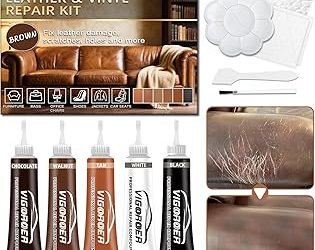
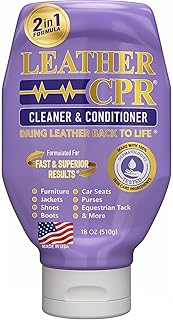
Indigo transfer is not a stain in the ordinary sense; it is dye seeking a compatible surface, and it keeps migrating deeper into the topcoat the longer it sits. Address the front seat edge and the inside arm within days, not months, using repeated gentle passes rather than one aggressive one. Where color has already been lost from a scuff or an old transfer, cleaning cannot fix it and a pigment product is the honest answer. A white-matched recoloring balm with mink oil will rebuild the color on worn arm rolls and scratches, and it works on vinyl and PU as well as hide. For older sofas that have gone stiff and dull rather than dirty, Leather CPR Cleaner and Conditioner is a reasonable single-bottle route to restoring some softness alongside the clean.
Condition where the leather actually flexes
Conditioning is a durability step, not a cosmetic one. The seat deck and the front cushion edge complete thousands of compression cycles a year, and dried-out fiber cracks at the fold line long before flat panels show any age. Condition lightly every three to six months, concentrating on the seat surfaces, cushion fronts, and the crown of the backrest, and go thinner on vertical panels that never move. Over-conditioning is a real failure mode: excess product sits on the topcoat, attracts soil, and makes a white sofa look grey. Two thin applications beat one heavy one. A larger multi-pack such as the 2-pack Weiman Leather Cleaner & Conditioner makes sense if you are maintaining a sectional plus car seats on the same schedule.
Tips
- Keep a dry microfiber cloth in the room and wipe headrests and arm tops weekly. Sixty seconds of dry wiping removes skin oil before it sets and eliminates most deep cleans.
- Rotate and flip cushions monthly so compression, abrasion, and sun exposure distribute evenly instead of concentrating in one favorite seat.
- Position the sofa out of direct sunlight or use UV-protective window film. White leather does not fade so much as yellow, and photodegradation also embrittles the topcoat.
- Blot spills with a dry cloth immediately, then clean the full panel rather than the spot. Spot-cleaning is what creates visible rings on white.
Frequently Asked Questions
Can I use dish soap and water on white leather?
It will remove surface soil, but most dish detergents are alkaline and strip the protective oils and topcoat lubricants that keep the finish flexible. Occasional emergency use is survivable; routine use accelerates cracking at flex points. A pH-appropriate leather cleaner costs little and does not trade next year’s durability for today’s brightness.
How often should I deep clean?
For a daily-use sofa, a full clean every three to four months plus weekly dry wiping of contact zones is a sensible cadence. A formal living room sofa can stretch to twice a year. Frequency should follow use, not the calendar, and the headrest is your best gauge of when it is due.
Will baking soda, vinegar, or a magic eraser work?
Baking soda is abrasive, vinegar is acidic enough to haze some topcoats, and melamine erasers physically sand off pigment. All three appear in home remedy lists and all three shorten the life of a white finish. The visible improvement is real, but it comes from removing part of the coating.
Is yellowing reversible?
Light yellowing from accumulated oils and residue often lifts with proper cleaning. Yellowing from UV exposure or from a degrading topcoat is a chemical change in the finish and does not clean out. In that case, a white recoloring balm restores appearance, and relocating the sofa away from direct sun prevents a repeat.
Conclusion
Maintaining a white leather sofa is less about products than about pattern recognition. Learn where your body loads the piece, remove grit before it abrades, clean panel by panel with restrained moisture, keep the flex zones supple, and re-pigment small losses before they spread. Handle those five things and a white sofa stays crisp for a decade or more instead of becoming the thing you apologize for when guests arrive.