Our Top Picks
 roborock 2026 New Qrevo 2 Pro Robot Vacuum01-Qrevo 2 Pro (Black)19.45 x 17.72 x 15.83 inches27.12 PoundsCheck on Amazon
The best smart robot mops in 2026 are the Roborock Saros 10R for low furniture and precise navigation, the Dreame X50 Ultra for thresholds and large homes, the Eufy S1 Pro for hard-floor scrubbing, and the Narwal Freo Z Ultra for quiet, low-maintenance daily cleaning.
Quick comparison: the best smart robot mops by situation
| Best for | Recommended type or model | Why it stands out | Important limitation |
|---|---|---|---|
| Low sofas, beds, and cabinets | Roborock Saros 10R | Very low robot body, accurate lidar-free navigation approach, strong obstacle recognition | Premium price and a dock that needs generous floor space |
| Mixed flooring and raised thresholds | Dreame X50 Ultra | Motorized threshold-climbing design and automatic mop washing and drying | More moving parts and a larger dock footprint |
| Sticky marks on sealed hard floors | Eufy S1 Pro | Continuously rinsed roller mop applies active scrubbing rather than dragging a damp pad | Less compelling if most of your home is carpet |
| Quiet daily maintenance | Narwal Freo Z Ultra | Strong floor sensing, dual rotating mop pads, and hands-off dock routines | Deep dried stains may still need manual spot cleaning |
| Lower-cost automation | Midrange vacuum-and-mop robot | Usually includes room mapping, app scheduling, and a basic auto-empty dock | Less mop pressure, weaker obstacle avoidance, and more manual pad washing |
What separates the best smart robot mops
Navigation accuracy matters more than maximum suction
A robot that maps rooms accurately cleans a 10-by-12-foot bedroom more consistently than one with a larger suction number but poor route planning. Look for room-level mapping, no-go zones, carpet recognition, and the ability to clean around chair legs without repeatedly colliding with them.
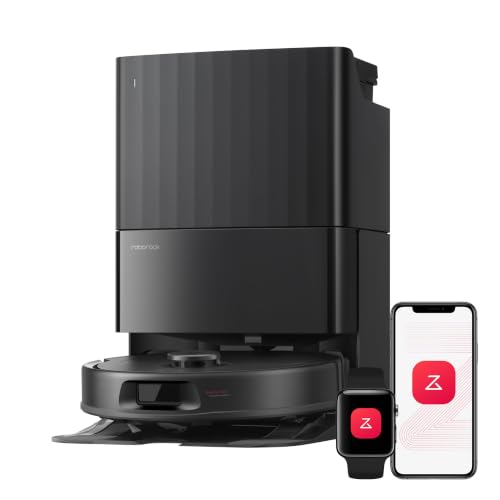
roborock 2026 New Qrevo S Pro Robot Vacuum and Mop, 18,500Pa Suction
Chosen because it specifies 500Pa Suction.
View on Amazon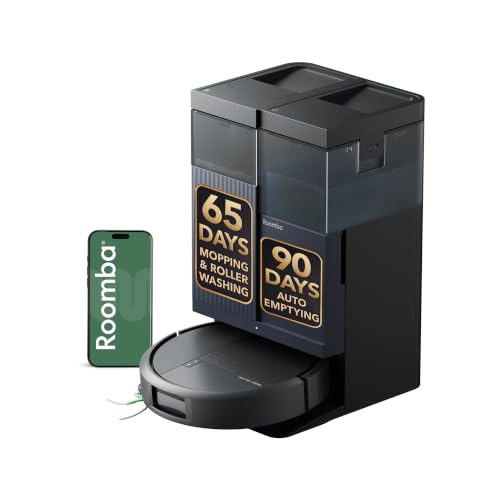
iRobot Roomba 415X Robot Vacuum & Mop Combo, 20,000Pa, 90 Days Self-Emptying, Multifunction Dock Self-Cleaning & Hot Dry, Smart Obstacle Avoidance, Lifting Spinning Mops, Ideal for Pet Hair
Chosen because it specifies 000Pa and 90 Days Self-Emptying.
View on Amazon
ROPVACNIC Robot Vacuum and Mop Combo 5200Pa Suction Robotic Cleaner
Picked as a relevant option in this category.
View on Amazonroborock 2026 New Qrevo 2 Pro Robot Vacuum and Mop, 20,000Pa Suction
Chosen because it specifies 000Pa Suction.
View on AmazonPremium models use combinations of lidar, cameras, structured light, and infrared sensing. Camera-based systems can identify cables, socks, pet bowls, and shoes, while lidar is particularly useful for measuring walls and maintaining a reliable map in dim rooms. The strongest systems use both types of information. Avoid assuming that every “AI obstacle avoidance” label means the same thing: some robots merely slow down when they detect an object, while better models identify and route around it.
Mopping pressure and mop design
There are three common approaches:
- Flat vibrating pads: good for routine dust and light footprints, but they can leave a dry or lightly cleaned strip at the edges.
- Dual spinning pads: provide better agitation and corner coverage, especially when the pads extend slightly beyond the robot body.
- Rolling mops: continuously rinse the roller with clean water and collect dirty water separately. This is the closest of the three to active scrubbing and is particularly useful for kitchens and sealed tile.
Pad pressure is more meaningful than a vague “deep cleaning” claim. A model that applies several newtons of downward pressure can remove marks more effectively than a free-floating pad, but excessive pressure can slow the robot and increase battery use. For most homes, adjustable water flow, repeated passes, and a clean-water rinse cycle are more useful than an extreme pressure figure.
Dock features reduce the real workload
A premium dock may empty the dustbin, refill the robot, wash mop pads with heated water, dry them with warm air, and add detergent automatically. These features make a difference because a wet pad left in a closed dock can develop an odor.
Check the dock’s consumables before buying. A self-cleaning washboard is helpful, but it still needs occasional removal and rinsing. Dirty-water tanks usually need emptying every few days in a pet household, while clean-water tanks may last one to two weeks depending on the number of mopping cycles. Heated drying is preferable to air drying when the robot runs daily.
Room-size and battery coverage
Manufacturers commonly quote battery coverage under favorable conditions, often with low suction, limited mopping, and few obstacles. Real coverage is lower when the robot uses high suction, washes pads repeatedly, or cleans multiple rooms.
| Home area | Practical single-charge target | What to choose |
|---|---|---|
| Up to 600 sq. ft. of hard floor | About 350–500 sq. ft. cleaned per cycle | Most midrange robots; auto-recharging is still useful |
| 600–1,000 sq. ft. | About 500–800 sq. ft. per cycle | A large battery and recharge-and-resume mapping |
| 1,000–1,500 sq. ft. | About 700–1,100 sq. ft. per cycle | Premium battery capacity, efficient navigation, and a full-service dock |
| More than 1,500 sq. ft. | Usually multiple runs | Choose reliable recharge-and-resume rather than focusing only on quoted runtime |
For example, a 10-by-12-foot room is 120 square feet before subtracting furniture. If a bed and dresser occupy roughly 45 square feet, the robot may clean only 75 square feet of open floor, although navigation around the furniture adds travel distance. Battery capacity is therefore most important in homes with many rooms, thick rugs, repeated mopping passes, or long corridors.
Obstacle avoidance and furniture clearance
Measure the lowest furniture in your home before choosing a robot. Many conventional models are about 3.7 to 4.0 inches tall. Low-profile models such as the Saros 10R are designed to reach spaces closer to 3.1 inches, while some robots can lower or retract their navigation hardware to pass beneath furniture.
- Allow at least 1.5 inches of side clearance for a robot to turn comfortably around a table leg.
- For a chair with four legs, expect more reliable cleaning if the gap between legs is at least 14 inches.
- Keep charging docks about 20 inches clear in front and roughly 4 inches clear on each side unless the manufacturer specifies otherwise.
- Remove charging cables, shoelaces, thin pet toys, and clothing from the floor; no obstacle system is dependable against every flexible object.
Obstacle avoidance is especially valuable for children and pets, but it does not replace preparation. A robot may recognize a shoe and avoid it, yet still drag a small cord or spread a pet accident. If accidents are a concern, choose a model with strong object recognition and schedule cleaning only after a quick floor check.
Decision guide for different homes
| Your situation | Best choice | Reason |
|---|---|---|
| Small apartment with low furniture | Low-profile premium robot | Clearance and accurate navigation matter more than maximum tank size |
| Kids, pets, and frequent crumbs | Robot with camera-based obstacle avoidance and auto-emptying | Fewer tangles and less daily bin handling |
| Mostly tile, vinyl, or sealed wood | Roller-mop or high-pressure dual-pad model | Better agitation and more consistent wet cleaning |
| Renter with thresholds between rooms | Threshold-climbing model such as the Dreame X50 Ultra | Reduces the need for ramps, provided the threshold is within its rated height |
| Back pain or limited mobility | Full-service dock with heated mop washing and drying | Minimizes bending, lifting, and hand-washing pads |
| Large home with several carpets | Long-battery vacuum-and-mop robot with automatic mop lifting | Can vacuum rugs without repeatedly wetting them and can resume after charging |
Buying and ownership costs
Basic vacuum-and-mop robots commonly cost about $200–$400, capable midrange models about $400–$700, and premium robots with advanced docks about $800–$1,600. Replacement mop pads, filters, brushes, detergent, and dust bags add an ongoing cost. A dock with washable components can be cheaper to maintain than one that depends heavily on disposable bags, although bagged docks are usually cleaner to empty.
The parts that normally wear first are the side brush, main brush, mop pads, and filter. Hair-heavy homes may need more frequent brush cleaning, while abrasive grit can shorten the life of wheels and brush bearings. Keep the dock on a hard, level surface, protect unfinished wood from standing water, and inspect the wash tray monthly.
Bottom line
Choose the Roborock Saros 10R when low clearance and precise avoidance are your priorities. Choose the Dreame X50 Ultra when thresholds and a larger multi-room home are the main obstacles. Choose the Eufy S1 Pro when hard-floor scrubbing matters more than carpet versatility. Choose the Narwal Freo Z Ultra when quiet, mostly hands-off daily maintenance is the goal. For a smaller budget, prioritize reliable room mapping, recharge-and-resume, and a genuinely washable mop system over headline suction numbers.