Key takeaways
- Bin access height and grip: A dustbin you lift straight up from the top, with a full-hand handle rather than a pinch tab, spares your wrists and stops the mid-air fumble that dumps debris on clean floor. Self-emptying docks push this task to a monthly bag change at waist height, which is the single biggest ergonomic upgrade available.
- Brushroll serviceability: Hair wraps around every roller eventually. Look for end caps that release by hand, a bearing you can see and clean, and either a self-cleaning comb or a tangle-resistant rubber design. A brushroll that requires scissors every fortnight will shorten the machine’s life through sheer neglect.
- Replaceable wear parts: Side brushes, filters, wheel treads, and caster bearings are consumables. Confirm the manufacturer sells them individually and cheaply. A robot with a $12 parts basket stays in service for years; one with no parts listing becomes landfill the moment a brush frays.
- Chassis clearance and bumper travel: Slim profiles reach under sofas and case goods, but check that the bumper has real spring travel rather than a rigid shell. Repeated hard contact is what scuffs furniture legs and cracks housings around year two.
- Navigation that reduces re-runs: LiDAR and structured mapping cut coverage time and total motor hours. Random-bounce cleaning wears the drive train harder to achieve the same result, so smarter routing is a durability feature, not just a convenience one.
What's inside
Mop-equipped robots get the marketing budget, but they also get the maintenance calendar. Every wet-cleaning system adds a water tank to refill, a pad to rinse, a tray to dry, and a set of seals and pumps that will eventually be the first thing to fail. For anyone with hardwood, engineered plank, or wall-to-wall carpet, a dry-only robot removes an entire category of upkeep and, more importantly, an entire category of breakage. Fewer wet parts means fewer service points, longer intervals between hands-on tasks, and a machine that ages more gracefully.
This guide evaluates vacuum-first robots the way we assess any piece of furniture destined for daily contact: how much bending, reaching, and twisting the owner is signed up for, how well the wear surfaces hold up over a few thousand runs, and whether the parts that inevitably degrade can be swapped without tools or a service call. Below are the models that earn their floor space, followed by the durability and handling criteria we used to rank them.
As an Amazon Associate we earn from qualifying purchases.




🛒 Best Price Today on Amazon
Prime members get fast, free shipping on everything above, plus member-only deals. New members get a 30-day free trial — cancel anytime.
How to Choose a Robot Vacuum Without a Mop (2026)
- Bin access height and grip: A dustbin you lift straight up from the top, with a full-hand handle rather than a pinch tab, spares your wrists and stops the mid-air fumble that dumps debris on clean floor. Self-emptying docks push this task to a monthly bag change at waist height, which is the single biggest ergonomic upgrade available.
- Brushroll serviceability: Hair wraps around every roller eventually. Look for end caps that release by hand, a bearing you can see and clean, and either a self-cleaning comb or a tangle-resistant rubber design. A brushroll that requires scissors every fortnight will shorten the machine’s life through sheer neglect.
- Replaceable wear parts: Side brushes, filters, wheel treads, and caster bearings are consumables. Confirm the manufacturer sells them individually and cheaply. A robot with a $12 parts basket stays in service for years; one with no parts listing becomes landfill the moment a brush frays.
- Chassis clearance and bumper travel: Slim profiles reach under sofas and case goods, but check that the bumper has real spring travel rather than a rigid shell. Repeated hard contact is what scuffs furniture legs and cracks housings around year two.
- Navigation that reduces re-runs: LiDAR and structured mapping cut coverage time and total motor hours. Random-bounce cleaning wears the drive train harder to achieve the same result, so smarter routing is a durability feature, not just a convenience one.
The Best Robot Vacuums Without a Mop, Reviewed
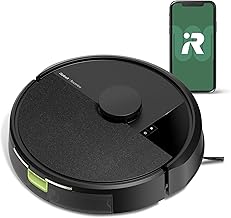
iRobot Roomba 105 Vac with AutoEmpty Dock
The 75-day dock capacity is the standout here, reducing owner contact to roughly five bag changes a year, each done standing up. LiDAR mapping and neat-row coverage keep motor runtime honest, and iRobot’s parts availability remains the most reliable in the category for anyone planning to keep a robot past its warranty.
Shark AV2501S AI Ultra
Shark’s self-cleaning brushroll is the most meaningful durability feature on this list, because it addresses hair wrap at the source instead of asking you to cut it away. Pair that with a 30-day bagless HEPA base and Matrix Clean’s overlapping passes, and you get thorough carpet pickup with almost no scheduled disassembly.
eufy 11S MAX
At barely three inches tall, the 11S MAX is the pick for homes with low-clearance sofas, sideboards, and platform beds where taller robots simply stop working. It is a bump-navigation machine with a manual bin, so expect daily emptying, but the simplicity means fewer subsystems to fail and a notably quiet run.
iRobot Roomba 105 Vac
The dockless version of the 105 delivers identical LiDAR navigation and power-lifting suction at a lower entry price, trading the AutoEmpty base for a hand-emptied bin. Sensible for apartments and smaller footprints where the dock’s bulk is harder to justify than the bending is to tolerate.
Q10 Pro Self-Emptying Robot
With 8000Pa of suction, laser mapping, and a 150-minute runtime, the Q10 Pro handles large multi-room layouts and embedded pet hair in a single pass. The mop function is removable, so it can be run purely dry indefinitely, which is a practical way to get flagship suction without committing to wet-system upkeep.
Frequently Asked Questions
Do vacuum-only robots actually last longer?
Generally yes, because they have fewer failure points. Water pumps, valves, and seals are common early failures on hybrid units, and mineral scale from tap water accelerates the problem. A dry-only robot’s wear items are mechanical and cheap to replace.
How often do I need to touch a self-emptying model?
Plan on a brushroll inspection monthly, a filter tap-out every few weeks, and a bag or bin change per the dock’s stated capacity. Sensor windows and cliff sensors want a dry wipe occasionally to prevent erratic behavior.
Will a robot vacuum damage furniture legs or baseboards?
Well-damped bumpers and LiDAR-based approach slowdown make contact gentle. If you have delicate finishes or antique legs, prefer a mapping model that can be given no-go zones rather than a random-navigation unit.
Is a bagged or bagless dock better long term?
Bagged docks are cleaner to service and better for allergy households. Bagless bases like Shark’s eliminate consumable cost but require occasional emptying by hand and a periodic rinse of the collection chamber.
Final Thoughts
For the lowest total handling over a multi-year ownership window, the Roomba 105 Vac with AutoEmpty Dock is the pick, with the Shark AV2501S AI Ultra close behind thanks to its self-cleaning brushroll and generous bagless base. If clearance under your furniture is the limiting factor rather than emptying frequency, the eufy 11S MAX remains the most sensible slim option on the market.