Key takeaways
- A dehumidifier for condensation on windows helps only when humidity is the cause. Dew point tables, humidity ceilings by outdoor temperature, cheaper fixes.
A dehumidifier can stop condensation on windows, but only when the cause is indoor humidity that is too high for how cold the glass gets. Condensation forms when the glass surface is colder than the dew point of the room air. A dehumidifier lowers that dew point. It does nothing to warm the glass, so in a house with single pane windows or a draft around the frames, you may have to hold the humidity very low to keep them clear, and a cheaper fix sits elsewhere.
This guide gives you the numbers to decide. You will find a dew point table for a 70 degree room, estimates of how cold different window types get, the indoor humidity ceiling at different outdoor temperatures, and a decision table that matches your symptom to a first fix. The figures are general physics and rule-of-thumb estimates, not measurements of any particular window, and nobody on our Editorial team measured a home. The basis is published specifications, manufacturer documentation and building guidance, so use a hygrometer in your own rooms.
The dew point rule: why glass fogs in the first place
Air holds water vapor, and the amount it can hold rises with temperature. Warm indoor air can carry far more vapor than the cold air outside. The dew point is the temperature at which a given parcel of air becomes saturated. Cool air below that point and the vapor condenses into liquid droplets on whatever surface it touches.
Glass is usually the coldest surface in a heated room. It is thin, it touches the outdoors, and it has little insulating value compared with a wall. So when the glass temperature falls below the room’s dew point, droplets form on the glass first. That is all condensation on windows is: a visible measurement that your indoor dew point is above the glass temperature.
This framing explains several things at once. Why fog appears at the bottom corners first: the lowest edge of the glass is often the coldest because of the spacer, the frame and the cold air that sinks along the glass. Why it comes and goes with the weather: the glass temperature drops when the outdoor temperature drops, while your indoor dew point barely changes. Why showering makes it worse: the dew point spikes for an hour or two.
It also tells you the two ways out. You can lower the dew point by removing moisture from the air, which is what a dehumidifier or ventilation does. Or you can raise the glass temperature, which is what better windows, storm panels, window film and air movement do. Everything else in this article is a variation on one of those two moves.
Dew point at 70 degrees by humidity level
The table shows the dew point of 70 degree Fahrenheit room air at common relative humidity readings. These values come from standard psychrometric relationships and are rounded.
| Indoor relative humidity | Dew point (about) | What it means for glass |
|---|---|---|
| 30 percent | 37 F | Only very cold single pane glass will fog |
| 40 percent | 45 F | Cold edges of older double pane may fog in a hard freeze |
| 50 percent | 50 F | Fog likely on single pane and on double pane edges below about 30 F outside |
| 60 percent | 55 F | Fog likely on most older windows in winter |
| 70 percent | 60 F | Fog on nearly every window, even in mild weather |
Read it from the right-hand side. If your glass surface sits at 45 degrees on a cold morning, any humidity above 40 percent at 70 degrees puts the dew point above that and the glass will fog. If the glass is 55 degrees, you can run 60 percent humidity before fog starts.
The same table works at other room temperatures, with small changes. A room at 65 degrees has a slightly lower dew point at the same relative humidity, while a room at 75 has a higher one. That is why a cold bedroom with a person sleeping in it can fog a window badly: the breathing adds moisture and the room’s glass is colder than in the living area. A hygrometer is the cheapest way to see where you sit. Many people are surprised to find that “normal” readings of 55 to 60 percent in winter are exactly what is fogging their glass.
How cold your glass actually gets, and the humidity ceiling it sets
Glass temperature depends on the window’s insulating value, called the U-factor, and on the temperature difference across it. A lower U-factor means a warmer interior surface. The estimates below assume 70 degrees inside and 20 degrees outside, still air and typical U-factors; real windows vary, so treat them as ballparks.
| Window type | Assumed U-factor | Center-glass temp | Fogs above (center) | Fogs above (edge, assumed 8 F colder) |
|---|---|---|---|---|
| Single pane | about 1.0 | about 36 F | about 29 percent | about 22 percent |
| Older clear double pane | about 0.5 | about 53 F | about 54 percent | about 40 percent |
| Low-E double pane | about 0.3 | about 60 F | about 70 percent | about 52 percent |
| Triple pane | about 0.2 | about 63 F | about 78 percent | about 60 percent |
Now flip it around. For an older double pane window, here is a humidity ceiling by outdoor temperature at 70 degrees inside, using the edge of the glass as the limit.
| Outdoor temperature | Center of glass stays clear below | Edge stays clear below |
|---|---|---|
| 40 F | about 70 percent | about 52 percent |
| 20 F | about 54 percent | about 40 percent |
| 0 F | about 41 percent | about 30 percent |
| minus 10 F | about 36 percent | about 26 percent |
The lesson is that single pane glass in a cold climate would need an indoor humidity so low that the air feels dry and static builds, while a modern double pane can stay clear at the 35 to 45 percent range most homes aim for. If a dehumidifier would have to hold your home at 25 percent to keep the glass clear, you are asking it to fix a window problem.
Where the moisture comes from
Before running a machine, find out what is adding the water. Household activities add moisture steadily. Commonly cited estimates put a family of four at somewhere between 10 and 20 pints a day from all sources combined. Those are rough, but the biggest contributors are well known.
- Showers and baths. A hot shower can add roughly half a pint or more of water vapor in a few minutes, mostly released into the bathroom and then drifting into the house if the fan is off or too small.
- Cooking. Boiling, steaming and gas burners add vapor, and a gas range releases water as a combustion product. A range hood that vents outside removes it. One that recirculates does not.
- Laundry. Drying clothes indoors on racks puts several pints of water into the air in a day. A dryer that is not vented outside, or a vent that leaks into the wall or basement, does the same. If the dryer is old or you are shopping for one, see our guide to washers and dryers for venting and condensing options.
- People and pets. Breathing and perspiration add water, which is why a crowded bedroom or a party fogs windows.
- Plants and aquariums. A large number of houseplants or an open tank adds to the load.
- Humidifiers. A humidifier set too high is the single most common cause of window fog in dry winter regions. Lowering its setting costs nothing.
- The building itself. A damp basement or crawl space, an unvented dryer or a leaky roof sends moisture up into the living space. This is the case where a dehumidifier does the most good.
A practical way to find the main source: watch your hygrometer through a normal day. A jump after showers points to the bathroom fan. A steady drift up overnight points to sleeping occupants and a lack of fresh air. A constant high reading regardless of activity points to a moisture source in the building, and that is where you may need a dehumidifier.
Fix one: a dehumidifier, when it helps and how to size it
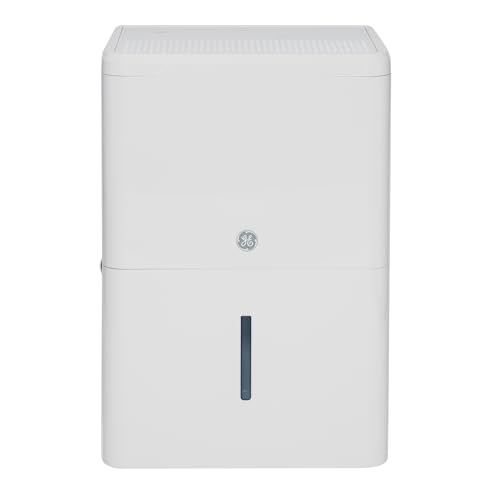
A dehumidifier pulls water from the air, which lowers the dew point and therefore the temperature at which the glass fogs. It works best when moisture is the problem: a damp basement, a closed-up house with many occupants, a lot of indoor laundry drying, or a new build still releasing construction moisture. In those cases it addresses the cause.
Sizing. A small, tight bedroom or apartment of 500 to 800 sq ft with ordinary dampness is often served by a unit in the 20 to 35 pint class. A larger house or a damp lower level usually calls for 35 to 50 pints. These are editorial rules of thumb, not standards; the pint rating is the number to follow, not the square footage claim on a listing. Cool rooms reduce output well below the nameplate figure.
Settings. Set a target a few points below the ceiling from the second table for your coldest weather, and let it hold that. Do not chase 30 percent all winter in a house with leaky single pane windows. The unit will run constantly, dry the air uncomfortably and still not clear the glass.
Drawbacks. It adds noise and uses electricity: at an assumed 500 W for 10 hours a day and 17 cents per kWh, running costs are around 26 dollars a month. Compressor models lose efficiency in cool rooms, and in winter the heat they release is a small bonus rather than a cost. They also move nothing out of the house if the moisture source is an open dryer vent, so fix sources before you buy capacity. If you do decide to buy, size on the pint rating and plan the drain before you choose a model.
Fix two: ventilation, the cheaper first move
Ventilation swaps humid indoor air for outdoor air that is, in winter, much drier in absolute terms even if it feels damp. Cold air at 20 degrees and 80 percent relative humidity holds far less water than 70 degree room air at 40 percent. Bring it indoors and warm it, and its relative humidity falls sharply.
Use the fans you have. Run the bathroom fan during a shower and for 15 to 20 minutes afterward. Use the kitchen hood while cooking, particularly with gas. Check that the ducts actually vent outdoors and not into the attic. A fan that vents into the attic only moves the problem upstairs.
Open windows briefly. Ten minutes with a couple of windows open on opposite sides of the house resets the air without cooling the walls and furniture much. Leaving a window cracked all day in winter wastes heat and is rarely the best trade.
Trickle vents and slots. Many windows have small vents in the frame. Leaving them open provides a steady small air exchange. In a tight house, this can be the difference between a clear morning and fog.
Mechanical ventilation. Homes that are very tight may benefit from a heat recovery ventilator or energy recovery ventilator, which exchanges air while saving most of the heat. This is a larger project, usually one for a contractor, but if every winter morning shows fog and you have already fixed the sources, it is the structural answer.
Ventilation costs heat, a dehumidifier costs electricity, and the better choice depends on your climate and your energy prices. In cold climates, ventilation is usually the first fix because the incoming air is so dry. In humid, mild climates, outdoor air can be wetter than the indoor air, and a dehumidifier or air conditioning does more.
Fix three: warming the glass with insulation and air movement
If the dew point is reasonable and the glass is simply too cold, raising the glass temperature is the real remedy. Several options exist at different budgets.
Weatherstripping and caulk. Cold air leaking around the sash chills the glass edges and the frame. Sealing the gaps takes an afternoon and a few dollars, and can stop edge-only fog.
Interior window film or insulating kits. A clear plastic film stretched over the frame traps a layer of still air and raises the inside surface temperature. It is cheap and temporary, and works best on single pane windows.
Storm windows. Interior or exterior storm panels add a second layer to a single pane or old double pane window and raise the surface temperature substantially. They are a classic fix for old houses.
Replacement windows. A low-E double or triple pane unit raises the center-glass temperature by 7 to 10 degrees or more in our table. It is the most expensive route and the one with the longest payback, so choose it for the other benefits, with condensation relief as a bonus.
Air movement. Still air near glass cools further and holds moisture against it. A ceiling fan on low, a heat register under the window, and leaving blinds and curtains open during the day keep air moving across the surface. Heavy curtains that hang to the sill and are drawn at night trap cold air against the glass and are a common reason a window fogs in a room that otherwise stays clear.
One caution: insulated shades and curtains improve comfort but make the glass colder, since they stop room heat from reaching it. If you use them, make sure the room’s humidity is low enough for the colder glass.
Choosing the fix: match the symptom to the cause
| What you see | Most likely cause | First fix | Dehumidifier useful? |
|---|---|---|---|
| Fog on all windows after showers or cooking | Short moisture spikes | Run bath and kitchen fans longer | Rarely |
| Fog in bedrooms every morning | Occupants breathing, little fresh air, cold glass | Trickle vents, door gap, open blinds | Sometimes, a small unit |
| Fog at the bottom corners only | Cold glass edges, air leaks | Seal the frame, add film or storm panels | No |
| Fog on every window all winter, humidity above 55 percent | Too much moisture in the whole house | Find sources, lower humidifier setting | Yes |
| Damp basement plus fogging upstairs | Basement moisture rising | Fix drainage, ground cover; dry the basement | Yes, in the basement |
| Fog only on single pane windows | Glass too cold | Storm panels, film, window replacement | Only to lower the load |
| Moisture between the panes | Failed seal | Repair or replace the glass unit | No |
If you are unsure, start at the top and move down. Cost and effort rise as you go: fans are free, a dehumidifier costs money and power, film costs little, and new windows cost a lot. Do the free and cheap steps first, and watch the hygrometer for a week before committing to bigger purchases.
When you do run a dehumidifier for window fog, put it where the humid air is, not next to the window. A unit placed in the middle of the room or the area with the highest reading works on the air that causes the problem. And keep the doors to that area open, or the machine will dry one room while the others keep their moisture.
Warning signs that this is not ordinary condensation
A little fog that clears an hour after sunrise is a signal, not a defect. Some signs point to something more serious, and a dehumidifier will not solve them.
- Water or fog between the panes. The sealed unit has failed. Moisture inside the sealed gap cannot be dried from the room. Ask a window company about re-glazing or replacing the unit.
- Black or green spots on caulk, sills or the wall below the window. This is mold and means the area stays wet for long periods. Clean it, lower the humidity and fix the cause. Persistent growth or a musty smell needs a closer look.
- Soft or stained wood on the sill and trim. Repeated wetting can rot wood. Check for a leak above the window or a failed flashing before blaming condensation.
- Frost or ice on the inside of the glass. This means the glass surface is below freezing, typically single pane in a hard freeze. It is a sign to improve the glass, not just the humidity.
- Water on only one window, always. Look for a draft or a leak at that window.
- High humidity with no clear source. A reading of 60 percent or more through the winter without cooking or showering points to a damp basement, crawl space or an unvented dryer. A moisture meter or a professional inspection is worth it.
If the fog is ordinary, the sequence is simple: measure the humidity, find the sources, ventilate where the moisture is made, warm the glass if it is too cold, and add a dehumidifier when the house is simply holding too much water. Adjust one thing at a time so you can see what worked.
Related guides
Frequently asked questions
Will a dehumidifier stop condensation on my windows?
It will if the cause is indoor humidity that is high for the outdoor temperature, because it lowers the dew point below the glass temperature. It will not warm the glass. If single pane or poorly sealed windows get very cold, you may need indoor humidity in the 20s or 30s to keep them clear, and that is when ventilation, storm panels or window film are the better fix.
What humidity level stops windows from fogging?
It depends on the outdoor temperature and the window type. As an estimate, with 70 degrees inside and double-pane glass, about 54 percent works with 20 degrees outside, roughly 41 percent at 0 degrees, and about 36 percent at minus 10. Single pane glass needs far lower numbers. Use a hygrometer and lower the setting only as far as the weather requires.
Is condensation on the inside of windows harmful?
Occasional morning fog that clears within an hour is common in cold weather and mostly a signal. Persistent water, dripping onto sills, black spots on caulk or sealant, peeling paint or softened wood are different, because repeated wetting feeds mold and can damage materials. If moisture shows up between the panes, the seal has failed and no dehumidifier will correct it.
Should I open a window to reduce condensation?
Briefly, yes, in some cases. Cold outdoor air holds little moisture, so swapping stale indoor air for it can lower indoor humidity quickly, but a long open window wastes heat. A short burst of ten minutes with the interior doors open is the usual compromise. Running bathroom and kitchen fans during and after use is more targeted and costs less heat.
Do curtains and blinds make window condensation worse?
They can. Closed curtains and shades block room air from circulating across the glass and keep heat from reaching it, so the glass gets colder and its surface is more likely to fall below the dew point. Opening blinds in the morning, leaving a gap at the top and bottom of curtains, or using a ceiling fan to move air across the glass can help.