Key takeaways
- PSI-to-GPM Ratio: PSI pushes grime loose; GPM rinses it away. For detailing, a balanced ratio between 1800–3400 PSI paired with 1.7–2.2 GPM gives you enough force to strip wax and embedded dirt without risking paint damage on delicate surfaces.
- Trigger Ergonomics and Wand Weight: A light wand with a well-padded trigger reduces wrist strain during long sessions. Models with steel wands resist cracking far better than plastic alternatives, but demand better weight distribution from the manufacturer.
- Hose Management: Stiff, short hoses create trip hazards and force awkward body positions. Retractable or wall-mounted systems dramatically cut setup time and keep the workspace safe.
- Motor Construction: Brushless motors run cooler and outlast brushed designs by thousands of hours. If you detail frequently, this single specification may justify a higher upfront cost.
- Nozzle Range and Foam Compatibility: A wider nozzle set—from zero-degree pinpoint to 25-degree fan—means you can dial pressure for each surface. A quality foam cannon included in the box saves a separate purchase and ensures chemical compatibility.
What's inside
Buying a pressure washer for detailing often feels like decoding a spec sheet that wasn’t written for you. Advertisers lean hard on PSI and GPM numbers, but those figures say nothing about how the hose drags across your driveway, how quickly your trigger finger cramps, or whether the motor will still spin reliably after two summers of weekend use. For anyone who cares about their furniture, vehicles, and their own joints, those overlooked details are the ones that matter most.
This roundup puts ergonomic design and structural durability at the center of the conversation. We evaluated six electric pressure washers on how they handle extended use, how well their components hold up over time, and whether their features genuinely serve the needs of someone who details cars, patio furniture, and outdoor surfaces on a regular basis.
As an Amazon Associate we earn from qualifying purchases.


🛒 Best Price Today on Amazon
Prime members get fast, free shipping on everything above, plus member-only deals. New members get a 30-day free trial — cancel anytime.
How to Choose a Pressure Washer For Detailing (2026)
- PSI-to-GPM Ratio: PSI pushes grime loose; GPM rinses it away. For detailing, a balanced ratio between 1800–3400 PSI paired with 1.7–2.2 GPM gives you enough force to strip wax and embedded dirt without risking paint damage on delicate surfaces.
- Trigger Ergonomics and Wand Weight: A light wand with a well-padded trigger reduces wrist strain during long sessions. Models with steel wands resist cracking far better than plastic alternatives, but demand better weight distribution from the manufacturer.
- Hose Management: Stiff, short hoses create trip hazards and force awkward body positions. Retractable or wall-mounted systems dramatically cut setup time and keep the workspace safe.
- Motor Construction: Brushless motors run cooler and outlast brushed designs by thousands of hours. If you detail frequently, this single specification may justify a higher upfront cost.
- Nozzle Range and Foam Compatibility: A wider nozzle set—from zero-degree pinpoint to 25-degree fan—means you can dial pressure for each surface. A quality foam cannon included in the box saves a separate purchase and ensures chemical compatibility.
The Best Pressure Washer For Detailing (2026)s Reviewed
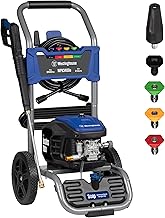
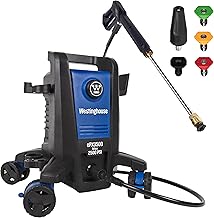
Westinghouse WPX3400e Electric Pressure Washer
At 3400 max PSI with a brushless motor, this unit delivers the highest sustained output in the lineup while maintaining a surprisingly comfortable grip angle on the spray gun. The onboard soap tank and five-nozzle set make it a genuinely complete detailing station, and the brushless motor’s reduced vibration means your hands feel noticeably less fatigued after a full wash cycle. Build quality is solid—this is the kind of machine that handles a full weekend of work without sounding like it’s begging for mercy.
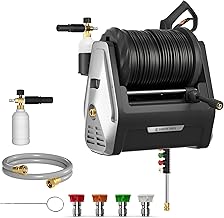
Giraffe Tools Wall Mounted Pressure Washer
The retractable 100-foot hose is the headline feature, and it earns that distinction. Mounted to a garage or workshop wall, the automatic rewind system eliminates the tangled-hose problem that plagues portable units and protects the hose’s inner lining from UV and abrasion damage over time. The 1800W motor provides adequate pressure for most detailing tasks, though the wall-mount design limits where you can take it. For anyone whose detailing happens primarily in one location, this is the most ergonomically thoughtful option available.
Westinghouse ePX3500 Electric Pressure Washer
Westinghouse built this model around anti-tipping technology, and it shows—the low center of gravity and stable footprint keep it upright on uneven surfaces where competitors would topple. The pro-style steel wand resists the warping and cracking that plastic alternatives develop after a few seasons, and at 2500 PSI it strikes a practical sweet spot for home detailing work where raw power matters less than consistency.
Hiclean Electric Pressure Washer 2100 PSI
Portability is this unit’s strongest card. The compact chassis tucks into a car trunk easily, making it ideal for mobile detailers or anyone who moves between vehicles and furniture without wanting to drag a heavy machine around the yard. Don’t mistake its size for weakness—the included turbo and fan nozzles cover a wide range of tasks, and the foam cannon delivers the thick blanket of soap that proper detailing requires.
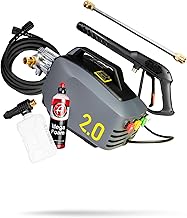
Adam’s Polishes Active Pressure Washer 2.0
Designed by a detailing brand rather than a generalist power-washer company, this unit is purpose-built for automotive and surface care. The 1800 PSI output is deliberately conservative to protect paint and clear coats, and the bundled Mega Foam soap produces a dense, clinging lather that hangs on vertical panels long enough to do real cleaning work. Lightweight and compact, it’s the most detail-specific machine in this group.
Frequently Asked Questions
What PSI is safe for car paint?
Most automotive paint tolerates up to 1900–2000 PSI at a safe distance of 12–18 inches without risk. Anything above that threshold, especially with a zero-degree nozzle, can chip clear coat or force water beneath panel seams. Every model in this roundup offers lower-pressure nozzle options that keep you within a safe range for vehicle surfaces.
Can I use a pressure washer on outdoor furniture?
Yes, with the right nozzle. A 25-degree fan tip combined with 1500–2000 PSI cleans wicker, teak, aluminum, and resin furniture effectively without gouging finishes or splintering wood. Always test an inconspicuous spot first, and keep zero-degree nozzles away from any furniture surface.
Electric vs. gas—does it matter for detailing?
Electric pressure washers win on three fronts that matter for detailing: no exhaust fumes near the surfaces you’re cleaning, steadier pressure output without the surge-and-dip pattern of gas engines, and virtually no mechanical maintenance beyond occasional nozzle swaps. Unless you need portability far from a power outlet, electric is the stronger choice.
How often should pressure washer nozzles be replaced?
Nozzle tips wear gradually—eroded orifices distort your spray pattern and reduce cleaning efficiency. Inspect them every 50–60 hours of use or at least once per detailing season. Most manufacturers sell replacement sets for under ten dollars, and swapping a nozzle takes under thirty seconds on quick-connect models.
Final Thoughts
For the detailer who wants the most power and the longest service life, the Westinghouse WPX3400e stands out with its brushless motor and robust build. If your workspace is fixed and you value ergonomic efficiency above all else, the Giraffe Tools wall-mounted system is hard to beat. And for anyone who needs a lightweight, purpose-built detailing tool they can toss in the trunk, the Adam’s Polishes Active Pressure Washer 2.0 nails the brief with surgical precision.