Key takeaways
- PSI Range: For paintwork, 1,500–2,000 PSI at the nozzle tip is the sweet spot. Anything above 3,000 PSI demands careful distance management to avoid etching clear coat, so verify the machine’s actual tested output rather than trusting the max rating on the box.
- GPM Flow Rate: Gallons per minute determine how fast you rinse. A minimum of 1.4 GPM prevents soap from drying on panels, while 1.7–2.0 GPM meaningfully cuts total wash time on larger vehicles without increasing the risk of paint damage.
- Motor Build & Pump Type: Brushless induction motors run cooler, quieter, and outlast brushed designs by years. A metal-bodied axial pump with brass fittings resists mineral deposits and replacement headaches compared to plastic-clad alternatives.
- Ergonomic Contact Points: Evaluate the spray-gun grip diameter, trigger pull weight, and wand length. A pro-style steel wand distributes leverage across the forearm rather than concentrating stress at the wrist, which matters enormously during a full exterior detail.
- Hose Quality & Length: A 25–33 ft hose with low memory coils around the unit without kinking. Reinforced rubber outlasts PVC by seasons, and an onboard reel eliminates the trip hazard of a tangled line pooling in your driveway.
What's inside
Shopping for a pressure washer built for automotive detailing can feel like trying to wash a car blindfolded. Buyers wade through inflated PSI claims, flimsy plastic housings that crack by the second season, and wands that torque their wrists into knots after fifteen minutes of roof-panel work. The wrong choice doesn’t just waste money — it risks clear-coat damage from excessive pressure or chronic arm fatigue that turns a satisfying weekend detail into a punishment.
This guide cuts through the noise with an ergonomics-and-durability lens. Every recommendation below was evaluated for handle balance, hose memory, pump longevity, motor construction, and spray-gun comfort — the traits that separate a tool you enjoy reaching for from one that collects dust. Here are the five best electric pressure washers for automotive detailing in 2026.
As an Amazon Associate we earn from qualifying purchases.


🛒 Best Price Today on Amazon
Prime members get fast, free shipping on everything above, plus member-only deals. New members get a 30-day free trial — cancel anytime.
How to Choose a Pressure Washer For Automotive Detailing (2026)
- PSI Range: For paintwork, 1,500–2,000 PSI at the nozzle tip is the sweet spot. Anything above 3,000 PSI demands careful distance management to avoid etching clear coat, so verify the machine’s actual tested output rather than trusting the max rating on the box.
- GPM Flow Rate: Gallons per minute determine how fast you rinse. A minimum of 1.4 GPM prevents soap from drying on panels, while 1.7–2.0 GPM meaningfully cuts total wash time on larger vehicles without increasing the risk of paint damage.
- Motor Build & Pump Type: Brushless induction motors run cooler, quieter, and outlast brushed designs by years. A metal-bodied axial pump with brass fittings resists mineral deposits and replacement headaches compared to plastic-clad alternatives.
- Ergonomic Contact Points: Evaluate the spray-gun grip diameter, trigger pull weight, and wand length. A pro-style steel wand distributes leverage across the forearm rather than concentrating stress at the wrist, which matters enormously during a full exterior detail.
- Hose Quality & Length: A 25–33 ft hose with low memory coils around the unit without kinking. Reinforced rubber outlasts PVC by seasons, and an onboard reel eliminates the trip hazard of a tangled line pooling in your driveway.
The Best Pressure Washers For Automotive Detailing (2026) Reviewed
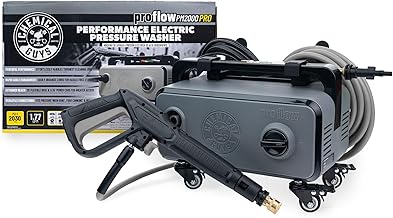
Chemical Guys PM2000 PRO
This 2,030 PSI / 1.77 GPM unit hits the detailing sweet spot with a 14.5-amp motor that draws standard household current. The gun grip is noticeably lighter than competitors, and the 25 ft hose keeps coils manageable. A genuinely well-balanced machine for weekend detailers who want clean results without babysitting distance from the panel.
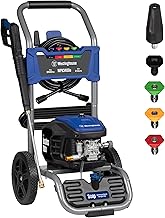
Westinghouse WPX3400e
The brushless motor inside the WPX3400e is the durability story here — it runs cooler and should outlast brushed alternatives by a wide margin. At 3,400 max PSI you must stand back for paintwork, but the included 5-nozzle set gives you the low-pressure tip needed for safe rinsing. Onboard soap tank is a practical touch that eliminates a separate bucket-and-cannon step.
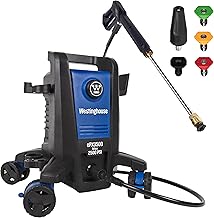
Westinghouse ePX3500
Anti-tipping technology addresses one of the most overlooked frustrations: top-heavy units falling over when you yank the hose. The pro-style steel wand is genuinely comfortable over long sessions, and at 2,500 max PSI the machine offers headroom for driveway cleaning while the lower-nozzle settings keep paint safe. A smart buy for households that share the washer across cars and home surfaces.
5000 PSI Power Washer (Bright Green)
This bright-green unit pairs four quick-connect nozzles with a foam cannon, giving you a full soap-and-rinse toolkit out of the box. The 5,000 PSI claim is aspirational at the pump — expect real-world numbers closer to 3,000 — so use the widest-angle nozzle and keep distance for automotive work. Best suited for buyers who also tackle fences and patios alongside their vehicles.
5000 PSI Power Washer with Reel (Blue)
The standout feature is the built-in 33 ft hose reel, which makes storage genuinely effortless and prevents the kinking that degrades cheaper hoses over time. Like its green counterpart, treat the 5,000 PSI rating as a maximum rather than a working figure for paintwork. The included soap bottle and four nozzle tips cover the essentials, and the longer hose means fewer mid-wash repositionings around the vehicle.
Frequently Asked Questions
Can I use a high-PSI pressure washer on car paint?
You can, but you must manage the distance and nozzle carefully. Use a 40-degree or 25-degree tip at 12–18 inches from the surface. Anything above 2,500 PSI demands extra caution, as concentrated spray can strip wax, dull clear coat, or force water into trim seals.
Do I need a foam cannon for automotive detailing?
A foam cannon significantly improves lubrication during the contact-wash stage, reducing the chance of swirl marks. Most units here include a soap bottle or cannon attachment, which is adequate for home use. Professional-grade foam cannons mount on the wand and generate thicker suds for heavily soiled vehicles.
How important is the hose length for car washing?
A 25 ft hose covers sedans and compacts without repositioning the unit. If you wash SUVs or trucks, look for 33 ft or consider a lightweight extension. Low-memory hoses coil neatly and resist the permanent kinks that reduce flow over time.
Brushless or brushed motor — which lasts longer?
Brushless induction motors last significantly longer because they generate less heat and have no carbon brushes to wear down. They also run quieter, which matters if you detail early mornings or in shared driveways. The trade-off is higher upfront cost, but the longevity typically justifies it.
Final Thoughts
For pure automotive detailing comfort, the Chemical Guys PM2000 PRO offers the best weight-to-performance ratio and sits right in the safe PSI window for paint. If you want a long-lasting motor you can hand down, the Westinghouse WPX3400e’s brushless build is hard to beat. And for buyers who share the washer between cars and home projects, the Westinghouse ePX3500 delivers versatile power with a genuinely stable, anti-tip design.