Our Top Picks
 Acer 23.8in FHD 1920x1080 IPS 120Hz Office Monitor23.8-inch4.53 x 21.21 x 16.7 inchesCheck on Amazon
Best Monitors for Office Work: Clear, Comfortable Screens
The best monitors for office work are usually 27-inch, 1440p displays for a comfortable balance of readable text, workspace and desk fit; choose a 24-inch 1080p model for a tight budget or small desk, and a 32-inch 4K screen when detailed documents or several windows need more room.
Before choosing, check the space the monitor will occupy, how far you sit from it and which devices you need to connect. A larger screen is not automatically more comfortable: resolution, stand adjustment and viewing distance matter just as much.

Lenovo L24-4e - Office Monitor - 23.8" FHD IPS Display - 100Hz Refresh Rate - 4 ms MPRT - 99% sRGB - Raven Black - Tilt Stand
Chosen because it specifies Office Monitor and 23.8" FHD IPS Display.
View on Amazon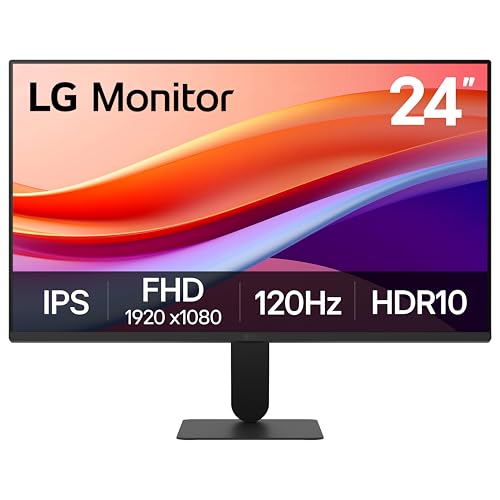
LG 24U411A-B 24-inch Full HD (1920 x 1080) IPS Computer Monitor, 120Hz, HDR10, Reader Mode, Flicker Safe, HDMI, Slim Stand Base, Black
Chosen because it specifies 120Hz and HDR10.
View on Amazon
Samsung 24” (S40GD) Borderless Business Monitor with IPS Panel
Picked as a relevant option in this category.
View on AmazonAcer 23.8in FHD 1920x1080 IPS 120Hz Office Monitor KB242Y G0bi
Picked as a relevant option in this category.
View on AmazonChoose by desk, workload and budget
| Work setup | Good starting point | Why it fits | Typical market range |
|---|---|---|---|
| Small desk, email and spreadsheets | 24-inch, 1080p, height-adjustable | Compact footprint; adequate for one main window and everyday office apps | Usually $100–$250 |
| General office work, one screen | 27-inch, 1440p, IPS | Sharper text and more usable workspace than 1080p at the same screen size | Usually $200–$450 |
| Large documents or side-by-side windows | 32-inch, 4K, IPS | Fine detail and room for multiple windows, with scaling set to keep text readable | Usually $350–$800 |
| Laptop-first desk with frequent docking | 27-inch, 1440p or 4K, USB-C with power delivery | One compatible cable can carry video and data while charging the laptop | Usually $300–$700 |
These are broad 2026 market ranges, not quotes for a particular model. Features such as a webcam, built-in USB hub, higher power delivery or a fully adjustable stand can move a display into a higher price bracket.
Screen size and resolution: what changes at your desk?
24 inches: A practical choice when desk depth is limited or you sit close to the screen. At 1080p, text and icons are familiar in size without needing much scaling. It can feel cramped for comparing long spreadsheets or keeping two full documents open side by side.
27 inches: The most versatile size for a single office monitor. At 1440p, it provides noticeably more workspace than 1080p without making interface elements as tiny as they can appear on an unscaled 4K screen. If you use a 27-inch 4K display, adjust operating-system scaling to suit your eyesight and working distance.
32 inches: Useful for detailed design files, large spreadsheets and several visible windows. It needs more desk depth and lateral room, and moving your eyes across a wide screen may be less convenient than using two smaller displays. A 4K resolution is a sensible match for this size when fine text and detail matter.
For ordinary documents, a fast gaming refresh rate is rarely the first priority. Look instead for a stable image, flicker-free operation where specified, and a matte screen if reflections are a problem. An IPS panel is a common office choice because its viewing angles help keep the image consistent when you shift position or share the display.
Measure the desk before buying
Screen size is measured diagonally, not across the desk. As a rough fit estimate, a 16:9 display’s panel is about 21 inches wide at 24 inches, 24 inches wide at 27 inches and 28 inches wide at 32 inches. The stand can add substantial width and depth, so check the manufacturer’s full dimensions rather than relying on panel size alone.
| Screen size and format | Approximate panel width | Suggested viewing distance | Practical desk-depth check |
|---|---|---|---|
| 24-inch, 16:9 | 21 in | 20–30 in | Allow about 24–30 in for monitor placement and comfortable viewing |
| 27-inch, 16:9 | 24 in | 22–36 in | About 26–32 in of desk depth is a useful target |
| 32-inch, 16:9 | 28 in | 26–40 in | About 28–36 in of depth helps avoid sitting too close |
These are planning estimates, not strict ergonomic limits. A deep monitor stand, keyboard, paperwork and a desk lamp all compete for the same surface. On a shallow desk, a clamp-on monitor arm can free space, but first confirm that the desk edge can support the clamp and that the monitor has a compatible VESA mounting pattern. Leave roughly 2–4 inches behind a stand-mounted monitor for cables and airflow; an arm may need more clearance to move freely.
Ergonomics: the stand is part of the purchase
Look for a stand that offers height adjustment and tilt at minimum. Swivel helps when you share a screen, while pivot can be useful for long documents or code. A fixed stand may force you to raise the monitor on books or stackable risers, and then add a separate keyboard and mouse if using a laptop.
Set the screen so you can look ahead with your neck relaxed; the top edge is often near eye level, though people and workstations differ. Keep the monitor directly in front of you, with the display roughly an arm’s length away as a starting point. If you lean forward to read, try increasing text scaling before moving the screen closer.
Connectivity: avoid the wrong-cable surprise
- HDMI: A convenient connection for most desktops and laptops. Check that the port and cable support the monitor’s chosen resolution and refresh rate.
- DisplayPort: Common on desktop computers and useful for high-resolution displays. Verify that your computer has the matching output or an appropriate adapter.
- USB-C: Best for a compatible laptop setup when the display supports video over USB-C and enough charging power for your computer. USB-C connectors do not all support video or laptop charging.
- USB hub: Handy for a keyboard, mouse or webcam, but the monitor must be connected upstream to the computer for those ports to work.
- Built-in speakers: Convenient for calls and alerts, though separate speakers or a headset usually provide better sound.
For a single-cable laptop desk, confirm three things in the specifications: USB-C video support, power delivery in watts, and whether the monitor’s USB ports remain usable through that connection. If you regularly plug in several peripherals, a monitor hub or a separate docking station may reduce cable clutter.
Match the monitor to your situation
| Your situation | Best fit | Trade-off to expect |
|---|---|---|
| Small apartment or shared desk | 24-inch 1080p, or a compact 27-inch 1440p with a narrow stand | Less room for side-by-side windows than a 32-inch display |
| Spreadsheet-heavy work | 27-inch 1440p or 32-inch 4K | The larger option needs more desk depth and careful text scaling |
| Frequent video calls | 27-inch display with USB hub; add a separate webcam if needed | Built-in speakers or cameras may be basic; check placement and connection needs |
| Neck or shoulder discomfort | Height-adjustable stand or compatible VESA arm | An arm adds cost and requires a suitable desk edge and mounting clearance |
| Laptop docked and undocked daily | USB-C monitor with video and adequate power delivery | One-cable convenience depends on laptop compatibility and charging needs |
What to verify before checkout
- Measure available width and depth, including space for the stand, keyboard and papers.
- Check the monitor’s outer dimensions, stand adjustment range, weight and VESA compatibility if you plan to use an arm.
- Match resolution to screen size and the amount of text or detail you work with.
- Confirm your computer’s video ports, USB-C capabilities and any required adapters.
- Check the return policy and dead-pixel or warranty terms, especially for a display you will use all day.
For most everyday office setups, start with a 27-inch 1440p IPS monitor and a height-adjustable stand. Move down to 24 inches when workspace is scarce, or up to 32-inch 4K when detail and multiple windows justify the extra desk area. That approach prioritizes usable space and comfort over buying the biggest screen available.