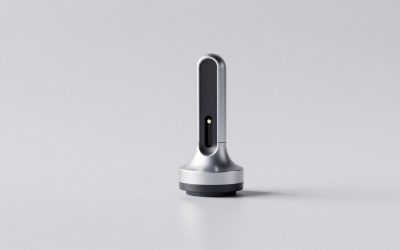
Our Top Picks
 Labstandard Professional Wireless Lavalier Lapel Microphone for iPhone4.5 x 3.3 x 0.7 inches0.1 PoundsCheck on Amazon
 Hollyland Lark M2 Wireless Microphone for iPhone15/16/17&AndroidUSB Type-C Version0.4 PoundsCheck on Amazon
The best microphones for video depend on where you record: choose a shotgun microphone for a camera, a wireless lavalier system for moving subjects, a compact microphone for a phone, or a dynamic USB/XLR microphone for a noisy home studio.
Quick picks by recording situation
| Situation | Best microphone type | Useful choice | Why it fits |
|---|---|---|---|
| Camera on a tripod, subject within 3–6 feet | Short shotgun | RØDE VideoMic NTG or Sennheiser MKE 200 | Directional pickup without putting a microphone in the frame |
| Presenter walking or filming outdoors | Wireless lavalier | DJI Mic 2 or a comparable two-transmitter system | Consistent voice level while the subject moves |
| Phone-based videos and interviews | USB-C or Lightning-compatible compact microphone | RØDE VideoMic Me-C or a phone-ready wireless system | Small, powered by the phone, and quick to set up |
| Desk-based tutorials, podcasts, and video calls | Dynamic USB/XLR microphone | Shure MV7+ or Samson Q2U | Rejects more room sound than a typical condenser microphone |
| Quiet home studio with controlled acoustics | Large-diaphragm condenser | Audio-Technica AT2020 | Detailed, open sound when the room is quiet |
Microphone types: which one solves your problem?
Shotgun microphones for cameras
A shotgun microphone uses a narrow interference-tube design to favor sound arriving from the front. It is a practical choice for a camera mounted above or below the subject, especially when the microphone can remain just outside the frame. A short shotgun such as the RØDE VideoMic NTG offers more useful reach than a built-in camera microphone, while the compact Sennheiser MKE 200 is easier to carry.
Labstandard Professional Wireless Lavalier Lapel Microphone for iPhone, iPad, mini Video Recording Mic forInterview Video Podcast Vlog YouTube&Livestream, Noise Reduction, Plug &Play
Chosen because it specifies iPad and Noise Reduction.
View on AmazonHollyland Lark M2 Wireless Microphone for iPhone15/16/17&Android, USB C Mini Lapel Microphone Wireless, 1000ft Range, Hi-Fi Audio, Noise Cancellation, 30H Battery for Video Recording, Streaming
Chosen because it specifies USB C Mini Lapel Microphone Wireless and 1000ft Range.
View on Amazon
MAYBESTA Wireless Mini Microphone for iPhone, Android Phone - 2 Pack Lavalier Lapel Mic for Audio Video Recording - Clip on Content Creator Microphones for YouTube Tiktok Podcast Vlogging
Chosen because it specifies Android Phone and 2 Pack Lavalier Lapel Mic for Audio Video Recording.
View on Amazon
wedaniya Wireless Mini Microphone for iPhone, Android, 2 Pack Clip on Mini Mic with USB-C & Lightning, 2-in-1 Noise Reduction Lavalier Lapel Mic for Video Recording, Podcast, Vlogging, YouTube
Chosen because it specifies Android and 2 Pack Clip on Mini Mic with USB-C & Lightning.
View on AmazonDistance still matters. A shotgun mounted on a camera six feet away cannot produce the same clarity as a microphone positioned two feet from the speaker. It also performs poorly when aimed at a reflective wall or ceiling. For seated videos, place the camera 4–8 feet away and keep the microphone pointed at the speaker’s chest or mouth rather than at the furniture or wall behind them.
Lavalier and wireless microphones
A lavalier clips near the collar and keeps the microphone close to the mouth, so it usually delivers more consistent speech than a camera-mounted microphone. Wireless systems such as DJI Mic 2 include a transmitter worn by the speaker and a receiver connected to the camera or phone. Two-transmitter kits are useful for interviews.
Wireless systems add batteries, pairing, charging, and radio-interference considerations. Check whether the receiver includes the correct USB-C, Lightning, or camera cable. For important recordings, use the transmitter’s internal backup recording when available, then synchronize or transfer the file later.
USB and XLR desk microphones
Dynamic microphones are often the safer choice for a home office, kitchen, or living room because they pick up less distant room sound. The Shure MV7+ provides USB and XLR outputs, allowing a beginner to start without an audio interface and upgrade later. The Samson Q2U follows the same flexible USB/XLR idea at a lower general market price.
Condenser microphones such as the Audio-Technica AT2020 capture more detail and sensitivity, but they also hear keyboard noise, air conditioners, hard floors, and nearby conversations more readily. They work best in a quiet room with soft furnishings and the microphone positioned close to the speaker.
Pickup patterns and room-noise performance
| Pickup pattern | Best use | Noise behavior | Placement guidance |
|---|---|---|---|
| Cardioid | One person at a desk | Rejects much of the sound behind the microphone | Point the rear toward a computer fan or noisy doorway |
| Supercardioid or shotgun | Camera-mounted speech | Strong front focus, but can react to sound from the rear | Aim accurately and avoid placing reflective surfaces directly behind the speaker |
| Omnidirectional | Clips and small interview microphones | Natural but captures sound from all directions | Keep it close to the speaker and away from rubbing fabric |
| Figure-eight | Two-person face-to-face recording | Rejects sound from the sides but captures front and rear | Usually better for controlled studio work than casual video |
For a 10-by-12-foot room with hard walls, a close-positioned dynamic microphone is usually easier to manage than a sensitive condenser. Place a rug beneath the desk, curtains over windows, or a fabric sofa along one wall to reduce reflections. A microphone cannot remove echo after it has been recorded; room treatment and distance are more important than a high-resolution specification.
Connection options: camera, phone, or computer
- 3.5 mm TRS: Common on cameras and some compact microphones. Camera inputs generally expect TRS, while phones and headsets often use TRRS, so the wrong adapter can produce silence or one-channel audio.
- USB-C: The most convenient connection for current phones, tablets, and computers. Confirm that the phone supports external USB audio and use a powered hub if the microphone draws more power than the phone can provide.
- Lightning: Required by some older iPhones. A USB-C microphone is not automatically compatible with a Lightning device without an appropriate certified adapter.
- XLR: The professional connection used with audio interfaces and mixers. It is reliable and upgradeable, but an XLR microphone cannot normally plug directly into a computer.
- Wireless digital: Convenient for presenters and interviews. It reduces cable clutter but requires charging and a plan for backup audio.
Cable length and placement numbers that matter
| Setup | Recommended cable length | Practical placement |
|---|---|---|
| Microphone on a desk | 6–10 feet | Leave about 12–18 inches between the microphone and the speaker |
| Camera on a tripod | 10–16 feet | Keep slack behind the tripod; avoid a cable crossing the walking path |
| Boom arm beside a desk | 6–10 feet | Position the capsule 4–8 inches from the mouth, slightly off-axis |
| Floor stand or room interview | 15–25 feet | Route the cable along a wall or use a cable cover to prevent trips |
A cable that is too short pulls on the connector and limits camera placement. A cable that is excessively long creates loops that catch on chair casters. If your desk is 29–30 inches high, a compact stand may place the microphone too low; a boom arm or 6–12-inch desktop riser can bring it close without blocking the monitor.
Choosing around furniture and room layout
Microphone support should fit the furniture you already use. A clamp-on boom arm typically needs 2–3 inches of clear desk edge and may not work with a thick apron, glass top, or rounded edge. A desktop stand is more stable but consumes roughly 6–10 inches of desk depth. Leave at least 24 inches of clear space behind an office chair so a boom arm or cable does not strike the wall when the chair moves.
For renters, avoid permanent acoustic panels unless the lease allows them. A freestanding fabric screen, thick curtain, full bookcase, or upholstered chair can soften reflections without drilling. In a small apartment, prioritize a dynamic cardioid microphone and close placement over a large condenser with a wide, room-sensitive sound.
Buying decision matrix
| Your priority | Recommended specification | What to avoid |
|---|---|---|
| Noisy apartment or children and pets | Dynamic cardioid microphone, close working distance, headphone monitoring | Highly sensitive condenser placed across the room |
| Frequent travel | Compact camera shotgun or wireless kit under about 1 pound | Large stand, separate interface, and fragile exposed accessories |
| Phone filming | Native USB-C or Lightning connection and a short strain-relieved cable | Assuming a camera TRS cable will work directly with a phone |
| Two-person interviews | Two wireless transmitters or two microphones into a two-input interface | One centered microphone positioned too far from both speakers |
| Long-term home studio use | USB/XLR microphone, replaceable cable, shock mount, and headphone output | A USB-only model if you expect to add an interface later |
What to budget
Compact wired camera and phone microphones usually cost about $50–$150. Better camera shotguns generally fall around $150–$300. Wireless systems commonly range from $200–$450, depending on the number of transmitters and recording features. USB/XLR desk microphones are often $100–$300, while a condenser setup may require another $80–$250 for an interface, stand, pop filter, and cable.
Remember the complete setup: a microphone may need a stand, shock mount, windscreen, adapter, headphones, and a cable of suitable length. The best microphones for video are not necessarily the most expensive; they are the ones that place the capsule close to the voice, connect correctly to the recording device, and suit the noise and furniture constraints of the room.
Common questions
Is a shotgun microphone better than a lavalier?
Neither is universally better. A lavalier usually wins for consistent speech during movement, while a shotgun is less visible and works well for a stationary subject when it can be placed close enough.
Should I choose USB or XLR?
Choose USB for the simplest computer or phone workflow. Choose XLR if you already have an interface or want a modular system. A USB/XLR microphone provides the most flexibility for future upgrades.
Can a microphone fix echo?
No. Directional pickup and close placement can reduce the amount of room sound, but echo must be addressed with distance, rugs, curtains, upholstered furniture, or other acoustic treatment.