Our Top Picks
The best medium format cameras for studio shoots in 2026 are the Fujifilm GFX 100 II for all-around tethered workflow and autofocus, the Hasselblad X2D 100C for color-critical fashion and beauty work, and the Phase One XT / XF IQ4 150MP system for high-end commercial reproduction where maximum resolution justifies the investment.
What Makes a Medium Format System “Studio-Ready”
Studio work prioritizes different specs than location shooting. Sensor resolution matters for cropping and large prints, but tethering stability, flash sync behavior, and lens rendering at close distances matter more day-to-day. Evaluate these five criteria before choosing:

IUTD STUDIOS to Be Continued (TBC) Reusable 35mm Film Camera – Transparent Design, 28mm Wide Lens, Reloadable and Analog, Built-in Flash, Point and Shoot
Chosen because it specifies Transparent Design and 28mm Wide Lens.
View on Amazon
4K Digital Camera for Photography,75MP WiFi Vlogging Camera for YouTube, 3" 180° Flip Screen Point and Shoot Camera with 64GB SD Card, 2 Batteries, Compact Travel Camera for Beginners (Pink)
Chosen because it specifies 75MP WiFi Vlogging Camera for YouTube and 3" 180° Flip Screen Point and Shoot Camera with 64GB SD Card.
View on Amazon- Sensor resolution and file handling: 100MP is the current sweet spot for most studios. It delivers ~11,600 x 8,700 pixel files that allow tight crops for e-commerce while remaining manageable over Capture One or Lightroom tethering. 150MP sensors create 150-200MB RAW files that slow previews and require faster storage.
- Tethering support: Look for native USB-C 3.2 tethering, stable Capture One or Phocus support, and power delivery over USB-C so you can shoot all day without swapping batteries. Fujifilm and Phase One have the most reliable wired tethering; Hasselblad relies on Phocus and is stable but less universally supported in rental studios.
- Autofocus vs. manual focus workflow: Modern medium format autofocus is contrast or phase-detect hybrid but still slower than full-frame. For still life and product, manual focus with focus peaking is fine. For portrait and fashion with movement, eye-detection AF (Fujifilm GFX 100 II) reduces misses.
- Lens options and close-focus ability: Check minimum focusing distance and availability of 80mm, 110mm, and macro lenses. A system with a true 120mm macro that reaches 1:2 magnification saves you from diopters and extension tubes for jewelry or cosmetics.
- Studio workflow features: Leaf shutter vs. focal plane shutter determines flash sync speed. Leaf shutters (Hasselblad XCD, Phase One Blue Ring) sync to 1/1600s – 1/2000s, letting you kill ambient light and freeze fabric movement without HSS power loss. Focal plane shutters (Fujifilm GFX) sync at 1/125s, so you will rely on blackout curtains and lower ambient levels.
Studio Space and Furniture Fit: Measurements That Determine Your Setup
Medium format image quality is wasted if your shooting distance, table height, and clearance force you to use the wrong focal length or shoot at extreme angles. Use these real-world measurements to plan furniture around the camera, not the other way around.
| Shooting Situation | Minimum Room Size | Ideal Shooting Distance | Shooting Table / Desk Height | Clearance Needed Around Table | Furniture Weight Limit to Check |
|---|---|---|---|---|---|
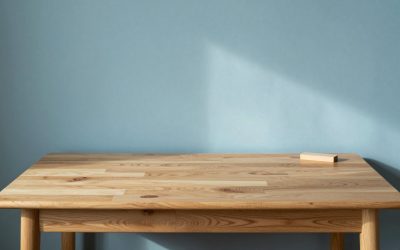
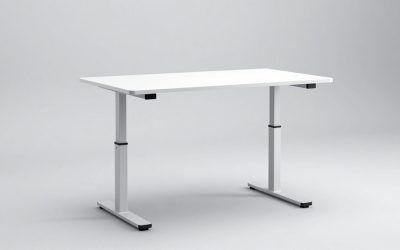
| Product / e-commerce on table (80-120mm lens) | 10 x 12 ft (120 sq ft) | 3.5 – 5 ft from subject | 30 – 32 inches (standard counter height) | 36 inches on camera side, 24 inches on sides | 150 – 250 lbs for solid wood shooting table |
| Full-length fashion (80mm on tripod) | 12 x 18 ft (216 sq ft) with 9 ft ceiling | 10 – 14 ft from subject to sensor | N/A – seamless paper or platform at floor level | 48 inches behind camera for tethered cart + operator | 300 lbs+ for backdrop support and apple boxes |
| Beauty / headshot (100-120mm lens) | 10 x 14 ft | 5 – 7 ft from subject | 42 – 44 inch standing makeup / tether desk | 30 inches for stool movement | 200 lbs for hydraulic stool + subject |
| Flat lay overhead (90mm tilt or 50mm) | 10 x 10 ft with 8.5 ft+ ceiling | 5 – 6 ft overhead (camera to table) | 28 – 30 inches (lower table reduces ladder height) | 40 inches for C-stand legs and boom arm swing | 100 – 150 lbs for folding table; check center sag |
If you are converting a home room, measure doorway width before buying furniture. Most interior doorways are 28-30 inches wide; assembled shooting tables with 60 x 36 inch tops will not turn the corner into a 10×12 ft bedroom. Choose knock-down tables that ship in a 62 x 38 x 6 inch flat box weighing 70-90 lbs, and verify the leg stretcher clears your light stand bases (typically 36 inches diameter per C-stand).
Furniture Material Trade-Offs for Studio Use
Your shooting surface and tethering furniture affect vibration, reflections, and durability under hot modeling lights.
| Material | Vibration / Stability | Heat & Light Durability | Weight & Moving Reality | Best For |
|---|---|---|---|---|
| Solid hardwood (maple, oak, 1.5-inch top) | Excellent – damps shutter and foot traffic vibration | No off-gassing, tolerates 150W continuous LED without warping | 85 – 120 lbs for 60-inch table; requires two people to move | Permanent product studio, heavy medium format + tethered laptop setup |
| Engineered wood / MDF with laminate | Good if 1-inch+ thickness with steel frame; sags at 48-inch span over time | Laminate reflects less than gloss; MDF swells with humidity – avoid unsealed edges in basement studios | 50 – 75 lbs; flat-pack, easier for renters | Budget e-commerce, renters who need to disassemble quarterly |
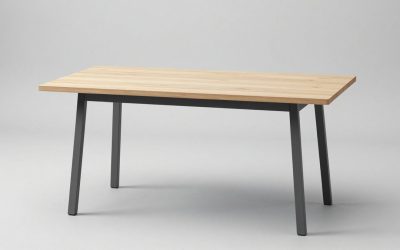
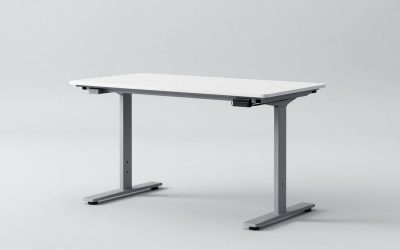
| Powder-coated steel frame + wood top | Very good – steel legs resist racking when you lean for overhead shots | Steel tolerates heat; powder coat resists scratches from clamps | 60 – 90 lbs; legs detach with 8 bolts | Hybrid photo/video studio with frequent reconfiguration |
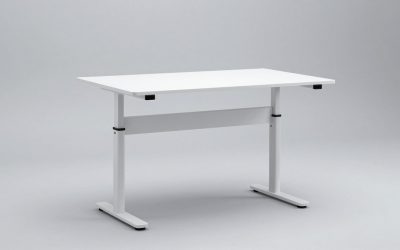
| Aluminum tether cart / standing desk | Lightweight can transmit vibration – add 20 lb sandbag to lower shelf | Aluminum stays cool under lights; height adjustable 28 – 46 inches | 35 – 55 lbs; rolls through 30-inch doorway | Tethered capture station that moves between sets |
For seat height, match your subject and camera height: a 26-inch counter stool puts a seated model at ~ 46 inches eye height, which aligns with a tripod-mounted GFX at 52 inches with the center column low, reducing the need to tilt and correct perspective in post. A standard 18-inch desk chair is too low for beauty and forces a downward angle that distorts features on 80mm+ lenses.
Best Picks by Studio Situation
1. Best All-Around for Tethered Product and Portrait: Fujifilm GFX 100 II
The GFX 100 II (102MP, usually $7,000–$8,000 for body) is the most flexible studio choice because of its combination of fast sensor readout, improved phase-detect AF with face/eye detection, and native Capture One tethering over USB-C. It shoots 16-bit RAW, offers focus bracketing up to 999 frames for deep product stacks, and has a broad, relatively affordable lens line: GF 80mm f/1.7 for shallow depth beauty, GF 120mm f/4 Macro for 1:2 product, and GF 32-64mm for overhead sets.
Workflow note: The leaf-shutter limitation means you will work at 1/125s sync. In a home studio, control ambient with blackout curtains (0 EV ambient at ISO 100) rather than relying on HSS. Tethered power delivery lets you run all day on AC without battery interruptions, which matters for 300+ SKU e-commerce days.
2. Best for Color and Fashion: Hasselblad X2D 100C
The X2D 100C (100MP, usually $8,000–$8,500) uses Hasselblad Natural Colour Solution and 16-bit color depth that requires less grading for skin tones and fabrics. The XCD leaf shutter lenses sync to 1/2000s, so you can shoot wide open at f/2.5 on the XCD 90mm or f/2.5 on the XCD 55mm while still overpowering window light – ideal if your studio is also a living space without full blackout. Autofocus is accurate but slower than the GFX 100 II, so plan on single-point AF and re-composure for static poses.
Consider the furniture implication: Leaf-shutter sync lets you shoot near large windows without moving heavy blackout frames, saving 18-24 inches of wall clearance. Files are large but Phocus handles tethering cleanly; if your retoucher works only in Capture One, confirm compatibility before committing.
3. Best for Maximum Resolution and Reproduction: Phase One XF IQ4 150MP
The Phase One XF IQ4 150MP (151MP, usually $40,000–$50,000+ for body and back) remains the standard for art reproduction, luxury watch, and billboard campaigns where clients demand 150MP and frame averaging for color accuracy. The XF system with Schneider Kreuznach Blue Ring leaf shutter lenses syncs to 1/1600s and offers movements with the XT technical camera for perspective control – critical for furniture and interior catalog work where you must keep verticals straight without digital correction.
This system demands infrastructure: Dual card slots and 1TB+ tethered SSD storage, a studio desk that holds a workstation with 32GB+ RAM, and a 60-inch+ shooting table rated to 250 lbs to avoid vibration during electronic shutter exposures. It is overkill for social-first brands and requires a dedicated, climate-controlled space.
4. Budget-Conscious Entry to Medium Format Studio: Fujifilm GFX 100S or GFX 50S II
If you want medium format rendering without the flagship price, the GFX 100S (102MP, usually $5,000–$6,000) or GFX 50S II (51MP, usually $3,000–$4,000) share the same GF lens mount. The 100S uses the same sensor as older flagships but with slower readout and no removable EVF; the 50S II sacrifices cropping latitude but offers smaller 50MP files that process faster on mid-range laptops. Both tether via USB-C and sync at 1/125s. For a 10×12 ft home studio, the 50S II paired with GF 63mm f/2.8 and GF 120mm covers most tabletop needs while leaving budget for a solid steel-frame table and proper LED panels.
Decision Matrix: Match Your Constraints to the System
| Your Situation | Choose | Why |
|---|---|---|
| Small apartment (10×12 ft), kids/pets, need quick teardown | Fujifilm GFX 100S + folding 60×36-inch MDF table with steel frame | Lightest kit, compact lenses, table folds to 6-inch depth for closet storage; MDF tolerates occasional bumps better than solid wood for shared spaces |
| Renter who cannot install blackout or ceiling rails | Hasselblad X2D 100C with leaf shutter lenses | High sync speed kills window ambient without permanent modifications; 3.5 lb body is easy to carry to rental studio when needed |
| High-volume e-commerce (200+ products/week) on tether | Fujifilm GFX 100 II | Fastest AF and most stable Capture One tethering reduces reshoots; focus stacking automates depth of field |
| Furniture / interior catalog requiring straight lines | Phase One XT with tilt/shift or Fujifilm GFX with GF 30mm Tilt/Shift (if available) | Movements correct perspective in-camera, avoiding extreme crops that reduce resolution |
| Beauty and skin-tone critical fashion | Hasselblad X2D 100C or Phase One IQ4 with calibrated workflow | 16-bit color and HNCS or Frame Averaging produce cleaner gradients in skin – less post time |
Assembly, Moving, and Durability Realities
Medium format rewards stability, so plan furniture logistics before ordering gear. A 60-inch solid maple shooting table ships in two boxes totaling 90-120 lbs; the top alone is 65 lbs and needs a 32-inch doorway clearance on the diagonal to enter the room. Engineered wood tops under 0.75 inches will sag 1/8 – 1/4 inch over a year under a 15 lb medium format kit left centered, creating uneven focus planes for flat lays – choose a table with a center support leg or cross stretcher.
Light stands and booms wear floors first. Add felt pads rated to 150 lbs per leg and a 24 x 36 inch equipment mat under your tether cart to prevent caster dents in hardwood. For vibration, place the tripod on a different floor zone than the shooting table in wood-frame homes; footfalls within 6 ft transmit through laminate and soften 100MP files at 1/15s – 1/60s. If you must share the floor, use a 30 x 40 inch anti-vibration mat under the table (usually $80–$150).
Long-term, the items that wear first are adjustable desk gas springs (rated for ~10,000 cycles) and MDF edge banding near clamps. Inspect clamp points monthly; exposed MDF absorbs moisture from steamers and humidifiers, swelling irreversibly.
Workflow Checklist Before You Buy
- Measure your room and tape out the 36-inch camera-side and 48-inch tether-cart clearance. If you cannot hit the shooting distances in the table above, choose a wider lens (45-55mm equivalent) rather than backing through a wall.
- Confirm tethering software with your retoucher. If the studio computer is not calibrated and does not run Capture One Pro or Phocus, budget for software and a 27-inch 99% AdobeRGB monitor.
- Rent the body and one lens for a weekend product shoot. Test tethered stability for 200+ captures, flash sync behavior at your ceiling height, and file transfer speed to your drive.
- Allocate budget as system: body is 50-60% of cost; lenses, stable table/desk (usually $400–$900 for steel-frame), and lighting are the rest. A sharper lens on a stable 30-inch table outperforms a higher-resolution body on a wobbly surface.