Key takeaways
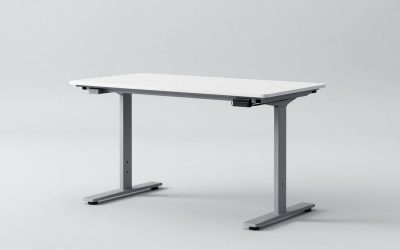
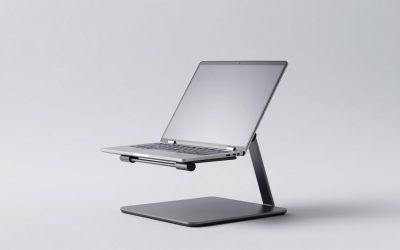
- Standard desk height is 29–30 inches. With a laptop flat on the desk, the top of the screen sits at about 35–37 inches from the floor, which forces neck flexion. Adding a riser that lifts the screen 5–6 inches brings eye level to 40–42 inches for a person 5’6″ to 5’10”.
- Allow 30 inches of clearance width per seated user and 36 inches of chair pull-back space behind the desk. In a 10×12 ft bedroom with a queen bed (60 x 80 inches) and a 47-inch desk, a 15.6-inch laptop still leaves about 42 inches of walkway if the desk is against the short wall.
- Weight limits matter for wall-mounted or folding desks. Many floating desks are rated for 30–50 lbs. A laptop (3–4 lbs) plus monitor and books is fine, but a 16-inch mobile workstation at 5.5 lbs plus accessories can approach the limit of lighter folding tables.
- Doorway width (standard 28–32 inches) and box weight (most 14–15.6 inch laptops ship in a 6–8 lb box) rarely block delivery, but a 17-inch gaming chassis ships in a 12–15 lb box that is awkward on narrow apartment stairwells.
The best laptop under any budget ceiling is the one that allocates the most money to RAM and storage first, processor second, and screen size last, while matching your desk setup and how long you need it to stay unplugged.
How to Translate an “Under” Budget Into Real Specs
When you search for best laptop under a certain amount, you are not just picking a price, you are picking a performance tier. Retailers list dozens of options under the same ceiling, but their real differences come down to five compromises. Understanding where your ceiling forces a compromise prevents buying a laptop that feels slow in six months or doesn’t fit your workspace.
| Budget Tier (General Market Range) | Typical Processor | RAM | Storage | Display | Best For |
|---|---|---|---|---|---|
| Entry: usually $300–$500 | Intel Core i3 / N-series, AMD Ryzen 3, or MediaTek Kompanio | 8GB | 128–256GB eMMC or SSD | 14–15.6″ HD or Full HD, 60Hz | Web browsing, video streaming, documents, kids’ homework |
| Mainstream: usually $500–$800 | Intel Core i5 / Core Ultra 5, AMD Ryzen 5 | 8–16GB | 256–512GB SSD | 14–16″ Full HD IPS | Students, work-from-home, light photo editing |
| Mid-Range: usually $800–$1200 | Intel Core Ultra 7, AMD Ryzen 7, Apple M2/M3 | 16GB | 512GB–1TB SSD | 14–16″ Full HD+ or 2.8K OLED | Multitasking, creative work, long-term use |
| Premium: usually $1200+ | Intel Core Ultra 9, AMD Ryzen 9, Apple M3 Pro/M4 | 16–32GB | 1TB SSD+ | 14–16″ OLED or Mini-LED, 90–120Hz | Video editing, coding, heavy multitasking |
If your ceiling sits at the low end, prioritize a model with 8GB RAM and a true SSD (not eMMC) over a slightly faster processor. A slow processor with enough RAM feels usable; enough processor with too little RAM does not.
Decision Matrix: Pick by Your Situation, Not Just Specs
Two shoppers with the same budget need different laptops. Use this matrix to see where to put your money:
| Your Situation | Prioritize | Accept Trade-Off | Example Fit |
|---|---|---|---|
| Small apartment, shared table, move laptop daily | 14-inch, under 3.5 lbs, 8+ hour battery, 16GB RAM | Smaller screen, fewer ports | Lenovo IdeaPad Slim, Acer Swift Go 14, Apple MacBook Air |
| Fixed home office desk, external monitor available | 15.6–16-inch Full HD, numeric keypad, better cooling | Heavier weight, shorter battery | Dell Inspiron 16, HP Pavilion 16, ASUS VivoBook 16 |
| Family use with kids and pets | Spill-resistant keyboard, sturdy hinge, 256GB+ SSD | Thicker chassis, basic display | Lenovo IdeaPad Flex, Dell Inspiron, HP Chromebook Plus |
| Renter who moves often, no dedicated desk | Lap-friendly thermals, quiet fans, durable lid | Less upgrade access | Apple MacBook Air, ASUS Zenbook 14 |
| Back or neck pain, long hours at desk | Ergonomic height compatibility, external keyboard/mouse support | Pay more for adjustable stand or dock | Any 14-inch with USB-C docking + laptop riser |
Screen Size, Desk Depth, and Fit in a Real Room
Screen size determines more than viewing comfort. It dictates footprint, clearance, and whether the laptop works with home furniture you already own.
A 14-inch laptop usually measures about 12.3 x 8.8 inches and needs a desk at least 20 inches deep to allow 4–6 inches behind the screen for the hinge and 8–10 inches in front for wrists. A 15.6-inch model measures about 14.1 x 9.3 inches and needs 22–24 inches of depth. A 16-inch model often exceeds 14.5 inches wide and can overhang a compact writing desk.
For ergonomics, match laptop height to furniture:
- Standard desk height is 29–30 inches. With a laptop flat on the desk, the top of the screen sits at about 35–37 inches from the floor, which forces neck flexion. Adding a riser that lifts the screen 5–6 inches brings eye level to 40–42 inches for a person 5’6″ to 5’10”.
- Allow 30 inches of clearance width per seated user and 36 inches of chair pull-back space behind the desk. In a 10×12 ft bedroom with a queen bed (60 x 80 inches) and a 47-inch desk, a 15.6-inch laptop still leaves about 42 inches of walkway if the desk is against the short wall.
- Weight limits matter for wall-mounted or folding desks. Many floating desks are rated for 30–50 lbs. A laptop (3–4 lbs) plus monitor and books is fine, but a 16-inch mobile workstation at 5.5 lbs plus accessories can approach the limit of lighter folding tables.
- Doorway width (standard 28–32 inches) and box weight (most 14–15.6 inch laptops ship in a 6–8 lb box) rarely block delivery, but a 17-inch gaming chassis ships in a 12–15 lb box that is awkward on narrow apartment stairwells.
When to Choose Which Size
- 14-inch: Best if you work from a dining table, lap desk, or small apartment. Easiest to store in a drawer or shelf when not in use. Pairs well with a separate monitor at home if you need screen real estate later.
- 15.6-inch: Best for a dedicated 47–55 inch desk where you want a numeric keypad and a larger keyboard without an external one.
- 16-inch: Best as a desktop replacement where the laptop rarely moves. Avoid if your desk is under 40 inches wide or under 20 inches deep.
Processor, RAM, and Storage: Where Budget Ceilings Hurt Most
Retail listings emphasize processors, but for most home users RAM and storage create the daily experience.
- RAM: 8GB is the minimum for smooth browsing with 10–15 tabs and video calls in 2026. If you keep many tabs and apps open or use the laptop for 3+ years, 16GB avoids the most common slowdown. Many laptops under $500 still ship with 4GB, which requires immediate upgrading or will feel constrained.
- Storage: Insist on an SSD, not eMMC or hard drive. 256GB is workable if you use cloud storage; 512GB is more comfortable for photos, downloads, and offline files. A 128GB drive fills quickly after system files and updates, leaving less than 70GB usable.
- Processor: Within the same generation, an Intel Core i5 vs i7 or Ryzen 5 vs Ryzen 7 matters less than RAM for web-based work. For entry budgets, a newer efficient chip like Intel Core i3-N305 or AMD Ryzen 3 7320U with 8GB RAM outperforms an older i7 with 4GB RAM. For Apple options, even the M1 and M2 remain capable in 2026 for everyday use, while M3 and M4 add efficiency and headroom.
Display and battery often get quietly downgraded to hit a price ceiling. A Full HD (1920×1080) IPS panel is worth choosing over a faster chip paired with an HD (1366×768) panel, because low resolution and poor viewing angles affect every task.
Battery Life and What It Means at Home
Claimed battery life assumes dim screens and light use. Real use at home with brightness at 150–200 nits, Wi-Fi on, and video calls running reduces that by 30–40%.
- Listed as 10 hours: expect 6–7 hours of mixed use.
- Listed as 14 hours: expect 9–10 hours of light work, 7–8 hours with streaming.
- Listed as 18+ hours (common for Apple MacBook Air M2/M3 or similar efficient models): expect 11–13 hours real use.
If your laptop stays plugged in on a desk 90% of the time, prioritize a better screen and keyboard over maximum battery. If you work from a sofa, kitchen, or move between rooms without an outlet nearby, battery should outrank processor speed.
Upgrade Limitations Most Listings Do Not Explain
The cheapest way to make a budget laptop last is to upgrade it later, but many thin-and-light models no longer allow it.
- Soldered RAM: Most 14-inch ultrabooks, Microsoft Surface Laptop, Apple MacBook Air, and many ASUS Zenbook and Lenovo Yoga models have soldered memory. What you buy is what you keep. If RAM is soldered, buy 16GB up front if your ceiling allows.
- One SSD slot, no extra bay: Most laptops under $800 have one M.2 slot. You can replace the drive but not add a second one. Check whether the SSD is socketed or soldered; entry Chromebooks and some ultra-thin PCs solder storage.
- Non-upgradeable battery and Wi-Fi: Batteries are replaceable by service but not hot-swappable. Wi-Fi cards are often soldered on newer boards.
- Port limitations: Budget models may have only one USB-C without charging or display output, or HDMI 1.4 that limits external 4K to 30Hz. If you plan to use a home monitor, look for USB-C with Power Delivery and DisplayPort or HDMI 2.0/2.1.
Models that still tend to allow RAM or storage access include Dell Inspiron 15/16, Lenovo IdeaPad 15/16, HP Pavilion 15, and Acer Aspire series, though even these are moving toward soldered RAM in slimmer configurations. Always check the service manual for “memory: soldered” or “one DIMM slot” before assuming upgradeability.
Material, Build, and Durability Realities
Price also determines chassis feel and longevity, which affects where the laptop lives on home furniture.
| Build Type | Typical Weight | Durability | Thermal/Noise | Care Note |
|---|---|---|---|---|
| All plastic (entry IdeaPad, Aspire, Pavilion) | 3.2–3.8 lbs (14″), 3.7–4.2 lbs (15.6″) | Flexes under pressure; hinge is first to loosen after 2–3 years | Runs warmer on soft surfaces; fans more audible | Use a hard lap desk, not a blanket or sofa cushion |
| Aluminum lid + plastic base (mainstream Swift, VivoBook) | 3.0–3.5 lbs (14″) | Better lid rigidity; base still prone to scratches | Cooler palm rest, moderate fan noise | Wipe with dry microfiber; metal dents rather than cracks |
| Full aluminum (MacBook Air, Zenbook, higher Inspiron) | 2.7–3.3 lbs (14″), 3.8–4.1 lbs (16″) | Most rigid; resists twisting in bags | Most efficient heat spreading; quieter at light loads | Can scratch furniture; use felt feet |
What wears first is rarely the processor. Hinges, keyboard shine, battery capacity, and rubber feet degrade before performance does. Keeping the laptop on a flat, hard surface and avoiding charging to 100% constantly extends battery health more than any spec choice.
How to Finalize Your Pick Under Your Ceiling
- Set your ceiling, then filter: 16GB RAM if possible, 512GB SSD preferred, Full HD IPS minimum.
- Measure your desk depth and width before choosing 14 vs 15.6 vs 16 inches. If depth is under 22 inches, favor 14-inch.
- Decide if you need upgrade access. If you plan to keep the laptop 4+ years, avoid soldered 8GB.
- Match battery to outlet access. All-day unplugged needs a claimed 12+ hours; desk-bound can accept 8–10 hours.
- Add ergonomic cost to the budget: a $25–$60 riser and external keyboard often improve comfort more than spending $100 more on a chip.
Frequently Asked Questions
Is a Chromebook enough if my budget is under $400?
For browsing, streaming, video calls, and cloud documents, a Chromebook with 8GB RAM and 128GB+ storage is often sufficient and lighter to carry. It is not ideal if you need desktop apps like full Microsoft Office, Adobe apps, or offline software.
Should I choose a larger screen or a better processor at the same price?
Choose the better memory and display unless you regularly run heavy apps. A 14-inch Full HD laptop with 16GB RAM will feel faster day-to-day than a 15.6-inch model with 8GB RAM and a slightly faster chip.
Can I use a 16-inch laptop on a small desk?
You can, but you lose wrist space and ventilation clearance. On desks under 42 inches wide, a 14-inch laptop with an external 24-inch monitor on an arm saves surface area and improves posture compared to a large laptop alone.