Key takeaways
- Fit: Confirm that the attachment suits your ladder’s rail shape, width, and fastening method; a universal label does not guarantee universal compatibility.
- Contact protection: Look for substantial rubber or other non-marring surfaces where the stabilizer meets siding, shingles, trim, or a roof ridge.
- Load path: Wide standoff arms and a rigid crossbar generally distribute pressure more effectively than narrow points that concentrate force.
- Adjustability: Adjustable spacing can improve clearance around gutters and windows, but every locking point should be easy to verify before climbing.
- Handling: Consider weight, installation time, wheels, and storage; a stabilizer that is awkward to position is more likely to be fitted incorrectly.
What's inside
Choosing the Best Ladder Stabilizer For Roof (2026) is less about adding bulk to a ladder and more about controlling its contact with the building. A poorly matched standoff can shift sideways, press against fragile gutters, scratch siding, or leave the ladder feeling unstable precisely when you are working at full reach.
This guide evaluates roof ladder stabilizers through an ergonomics-and-durability lens: how well each design spreads load, protects contact surfaces, supports comfortable positioning, and stands up to repeated setup and removal. Always follow the ladder manufacturer’s instructions, inspect every component before use, and never treat a stabilizer as a substitute for safe ladder placement.
As an Amazon Associate we earn from qualifying purchases.



🛒 Best Price Today on Amazon
Prime members get fast, free shipping on everything above, plus member-only deals. New members get a 30-day free trial — cancel anytime.
How to Choose a/an Ladder Stabilizer For Roof (2026)
- Fit: Confirm that the attachment suits your ladder’s rail shape, width, and fastening method; a universal label does not guarantee universal compatibility.
- Contact protection: Look for substantial rubber or other non-marring surfaces where the stabilizer meets siding, shingles, trim, or a roof ridge.
- Load path: Wide standoff arms and a rigid crossbar generally distribute pressure more effectively than narrow points that concentrate force.
- Adjustability: Adjustable spacing can improve clearance around gutters and windows, but every locking point should be easy to verify before climbing.
- Handling: Consider weight, installation time, wheels, and storage; a stabilizer that is awkward to position is more likely to be fitted incorrectly.
The Best Ladder Stabilizer For Roof (2026)s Reviewed
Adjustable Heavy-Duty Steel Ladder Stabilizer
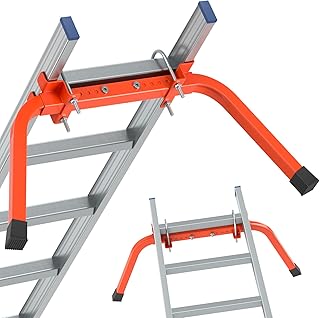
This adjustable extension ladder stabilizer is a practical all-rounder for users who need clearance from gutters, windows, or exterior walls. Its steel construction suggests good resistance to twisting, while the broad standoff format can make the ladder feel less tippy during careful, centered work. Check the attachment hardware and rail compatibility closely before ordering.
Roof Gutter Standoff Arms
The second Ladder Stabilizer for Roof Gutter is aimed at creating working space around roof edges and gutters. Its arm-style layout should appeal to homeowners who value a less cramped climbing position, although the real ergonomic benefit depends on achieving even contact on both sides and tightening the fasteners consistently.
Roof Hook with Wheel
This Ladder Stabilizer with Roof Hook and Wheel is designed for roof-ridge access rather than ordinary wall-only positioning. The wheel may reduce scraping and make initial placement easier, but roof hooks require especially careful inspection of the ridge contact, ladder angle, and the manufacturer’s approved use conditions.
Two-Pack Heavy-Duty Roof Hooks
The Ladder Roof Hook 2 Pack adds wheels, steel construction, and rubber grip surfaces intended to reduce damage during placement. A paired-hook design can provide reassuring ridge engagement when correctly installed, but it also adds setup steps; verify that both hooks sit evenly and that the ladder remains stable before transferring weight.
Mr Ironstone Extension Ladder Stabilizer
The Mr Ironstone Extension Ladder Stabilizer for Roof Gutter & Wall emphasizes a sturdy standoff structure, non-slip rubber, and a U-bolt attachment. Its stated capacity of up to 500 pounds is a product specification, not permission to exceed the ladder’s own rating or use the stabilizer outside its instructions. This is a strong candidate for users prioritizing a firm, wall-clearing setup.
Frequently Asked Questions
Do ladder stabilizers work on every extension ladder?
No. Rail dimensions, rail profiles, rung spacing, and attachment hardware vary considerably. Measure your ladder and compare those measurements with the stabilizer’s published compatibility information before purchase.
Can a ladder stabilizer rest on a gutter?
Many stabilizers are intended to clear or bridge around gutters rather than load them directly. Never assume a gutter can support ladder pressure; use a design and installation method specifically approved for that situation, and inspect the gutter and surrounding structure first.
Are roof hooks safer than standard standoffs?
They solve a different positioning problem. Roof hooks can improve engagement on a suitable ridge, while standard standoffs are often more convenient for wall, siding, and gutter work. Neither removes the need for correct ladder angle, stable footing, secure attachment, and cautious movement.
What should I inspect before climbing?
Check for bent steel, cracked welds, loose bolts, damaged rubber, worn wheels, and distorted hooks. Confirm that every clamp or U-bolt is tight, both sides are aligned, the ladder is on firm level ground, and the stabilizer is not bearing against a weak or decorative surface.
Final Thoughts
For general roof-edge and gutter work, the Adjustable Heavy-Duty Steel Ladder Stabilizer offers useful versatility, while the Mr Ironstone Extension Ladder Stabilizer is appealing for a robust wall-clearing setup. For ridge access, the Roof Hook with Wheel or Two-Pack Heavy-Duty Roof Hooks may be the better fit—provided the roof structure, ladder, and attachment method are all compatible.