Key takeaways
- Seat pan depth and front edge: Aim for 16 to 18 inches of usable depth with a rounded or waterfall front edge. A square edge compresses the underside of the thigh and cuts circulation during meals longer than about 30 minutes, which is the single most common comfort complaint on budget chairs.
- Backrest contact height: The backrest should meet you between the lower and mid back, roughly 7 to 10 inches above the seat. Contact that lands higher pushes the pelvis forward and encourages slouching; a curved rather than flat back panel spreads that load across more surface area.
- Joint construction: Glued and doweled or mortise-and-tenon wood joints outlast cam-lock hardware under repeated side loading. If a chair uses bolts, check that they thread into metal inserts rather than directly into particleboard, and plan to retorque them annually.
- Foam density over foam thickness: A thin high-density pad holds its shape far longer than a thick soft one. Soft low-density foam bottoms out within a year of daily use, and once the seat has taken a permanent impression, no cover will fix it.
- Floor interface: Uncapped metal or bare wood legs will mark hardwood and tile. Look for factory-fitted glides or budget for felt pads on day one, and check the footprint is stable if you have children who tip back.
What's inside
Dining chairs fail in predictable places. The joint where the back leg meets the seat frame loosens first, then the front edge of the seat pan starts pressing into the back of the thigh, and within two years a set that looked fine in the showroom has become the furniture nobody wants to sit in through a long meal. Buyers shopping IKEA-style chairs run into a second problem: the catalogue is built around flat-pack economics, so the honest tradeoffs between price, seat geometry, and frame durability are rarely spelled out anywhere on the product page.
This guide looks at IKEA’s two long-running dining workhorses alongside three upholstered sets that solve the same problem with different priorities. I’ve assessed each on the things that determine whether a chair is still comfortable at year five: seat pan depth and edge profile, backrest contact height, foam density, joint construction, and how the leg-to-floor interface holds up on hard surfaces. Prices and availability shift, so use the cards below for current listings.
As an Amazon Associate we earn from qualifying purchases.




🛒 Best Price Today on Amazon
Prime members get fast, free shipping on everything above, plus member-only deals. New members get a 30-day free trial — cancel anytime.
How to Choose IKEA Dining Chairs (2026)
- Seat pan depth and front edge: Aim for 16 to 18 inches of usable depth with a rounded or waterfall front edge. A square edge compresses the underside of the thigh and cuts circulation during meals longer than about 30 minutes, which is the single most common comfort complaint on budget chairs.
- Backrest contact height: The backrest should meet you between the lower and mid back, roughly 7 to 10 inches above the seat. Contact that lands higher pushes the pelvis forward and encourages slouching; a curved rather than flat back panel spreads that load across more surface area.
- Joint construction: Glued and doweled or mortise-and-tenon wood joints outlast cam-lock hardware under repeated side loading. If a chair uses bolts, check that they thread into metal inserts rather than directly into particleboard, and plan to retorque them annually.
- Foam density over foam thickness: A thin high-density pad holds its shape far longer than a thick soft one. Soft low-density foam bottoms out within a year of daily use, and once the seat has taken a permanent impression, no cover will fix it.
- Floor interface: Uncapped metal or bare wood legs will mark hardwood and tile. Look for factory-fitted glides or budget for felt pads on day one, and check the footprint is stable if you have children who tip back.
The Best IKEA Dining Chairs (2026) Reviewed
CHUN YI Upholstered Dining Chairs, Set of 4
The curved backrest here is the standout: it wraps enough to distribute lumbar load rather than concentrating it along a single horizontal rail, which makes a measurable difference at a long table. Wood frames with visible joinery and a firm seat pad put this ahead of most sets in its bracket for anyone who actually lingers after dinner.
IKEA Ingolf Chair, White
Solid pine construction and a doweled frame give the Ingolf genuine longevity, and it is one of the few chairs at this price you can reasonably expect to disassemble, re-glue, and keep using. The unpadded seat is the tradeoff, so factor in a tie-on cushion if meals routinely run past an hour.
COLAMY Wooden Dining Chairs, Set of 4
A generous seat pan and a slightly reclined back angle make this the more relaxed option of the upholstered sets, and the foot pegs add lateral bracing where cheaper four-leg designs rely on the seat frame alone. Best suited to households that want a softer feel without moving into low-density foam territory.
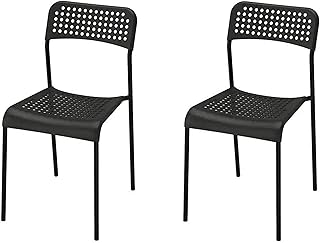
IKEA ADDE Chair, Black, 2-Pack
The ADDE is a steel-tube frame with a molded plastic shell, which means almost nothing to loosen and nothing to stain. It is the practical choice for overflow seating, balconies, and rentals; the flat seat and upright back are fine for an hour but were never designed for extended sitting.
UVV Metal Frame Upholstered Dining Chairs, Set of 4
Welded metal frames sidestep the loosening problem entirely, and the upholstered seat and back panels soften what would otherwise be a very firm chair. Check the leg caps on arrival, as metal legs are the least forgiving option on hardwood.
Frequently Asked Questions
Are IKEA dining chairs durable enough for daily use?
The solid wood and welded steel models are, provided you retorque fasteners once a year. The weak point in flat-pack furniture is rarely the material; it is the hundreds of small loading cycles that gradually work a bolted joint loose.
Do I need a cushion for an unpadded wood chair?
For meals under 30 minutes, no. Beyond that, a firm 1 to 2 inch pad reduces pressure at the sit bones considerably. Choose a tie-on style so it cannot slide, which is a real trip and tip hazard with loose cushions.
Are these chairs genuine IKEA products?
The Ingolf and ADDE are IKEA lines. The UVV, COLAMY, and CHUN YI sets are independent brands that compete in the same flat-pack category and are included because they address gaps in IKEA’s dining range, particularly upholstered seating in sets of four.
How much seat width should I allow per person?
Plan on 24 inches of table edge per diner. Chairs narrower than that will fit, but elbows start competing and people unconsciously shift forward off the backrest, which undoes the ergonomic benefit you paid for.
Final Thoughts
For everyday comfort at a full table, the CHUN YI set earns the top spot on backrest geometry alone. The IKEA Ingolf is the pick if you want a repairable solid wood frame that will outlast its upholstery, and the IKEA ADDE remains the sensible, wipe-clean answer for occasional and overflow seating.