Key takeaways
- Pile height under 1/4 inch: Low pile is not an aesthetic preference in a dining room, it is a mechanical requirement. Chair legs need to slide rather than dig, and a thin, dense profile keeps seat height stable so nobody rocks when they shift their weight.
- Size for the chair pull-out, not the table: Measure your tabletop and add at least 24 inches on every side, 30 if your chairs are deep or have arms. Rear legs must stay on the rug when a chair is fully pushed back, otherwise you get tipping and edge damage.
- Backing and slip resistance: Shear force from chair movement is what shifts a rug and eventually delaminates cheap backings. Look for a bonded non-slip layer, and pair it with a thin grip pad on hard floors for a meaningful gain in service life.
- Genuine machine washability: Dining spills are protein, oil, and tannin based. A rug you can actually put through a washer resets the whole surface instead of leaving you with a patchwork of cleaned rings and shadowed halos.
- Pattern that hides traffic: Distressed, vintage, and medallion prints camouflage compression tracks and small stains far better than solids. Beige and warm neutrals age most gracefully; flat single-tone rugs telegraph every crumb.
What's inside
A dining rug lives a harder life than any other floor covering in the house. Four to eight chairs get dragged across it several times a day, every day, which means the pile is fighting abrasion and compression at the same time. Add dropped food, wine, pet traffic, and a table leg pressing into the same four spots for years, and you have a wear pattern no living-room rug ever has to survive. Most shoppers discover this the hard way: they buy something plush and beautiful, and within eight months the chair paths have flattened into visible tracks while the edges have started to curl into a trip hazard.
This guide approaches dining rugs from an ergonomics and durability standpoint rather than a purely decorative one. I look at how pile height affects chair glide and seat stability, how backing construction holds up under repeated shear force, whether a rug can actually be cleaned rather than just spot-treated, and how sizing decisions determine whether guests can push back from the table without catching a rear leg on the edge. The picks below are all low-pile, washable constructions, because in a dining room those two traits do more for longevity than fiber marketing ever will.
As an Amazon Associate we earn from qualifying purchases.



🛒 Best Price Today on Amazon
Prime members get fast, free shipping on everything above, plus member-only deals. New members get a 30-day free trial — cancel anytime.
How to Choose a/an Rug For Dining Area (2026)
- Pile height under 1/4 inch: Low pile is not an aesthetic preference in a dining room, it is a mechanical requirement. Chair legs need to slide rather than dig, and a thin, dense profile keeps seat height stable so nobody rocks when they shift their weight.
- Size for the chair pull-out, not the table: Measure your tabletop and add at least 24 inches on every side, 30 if your chairs are deep or have arms. Rear legs must stay on the rug when a chair is fully pushed back, otherwise you get tipping and edge damage.
- Backing and slip resistance: Shear force from chair movement is what shifts a rug and eventually delaminates cheap backings. Look for a bonded non-slip layer, and pair it with a thin grip pad on hard floors for a meaningful gain in service life.
- Genuine machine washability: Dining spills are protein, oil, and tannin based. A rug you can actually put through a washer resets the whole surface instead of leaving you with a patchwork of cleaned rings and shadowed halos.
- Pattern that hides traffic: Distressed, vintage, and medallion prints camouflage compression tracks and small stains far better than solids. Beige and warm neutrals age most gracefully; flat single-tone rugs telegraph every crumb.
The Best Rug For Dining Area (2026)s Reviewed
Washable 8×10 Ultra Soft Faux Wool Vintage Low Pile Rug
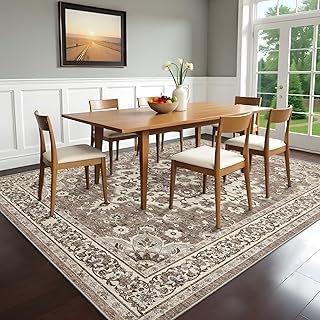
This is the most versatile pick for a standard six-seat table, combining a genuine low-pile profile with a faux wool hand that feels far better underfoot than the price suggests. The vintage print does real work hiding chair tracks, and full machine washability means a spilled bolognese is an inconvenience rather than a replacement cycle.
Washable 6×8 Beige Under-Table Rug
The 6×8 footprint suits smaller square or round tables and apartment dining nooks where an 8×10 would run into walls. Its stain-resistant, water-shedding surface buys you time to blot before liquid reaches the backing, which is exactly the failure point that ruins rugs in high-spill zones.
8×10 Washable Orange Vintage Low Pile Rug
If you want the dining zone to read as intentional rather than incidental, this warm orange colorway anchors a room without going loud. Same practical bones as the neutral options: thin pile that lets chairs glide, stain resistance, and a wash-friendly construction that keeps it serviceable long term.
8×10 Beige Neutral Vintage Farmhouse Rug
A quiet, forgiving choice for open-plan spaces where the dining area shares sightlines with a living room. The soft distressing diffuses shadowing from table-leg compression, so the four contact points stay far less obvious over the first few years than they would on a flat weave.
8×10 Vintage Boho Medallion Distressed Rug
The medallion layout is the best camouflage in this lineup, with enough tonal variation to absorb crumbs, pet hair, and the odd untreated splash. Low pile and non-slip backing keep the ergonomics right, so you get the busy pattern without sacrificing chair stability.
Frequently Asked Questions
What size rug do I need for a dining table?
Add 24 to 30 inches to each side of your tabletop dimensions. For most rectangular six-seaters, that lands on an 8×10; smaller round or square tables are usually well served by a 6×8 or 5×7.
Will chairs damage a low-pile rug?
Low pile is what protects the rug. Legs skate across the surface instead of catching in loops or tufts, and a dense short pile resists the crushing that creates permanent tracks. Felt glides on the chair legs extend life further.
Can I put a washable rug in a home washer?
Larger sizes like 8×10 generally need a commercial machine, while smaller formats often fit a large home washer. Always use cold water on a gentle cycle and air dry flat to protect the backing bond.
Do I still need a rug pad?
Yes, on hard flooring. Even with non-slip backing, a thin pad absorbs the lateral shear from chair movement, reduces edge curling, and cushions the rug against grit that would otherwise grind at the fibers.
Final Thoughts
For most dining rooms, the Washable 8×10 Ultra Soft Faux Wool rug is the strongest all-round pick, balancing chair-friendly pile height with a pattern that ages well. Choose the Washable 6×8 Beige for tighter nooks and smaller tables, or the 8×10 Vintage Boho Medallion if you want maximum stain and wear camouflage in a busy family household.