Key takeaways
- Joint type over wood species: Mortise-and-tenon or dowel-and-corner-block construction distributes stress across a broad glue surface. Chairs assembled only with bolts through end grain will loosen, because wood compresses around fasteners under repeated side loading. If a set requires assembly, look for metal-to-metal threaded inserts rather than screws driven straight into softwood.
- Stretchers and leg splay: Lower stretchers or an H-brace between the legs cut the leverage applied to upper joints dramatically. Slightly splayed rear legs widen the footprint and improve tip resistance, which matters most when someone shifts weight to the backrest.
- Seat width and usable depth: Aim for 19 inches or more of clear seat width between any side supports, and 16 to 18 inches of depth. Deeper is not automatically better; excess depth puts the front edge behind the knee and restricts circulation.
- Foam density, not thickness: A 2 inch pad at high density outperforms a 4 inch pad of soft filler, which bottoms out within months and transfers load straight to the plywood base. Firmer seats also make it easier to stand up without pushing off the table.
- Upholstery abrasion rating: Look for tightly woven fabrics or bonded-alternative vinyl with a stated rub count. Loose weaves pill at the seat front where jeans contact hardest, and thin PU coatings crack at the seam edges first.
What's inside
A 400 lb capacity rating sounds like a spec you can shop by, but it rarely tells you the whole story. Most published limits describe a static load test on a new chair sitting square on a flat floor. Real dining rooms apply something messier: people sitting down hard, leaning back on two legs, sliding sideways while seated, and repeating that cycle a few thousand times a year. What fails first is almost never the seat panel. It’s the joint where the leg meets the seat frame, and that failure starts as a faint creak long before anything visibly breaks.
This guide looks at heavy duty dining chairs through two lenses: how the frame resists racking and fatigue over years of use, and how the seat geometry supports a larger body without pressure points. I’ve flagged which sets use solid hardwood joinery versus metal frames, where seat width and depth actually accommodate broader hips, and which upholstery choices hold up to daily abrasion. Every pick below carries a 400 lb rating, but they earn it in different ways.
As an Amazon Associate we earn from qualifying purchases.



🛒 Best Price Today on Amazon
Prime members get fast, free shipping on everything above, plus member-only deals. New members get a 30-day free trial — cancel anytime.
How to Choose a Heavy Duty Dining Room Chairs 400 Lbs (2026)
- Joint type over wood species: Mortise-and-tenon or dowel-and-corner-block construction distributes stress across a broad glue surface. Chairs assembled only with bolts through end grain will loosen, because wood compresses around fasteners under repeated side loading. If a set requires assembly, look for metal-to-metal threaded inserts rather than screws driven straight into softwood.
- Stretchers and leg splay: Lower stretchers or an H-brace between the legs cut the leverage applied to upper joints dramatically. Slightly splayed rear legs widen the footprint and improve tip resistance, which matters most when someone shifts weight to the backrest.
- Seat width and usable depth: Aim for 19 inches or more of clear seat width between any side supports, and 16 to 18 inches of depth. Deeper is not automatically better; excess depth puts the front edge behind the knee and restricts circulation.
- Foam density, not thickness: A 2 inch pad at high density outperforms a 4 inch pad of soft filler, which bottoms out within months and transfers load straight to the plywood base. Firmer seats also make it easier to stand up without pushing off the table.
- Upholstery abrasion rating: Look for tightly woven fabrics or bonded-alternative vinyl with a stated rub count. Loose weaves pill at the seat front where jeans contact hardest, and thin PU coatings crack at the seam edges first.
The Best Heavy Duty Dining Room Chairs 400 Lbs (2026) Reviewed
Mid Century Modern Walnut Dining Chairs, Set of 4
FAS-grade oak is the top hardwood grade for clear, defect-free stock, which is exactly what you want in a leg carrying concentrated load. The armless profile and curved back give good scapular clearance, and the smoked brown seat hides wear patterns better than lighter upholstery.
POWERSTONE Wood Dining Chairs, Set of 4
Rubberwood is dense, dimensionally stable, and holds a glue joint well, making it a smart choice for a commercial-grade frame at this price. The taller back offers genuine upper-back contact rather than the token lumbar bump most dining chairs settle for.
Solid Oak Dining Chairs, Set of 6
A six-chair set in solid oak with a natural finish is the durability benchmark here, and the unfinished-looking tone makes future refinishing straightforward if a leg gets scuffed. The wood seat means no foam to compress, though you’ll want a firm cushion for meals longer than an hour.
Black Patterned Dining Chairs, Set of 4
The high back and solid wood legs handle recline loads competently, and patterned fabric is forgiving of the inevitable spills that solid colors broadcast. Nailhead trim is decorative, so check that the upholstery is stapled to the frame underneath rather than relying on those tacks.
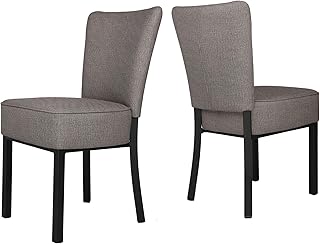
PU Leather Side Chairs with Metal Frame, Set of 2
A welded metal frame sidesteps the wood-joint fatigue problem entirely, which is why this is the pick for households where chairs get dragged and stacked. The wipe-clean PU surface suits kitchens with young kids, but keep it out of direct sun to slow coating breakdown.
Frequently Asked Questions
Is a 400 lb rating a safe working limit or a maximum?
Treat it as a static test result, not a daily target. Manufacturers typically test a new, correctly assembled chair under vertical load. For sustained comfort and long service life, leave meaningful headroom below the stated figure.
Do I need to re-tighten the hardware?
Yes, and it’s the single highest-value maintenance habit. Check every bolt at the one-month mark and twice yearly after that. Wood moves with seasonal humidity, and a snug joint stays strong while a loose one grinds itself oversized.
Are metal frames stronger than solid wood?
Welded steel has a higher strength-to-weight ratio and no glue lines to fail, but it flexes differently and can feel harsher. Well-jointed hardwood dampens vibration better and is repairable, whereas a cracked weld usually ends the chair.
What seat height works with a standard table?
Standard dining tables run 29 to 30 inches, so a seat height of 17 to 19 inches gives the 10 to 12 inches of thigh clearance most people need. Taller users should prioritize clearance over the aesthetic of a low seat.
Final Thoughts
For most dining rooms, the Solid Oak Set of 6 is the strongest long-term investment thanks to its hardwood frame and repairability. If you want comparable structure with a softer seat, the Mid Century Modern Walnut set delivers on both counts, while the PU Leather Metal Frame chairs are the pragmatic choice for high-traffic, easy-clean households.