Key takeaways
- Match weight to umbrella type: Table-supported umbrellas need roughly 30–50 lbs because the tabletop shares the lateral load; freestanding market umbrellas want 75 lbs or more, and cantilever models need 150 lbs minimum — often 200+ for canopies over 10 feet.
- Prioritize the pole collar, not just the mass: Look for a deep sleeve with two or more set knobs and a rubber shim. A snug collar eliminates the rocking that destroys umbrella hubs and loosens base hardware over years of use.
- Decide between cast and fillable: Cast resin or concrete gives you permanent density in a smaller footprint. Fillable bases ship light and fill on-site with sand (denser, more stable) or water (easier, but must be drained before hard freezes to prevent shell cracking).
- Insist on ergonomic handling features: Locking wheels, recessed carry handles, and wide-mouth fill spouts are the difference between a two-minute reposition and a back strain. Never lift a filled base — roll it or empty it first.
- Check the corrosion and UV story: Powder-coated steel, stainless hardware, and UV-stabilized polymer shells survive seasons of sun and sprinkler spray. Bare steel bolts on a poolside patio will bleed rust stains onto stone within one summer.
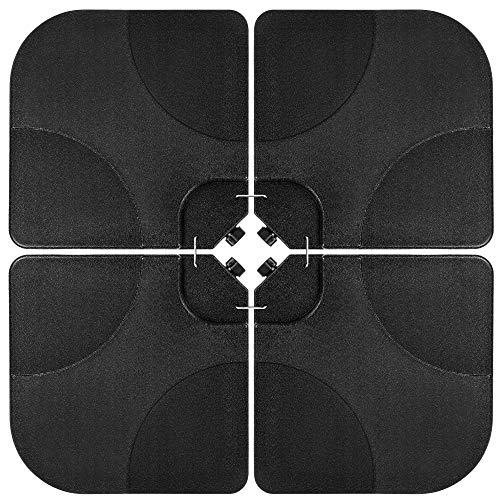
The US Weight 40lb Outdoor Umbrella Base is our best overall pick for table-mounted patio umbrellas, while the Best Choice Products 123lb Fillable Mobile Umbrella Base is the runner-up for freestanding market umbrellas.
Most umbrella failures aren’t fabric failures — they’re base failures. A stand that’s too light lets the pole rock in its collar, and that repeated micro-movement is what shears rivets, cracks powder coating, and eventually flips the whole canopy across your deck. The other half of the problem is human: nobody wants to drag 150 pounds of concrete across pavers twice a season. This guide evaluates heavy-duty bases on the two things that actually matter long-term — resistance to load cycling and how easy they are on your body to fill, move, and store.
Our top picks




As an Amazon Associate we earn from qualifying purchases at no extra cost to you. Ratings are shown as listed on Amazon.
Quick Comparison
| Product | Best For | Standout Feature | Rating |
|---|---|---|---|
| US Weight 40lb Umbrella Base | Umbrellas run through a dining table | Dense, no-fill cast weight in a compact footprint | Editor’s Choice |
| Best Choice Products 123lb Mobile Base | Freestanding market umbrellas on a budget | Four wheels with two locking casters | Best Value |
| Best Choice Products 155lb Cantilever Plate Set | Offset umbrellas over sofas and lounge sets | Four-plate load spread with easy-fill spouts | Top Tier |
| Simple Deluxe 4pcs Cantilever Weights | Decks and rooftops with tight clearances | U-shaped locking geometry hugs the stand | Highly Recommended |
| Best Choice Products 330lb Mobile Cantilever Base | Large offset umbrellas in exposed, windy sites | Extreme fillable capacity plus locking wheels | Heavy-Duty Pick |
How to Choose a Heavy-Duty Umbrella Base
- Match weight to umbrella type: Table-supported umbrellas need roughly 30–50 lbs because the tabletop shares the lateral load; freestanding market umbrellas want 75 lbs or more, and cantilever models need 150 lbs minimum — often 200+ for canopies over 10 feet.
- Prioritize the pole collar, not just the mass: Look for a deep sleeve with two or more set knobs and a rubber shim. A snug collar eliminates the rocking that destroys umbrella hubs and loosens base hardware over years of use.
- Decide between cast and fillable: Cast resin or concrete gives you permanent density in a smaller footprint. Fillable bases ship light and fill on-site with sand (denser, more stable) or water (easier, but must be drained before hard freezes to prevent shell cracking).
- Insist on ergonomic handling features: Locking wheels, recessed carry handles, and wide-mouth fill spouts are the difference between a two-minute reposition and a back strain. Never lift a filled base — roll it or empty it first.
- Check the corrosion and UV story: Powder-coated steel, stainless hardware, and UV-stabilized polymer shells survive seasons of sun and sprinkler spray. Bare steel bolts on a poolside patio will bleed rust stains onto stone within one summer.
The Best Heavy-Duty Umbrella Bases Reviewed
Best Overall: US Weight 40lb Outdoor Umbrella Base
This is the pick for anyone running an umbrella through a patio dining table, where the tabletop handles side load and the base only needs concentrated mass and a rock-solid collar. Its dense, sealed construction means nothing to fill, nothing to drain, and no freeze risk — the lowest-maintenance option here.
Best Budget: Best Choice Products 123lb Mobile Umbrella Base
Ideal for homeowners who want a genuinely stable freestanding market umbrella without paying premium prices. The four-wheel chassis with two locks is the ergonomic highlight: fill it once, then reposition 100+ pounds with a push instead of a lift.
Best Premium: Best Choice Products 155lb Cantilever Base Plate Set
Built for offset umbrellas shading a sofa or sectional, where a center pole isn’t an option. The four separate plates distribute load across a wide square footprint, which resists the tipping moment a cantilever arm generates far better than a single stacked weight.
Best for Tight Deck Spaces: Simple Deluxe 4pcs Cantilever Weights
Choose these if your cantilever stand sits near a railing, wall, or traffic path. The U-shaped locking profile nests tightly around the base frame, keeping toe-stubbing overhang to a minimum while still delivering serious ballast.
Best for Windy, Exposed Patios: Best Choice Products 330lb Mobile Cantilever Base
This is the answer for large offset umbrellas on open lawns, lakefronts, or rooftop terraces that catch real gusts. The huge fillable capacity paired with locking wheels gives you commercial-grade stability that you can still relocate when the season changes.
Frequently Asked Questions
Sand or water — which should I fill with?
Sand is roughly 30% denser than water, so the same shell yields meaningfully more ballast. Use dry play sand for maximum stability and permanent installations; use water when you need to empty and store the base regularly, and always drain it before freezing weather.
How much weight does my umbrella actually need?
As a rule of thumb, plan on about 10 lbs of base weight per foot of canopy diameter for a freestanding umbrella, then double it for cantilever designs. If your umbrella isn’t secured through a table, err heavier — the cost of overkill is far less than a replacement canopy.
Will a heavy base damage my deck or pavers?
It can, through point loading and trapped moisture. Set the base on a rubber mat or use a wheeled model that spreads load across four contact points, and lift it occasionally to let the surface underneath dry out.
Can I leave the base outside all winter?
Cast bases generally handle it fine. Fillable plastic shells should be drained of water, since ice expansion is the single most common cause of cracked housings and permanent leaks.
Final Thoughts
For table umbrellas, the US Weight 40lb base is the durable, maintenance-free default. Cantilever owners should size up to the Best Choice Products 155lb plate set for typical patios, or the 330lb mobile cantilever base if wind is a regular part of your forecast — both deliver the load spread and handling ergonomics that keep an umbrella upright for years.