Our Top Picks
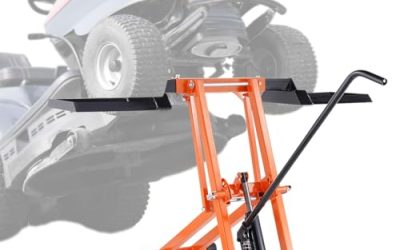
 Brinly 42" Tow-Behind Combo Lawn Sweeper with Dethatcher42"50 x 69.5 x 31 inches77 poundsCheck on Amazon
 Brinly 54" Tow-Behind Combo Lawn Sweeper with Dethatcher54"61.5 x 72 x 31 inches86 poundsCheck on Amazon
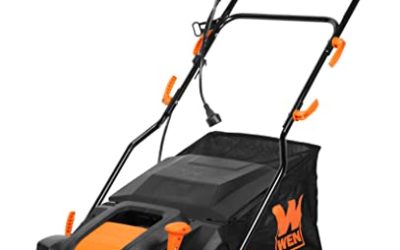
 VEVOR 2-in-1 Electric Dethatcher and Scarifier16 Inch24.41 x 43.7 x 37.4 inches26.68 poundsCheck on Amazon
A lawn sweeper and a dethatcher are not substitutes. In the lawn sweeper vs dethatcher decision, the sweeper picks up loose leaves, clippings and pine needles that sit on top of the grass, while the dethatcher uses spring tines to pull up the dead, spongy layer that has built up between the soil and the green blades. If your lawn is buried under fall leaves, you need a sweeper. If the turf feels like a mattress and water runs off it, you need a dethatcher. Many tractor owners end up wanting both, and the order you use them in matters.
Key takeaways
- A sweeper collects debris resting on the surface; a dethatcher loosens and lifts debris that is matted into the turf. Neither does the other’s job.
- Thatch becomes worth treating once the brown, spongy layer is thicker than about half an inch (a bit less for cool-season grasses). Measure before you buy anything.
- Run the dethatcher first, then sweep up what it pulled to the surface. Reversing the order leaves the freshly lifted debris on the lawn.
- Both attachments hook to a lawn tractor, zero-turn or ATV, so check hitch height and ground clearance before you order either one.
Lawn sweeper vs dethatcher: what each tool actually does
A tow-behind sweeper is a rotating brush that flicks debris into a fabric hopper as you drive. It works on the surface only. Its brush height is adjustable so the bristles brush the grass tips instead of digging in, and most models let you dump the hopper from the seat with a pull rope or handle. It is a cleanup tool: leaves, grass clippings, twigs, acorns, pine needles, and the loose straw left after overseeding.
Brinly 42" Tow-Behind Combo Lawn Sweeper with Dethatcher and Hamper Windscreen
Picked as a relevant option in this category.
View on AmazonBrinly 54" Tow-Behind Combo Lawn Sweeper with Dethatcher and Hamper Windscreen
Picked as a relevant option in this category.
View on AmazonVEVOR 2-in-1 Electric Dethatcher and Scarifier, 16-Inch 15 Amp, Corded | Lawn Dethatcher for Garden Yard Grass, Walk Behind Machine w/ 14.5-Gallon Thatch Collection Bag & 5-Position Depth Adjustment
Chosen because it specifies 16-Inch 15 Amp and Corded.
View on Amazon
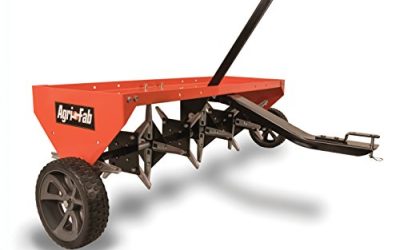
Agri-Fab 42 in Universal Front Mount Lawn Dethatcher with 14 Heat-Treated Spring Tines for Agri-Fab Lawn Sweepers
Picked as a relevant option in this category.
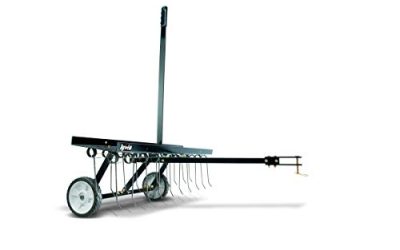
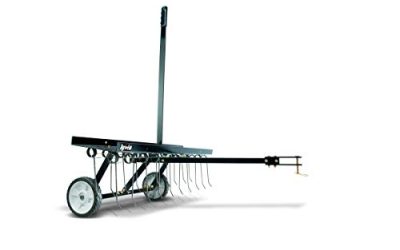
View on AmazonA tow-behind dethatcher has no hopper and no motor. It is a frame of spring steel tines on a wheeled axle. As the frame is pulled, the tines drag through the turf, comb out dead stems and runners, and leave them lying on the surface. It is a lawn-renovation tool. Because it only lifts the debris and does not collect it, you will almost always follow it with a rake, a mower bagger or a sweeper.
| Question | Tow-behind lawn sweeper | Tow-behind dethatcher |
|---|---|---|
| What it removes | Loose leaves, clippings, needles, twigs | Dead grass stems and roots matted at the soil line |
| Where it works | On top of the grass | Into the thatch layer, at the soil surface |
| Collects what it lifts? | Yes, into a hopper bag | No, leaves debris on the lawn |
| Typical use | Several times a season, mainly fall | Every few years, or when thatch measures over half an inch |
| Best time | When debris is dry | Early fall for cool-season grass; late spring to early summer for warm-season grass |
| Moving parts | Brush, drive wheels, hopper | Tines on a frame, lift handle |
| Stored size | Bulky, hopper must dry out | Flat frame that hangs on a wall |
How to tell whether you have a thatch problem
Do not buy a dethatcher on a hunch. Thatch is a natural layer of dead and living stems, roots and runners that has not yet broken down. A thin layer is healthy; it cushions the lawn. A thick one blocks water and fertilizer from reaching the soil.
- Pick a spot where the grass looks typical and cut a small wedge, a few inches deep, with a trowel or a knife.
- Look at the side of the wedge. The thatch is the brown, fibrous band between the green blades and the dark soil.
- Measure it with a ruler. Under roughly half an inch, leave it alone; for cool-season grass such as fescue or bluegrass, many lawn guides suggest acting a little earlier, around a third of an inch.
- Repeat in two or three other places. Thatch is often uneven, thicker in sunny corners and along edges.
- If the wedge feels springy underfoot and water beads on the surface, that is further evidence the layer is too thick.
If the measurement is below the threshold, a dethatcher is wasted money, and a sweeper is the tool that fits your problem.
Pick a sweeper if / pick a dethatcher if
Pick a tow-behind sweeper if
- You have trees that drop leaves, needles or seed pods over more than about half an acre, where raking is a weekend of work.
- You mow with a lawn tractor or zero-turn and want to clear clippings after cutting very tall grass.
- You want to tidy up after overseeding or after a storm.
- Your lawn is otherwise healthy and turf feels firm when you walk on it.
Pick a tow-behind dethatcher if
- Your thatch measurement is over half an inch.
- Water pools or runs off after normal irrigation, and fertilizer seems to sit on top.
- The lawn looks thin and patchy even though you feed and water it.
- You are about to overseed and want seed to reach the soil.
If both apply
Dethatch first when the lawn is actively growing, then sweep. Sweeping first would only clear the leaves; the tines would then pile up a fresh layer of dead grass that is still on the lawn when you finish.
Lawn sweeper with dethatcher: bundles and combo tools
Shoppers often search for a lawn sweeper dethatcher bundle, hoping a single tool does both. In practice the two jobs need different hardware. A sweeper depends on a fast-spinning brush and a hopper; a dethatcher depends on rigid tines that dig a little into the soil. Listings that pair a sweeper with a dethatcher are usually two separate attachments sold together, not one machine. Read the product description carefully, confirm which pieces are included, and check that each piece fits your hitch.
If you want to save money, buy one attachment now and the other next season. Both hitch behind the same tractor with a universal hitch plate, so nothing you own becomes obsolete.
Order of operations: a simple fall plan
- Mow low, but not scalped. Drop the deck a notch below your usual setting so the tines can reach the thatch layer.
- Dethatch in two passes. Make a first pass in one direction, then a second pass at a right angle. Raise the tines out of the ground at turns using the lift handle.
- Sweep the lifted debris. With the brush height set to just touch the grass, drive overlapping lanes. Empty the hopper before it is full to the brim, because a packed hopper stops the brush from turning freely.
- Overseed and feed. Bare patches exposed by the tines are a good place for seed. Follow the product label for rates.
- Water lightly. Keep the seedbed damp as the label directs.
How to use a lawn sweeper without clogging it
People who give up on sweepers usually have wet leaves, a hopper that is too full, or brushes set too low. These habits help:
- Wait until the debris is dry. Damp leaves mat together and clog the opening of the hopper.
- Set brush height first. The brush should flick the surface, not pull up grass. On uneven ground, raise it a notch.
- Drive at walking pace. A fast pass sends leaves over the top of the brush instead of into the hopper.
- Overlap each lane by a few inches. This avoids stripes of missed debris.
- Dump near where you will compost or bag. A dump-from-the-seat handle saves climbing down, but you still need a spot for the pile.
- Shake out the fabric hopper after each use. A hopper stored damp can mildew and tear sooner.
Hitch, clearance and tractor fit
Both tools use a universal hitch, but the details matter, especially on zero-turn mowers, which often have a low rear hitch point.
| Check | Why it matters |
|---|---|
| Working width vs your mower deck | A sweeper or dethatcher that is much wider than the tractor will catch on trees and fences; one narrower than the deck means extra passes. |
| Hitch height and tongue length | A tongue that tilts nose-down or nose-up changes tine depth and brush height. |
| Gate and path width | Measure the narrowest gate on your route and compare it with the transport width on the listing. |
| Tire type | Pneumatic tires ride smoother on bumpy ground; hard plastic wheels are fine on flat lawns. |
| Storage | A sweeper hopper takes up floor space; a dethatcher can hang from a wall hook. |
Walk-behind owners and people with a small lot do not need either tow-behind attachment. A push sweeper and a hand-pushed or electric dethatcher cover small lawns more cheaply, and are covered in other guides on this site.
Gear that helps
These four models come up often when shoppers compare the two attachment types. They are named from their product listings; check the maker page or listing for hitch details and dimensions before ordering.
- Agri-Fab 44 In Tow-Behind Lawn Sweeper: 44 in. width · flow-through hopper listed at 28 cu ft · adjustable brush height · dump-from-seat handle. A good fit for large leaf loads.
- Brinly 42″ Tow-Behind Lawn Sweeper: 42 in. width · high-velocity brushes per the listing · hammered black finish. A narrower option for tighter paths.
- Agri-Fab 48 In Tow Behind Lawn Dethatcher: 48 in. width · 24 spring steel tines · universal hitch. Wide coverage for larger lawns.
- Brinly 48″ Tow Behind Grass Dethatcher: 48 in. width · aimed at large lawns · flat black finish. A same-width alternative from another maker.
Frequently asked questions
Can a lawn sweeper dethatch my lawn?
No. A sweeper brush is designed to touch the grass tips and lift loose debris. It does not reach into the matted layer at the soil line.
Do I need a sweeper after dethatching?
Usually yes. The tines pull dead material to the surface, and if you leave it there it can smother grass. You can rake it, bag it with a mower, or sweep it.
How often should I dethatch?
Only when your thatch measurement is above about half an inch. For many lawns that means every few years, and for some lawns never. Over-dethatching stresses grass.
When is the best time to dethatch?
For cool-season grass, early fall is typical, while the turf is growing and can recover. For warm-season grass such as Bermuda or zoysia, many guides suggest late spring into early summer, after full green-up. Check your regional extension office for local timing.
Is a tow-behind dethatcher better than an electric one?
It depends on lawn size. Tow-behind models suit half an acre and up and need a tractor or ATV. Electric dethatcher-scarifiers suit small and medium lawns, as covered in our separate guide.
Can I use either tool on wet grass?
Avoid it. Wet leaves clog a sweeper, and wet soil makes tines tear turf instead of combing it.
Which should I buy first if I can only afford one?
Measure the thatch. If it is thick, buy the dethatcher. If it is thin and your problem is leaves, buy the sweeper.
More from Amazon
Programs that pair well with the guide above. Offers and eligibility are set by Amazon and may change.
Collect the home and kitchen items you want in one registry that guests can shop from.
Create a wedding registrySet up recurring deliveries of everyday items on eligible products. Terms and savings are set by Amazon.
Explore Subscribe & SaveFree shipping on eligible items, Prime Video and more. Eligible new members can start with a free trial.
Start a Prime free trialAudiobooks and podcasts to listen to on the go. Eligible new members can start with a free trial.
Try Audible freeAs an Amazon Associate we earn from qualifying purchases.