
The moment that convinced me to stop training on bare laminate was a 245-pound deadlift I set down slightly faster than intended. No crash, no drama — just a dull crack and a hairline seam in the plank that spread another inch every month afterward. Floor protection is the least glamorous purchase in home gym building and the one that quietly determines whether you can train heavy at 6 a.m. without a conversation from the people who live below you or beside you.
The choice comes down to three families of product: foam and EVA interlocking tiles, vulcanized rubber tiles, and rolled rubber sold by the linear foot. They differ in density by roughly a factor of ten, and that single number drives everything — how much a plate bounces, how much noise travels into the joists, whether a rack foot sinks, and whether you can drag a loaded sled across it. Below is how each performs in a real basement, garage, or spare bedroom, plus the thickness I would actually buy for each use.
Our top picks


As an Amazon Associate we earn from qualifying purchases at no extra cost to you.
As an Amazon Associate we earn from qualifying purchases.

Quick Comparison
| Surface | Typical Thickness | Density Feel | Best Use | Main Drawback |
|---|---|---|---|---|
| EVA foam interlocking tiles | 12–20 mm | Soft, compressible | Bodyweight, yoga, kids’ space | Dents under rack feet; no drop protection |
| High-density puzzle tiles | 20–25 mm | Firm foam | Dumbbells, kettlebell flow, cardio | Seams separate when dragged |
| Vulcanized rubber tiles | 8–19 mm | Dense, dead | Racks, benches, machines | Heavy to carry; seams visible |
| Rolled rubber | 6–13 mm | Dense, continuous | Full-room coverage, cardio decks | A 4×25 ft roll is a two-person job |
| Stall mats (thick rubber) | 19–25 mm | Very dense | Barbell platforms, bumper drops | 90–100 lb each, strong initial odor |
| Horse-stall-grade pebble rolls | 10 mm | Dense with texture | Sled pushes, turf-adjacent zones | Textured surface traps chalk dust |
How to Choose
- Start with your heaviest impact, not your average workout. If a loaded barbell will ever leave your hands from above the knee, you need at least 19 mm of dense rubber under it. Foam of any thickness transmits that force straight into the slab or joist.
- Know what’s under you. Concrete slab tolerates almost anything and mainly needs abrasion protection. A wood subfloor over joists is a drum — there you want mass and a decoupling layer, not softness.
- Measure the footprint of your rack, not the room. Uprights concentrate several hundred pounds onto four small plates. Dense rubber holds; foam takes a permanent impression within a week.
- Budget for waste. Rolls need a 6–10% overage for trimming around door casings and posts. Tiles need whole-unit rounding, which can add a full row.
- Plan for odor and off-gassing. Recycled rubber smells strongly for one to three weeks. Ventilate hard, wipe with a diluted degreaser, and never install it in a bedroom the day before you sleep there.
Top Picks Reviewed
Best Overall: 3/4-inch Vulcanized Rubber Stall Mats
Four-by-six-foot rubber mats remain the highest performance-per-dollar item in home gym flooring. Laid tight in a two-mat platform under a rack, they absorb bumper plate drops without bouncing the bar back at your shins, and they never shift once weight sits on them. The catch is logistics: each mat weighs roughly 95 pounds, arrives rolled and stubborn, and needs a day or two flattened under something heavy before the curl relaxes. Cut with a utility knife against a straightedge, replacing blades often.
Best for Full-Room Coverage: 8 mm Rolled Rubber
Rolled rubber gives you a seamless, gym-floor look that tiles can’t match. At 8 mm it’s the sweet spot — enough density to protect a slab from dumbbell dings and treadmill vibration, thin enough that a single person can maneuver a 10-foot section. It works especially well as wall-to-wall base flooring with thicker mats layered only in the drop zone. Use double-sided seam tape rather than glue if you rent.
Best for Apartments: Dense Rubber Tiles with Interlocking Edges
Interlocking rubber tiles solve the upstairs problem. They come in manageable 2×2 pieces you can carry up a stairwell alone, and the puzzle edges keep the field tight without adhesive. In the 3/8-inch thickness they cut impact noise noticeably for dumbbell work and machine cardio. They are not a substitute for a real platform if you deadlift heavy, but for a controlled-tempo apartment program they’re the right tool.
Best for Bodyweight and Mobility: 1-inch High-Density EVA Tiles
For a room where the heaviest object is a kettlebell, 1-inch closed-cell EVA is genuinely pleasant to train on. Push-ups, Turkish get-ups, and long stretch sessions all feel better on a surface with give, and the tiles are light enough to pull up and store when the room has another job. Look for a textured, non-reversible top rather than the cheap reversible tatami style, which polishes slick with sweat.
Best Cardio Isolation: Equipment Mat with Ribbed Underside
A dedicated treadmill or bike mat is a small purchase that fixes two problems: it stops belt vibration from turning your floor into a soundboard, and it catches the fine rubber dust that machines shed. The ribbed-underside designs grip better on hard surfaces than smooth PVC. Size it two inches larger than the machine’s frame on each side so the feet never wander onto bare floor.
Best Barbell Drop Zone: Layered Platform Kit
If you want the quietest possible heavy lifting, layer rather than buy thicker. Two sheets of plywood with a rubber layer beneath and horse mats on top spread load across a wide area and dramatically reduce the transmitted thud, especially on suspended floors. It costs more in labor than money, occupies a fixed 8×6 footprint, and is the closest a home setup gets to commercial platform feel.
Frequently Asked Questions
Will rubber flooring damage my concrete slab?
Unsealed concrete can absorb plasticizers from recycled rubber, leaving dark shadows where mats sat. It’s cosmetic rather than structural, but sealing the slab first or laying a thin vapor barrier underneath avoids it entirely — worth doing if the garage might become living space later.
How thick does flooring need to be for bumper plates?
Three-quarters of an inch of dense rubber is the practical minimum for controlled drops from the hip. For overhead drops or repeated Olympic lifting, add plywood beneath so the force spreads across several joists instead of one, or the noise below will be worse than you expect.
Do interlocking tiles stay together during workouts?
Under static equipment, yes. Under lateral force — shuffles, sled work, dragging a bench — the seams creep apart. Perimeter border strips help, and running your tile rows perpendicular to the direction of heaviest movement helps more.
How do I get rid of the rubber smell faster?
Unroll everything outdoors or in an open garage for two or three days, then scrub with a degreaser diluted well below label strength and let it dry fully. Airflow does most of the work; a fan pointed at the surface for a week beats any spray-on masking product.
Final Thoughts
Buy for the loudest, heaviest thing you plan to do in the space, then economize everywhere else. A practical setup for most home gyms is inexpensive rolled rubber or dense tiles across the general training area, with a thick rubber drop zone under the rack — a mix that costs less than covering the whole room in stall mats and performs better than covering it all in foam. Get the density right and the floor becomes invisible, which is exactly the goal.
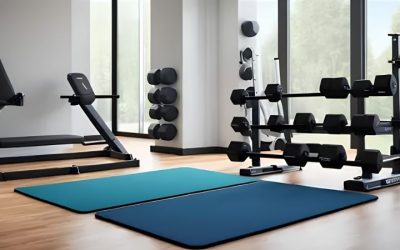
8 Best Gym Mats for Home: Rubber vs Foam Picks for Any Floor
Best gym mat for home choices come down to material density and...
8 Best Rowers for Home Gym: Air, Magnetic and Water Compared
Best rowers for home gym shortlists usually collapse once someone measures the...
8 Best Weight Home Gyms: 6 All-in-One Machines for Small Rooms
Best weight home gym decisions come down to two numbers before brand...
8 Best Home Gym Equipment for Beginners: The Starter Setup
Best home gym equipment for beginners is not a machine – it...
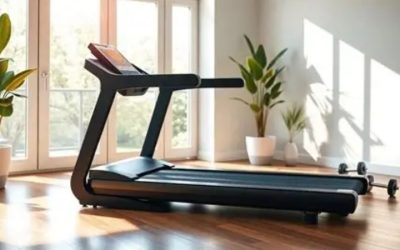
Best Treadmills for Home Gym: 5 Picks by Deck and Motor
Best treadmills for home gym decisions come down to two specifications and...
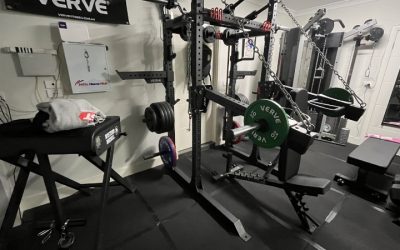
8 Best Home Gym Compact Setups: 6 Space-Saving Picks Ranked
Best home gym compact claims usually quote a stored footprint and stay...
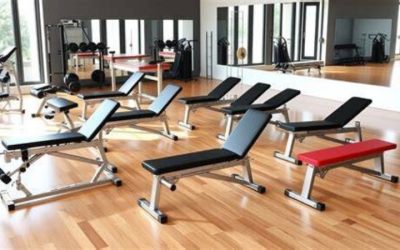
Best Adjustable Bench for Home Gym: 5 Picks Ranked by Use
Best adjustable bench for home gym decisions turn on three numbers most...
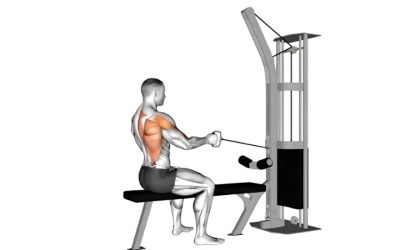
Best Cable Machine for Home Gym: 5 Picks and Pulley Ratios
Best cable machine for home gym shortlists collapse quickly once you convert...
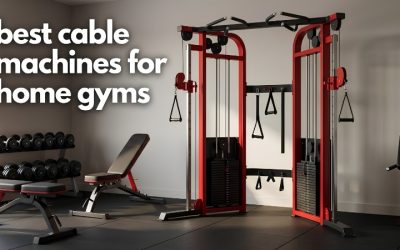
8 Best Cable Machines for Home Gym: 5 Types and Their Limits
Best cable machines for home gym use are not one product category...
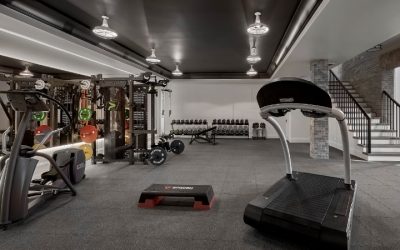
8 Best Home Gym Setups: Floors, Ceilings, Noise and Layout
Best home gym setup guides talk about equipment and skip the room,...
Write Your Review
No reviews yet. Be the first to share your experience!