Key takeaways
- Film strength vs. repairability: Polyurethane builds a hard barrier that shrugs off spills but requires sanding to fix damage. Oil finishes wear gradually and accept spot repairs with a rag, which suits tables with an existing patina or reclaimed tops.
- Tactile comfort: Run your hand along a sample board before committing. Heavy-build gloss films can feel slick and slightly sticky under warm forearms, while satin and semi-gloss sheens with a lightly sanded final coat stay pleasant during long dinners.
- Edge and apron coverage: Wear concentrates on the front edge and the top two inches of the apron, where arms and chair backs make contact. Whatever you choose, plan an extra coat there rather than spreading the same number of coats evenly.
- Cure time versus dry time: Water-based products are touch-dry fast, but full hardness can take one to three weeks. A table put back into service too early picks up permanent plate impressions, so build the wait into your schedule.
- Food contact and household sensitivity: If the surface doubles as a prep or serving area, or someone in the house reacts to solvents, look at food-grade oils and low-odor water-based formulas rather than traditional oil-based coatings.
What's inside
A dining table absorbs more punishment than any other piece of furniture in the house. It takes hot serving dishes, condensation rings, elbows dragging across the same eighteen inches of edge every night, spilled vinaigrette, homework pencils, and a toddler’s fork. From a durability standpoint, that combination is unusual: you need chemical resistance, abrasion resistance, and moisture resistance all at once, on a horizontal surface that sits at the exact height where forearms rest for an hour at a time. Most finish failures on dining tables aren’t dramatic. They show up as a dull, slightly tacky band along the front edge where skin oils and cleaner residue have quietly softened the film.
This guide looks at dining table finishes through two lenses that rarely get discussed together: how well the coating survives real mealtime abuse, and how it feels against the body during long seated use. Film-forming finishes, penetrating oils, and maintenance products all have a place, and the right answer depends on whether you want a surface you can wipe without thinking or one you’re willing to refresh a few times a year. Below are six products worth considering in 2026, followed by selection criteria and answers to the questions that come up most often.
As an Amazon Associate we earn from qualifying purchases.


🛒 Best Price Today on Amazon
Prime members get fast, free shipping on everything above, plus member-only deals. New members get a 30-day free trial — cancel anytime.
How to Choose a Finish For Wood Dining Table (2026)
- Film strength vs. repairability: Polyurethane builds a hard barrier that shrugs off spills but requires sanding to fix damage. Oil finishes wear gradually and accept spot repairs with a rag, which suits tables with an existing patina or reclaimed tops.
- Tactile comfort: Run your hand along a sample board before committing. Heavy-build gloss films can feel slick and slightly sticky under warm forearms, while satin and semi-gloss sheens with a lightly sanded final coat stay pleasant during long dinners.
- Edge and apron coverage: Wear concentrates on the front edge and the top two inches of the apron, where arms and chair backs make contact. Whatever you choose, plan an extra coat there rather than spreading the same number of coats evenly.
- Cure time versus dry time: Water-based products are touch-dry fast, but full hardness can take one to three weeks. A table put back into service too early picks up permanent plate impressions, so build the wait into your schedule.
- Food contact and household sensitivity: If the surface doubles as a prep or serving area, or someone in the house reacts to solvents, look at food-grade oils and low-odor water-based formulas rather than traditional oil-based coatings.
The Best Finish For Wood Dining Table (2026)s Reviewed
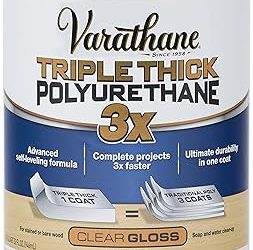
Varathane Triple Thick Polyurethane, Semi-Gloss
This is the shortest route to a genuinely protective film, laying down roughly the thickness of three standard coats in one self-leveling pass and reaching serviceable hardness quickly. The semi-gloss sheen is the sweet spot for dining use: enough reflection to look finished, not enough to broadcast every fingerprint, and a smooth rather than glassy hand feel.
Varathane Water-Based Ultimate Polyurethane, Semi-Gloss
The better pick when you want control over build, since thin coats let you tune the final texture and keep light-colored woods like maple and ash from ambering. Low odor and fast recoat times make it practical for indoor work, though I’d give it two full weeks before setting down anything heavy.
100% Pure Tung Oil, 64 oz
A food-grade penetrating option that hardens inside the wood instead of sitting on top, producing a warm, close-to-the-grain surface that’s genuinely comfortable to sit at. It won’t match polyurethane against standing water, but scuffs blend away with a wiped-on refresh, which makes it forgiving on tables that see daily use.
Varathane Total Control Gel Stain, Dark Walnut
Gel consistency is the reason to reach for this: it stays put on legs, aprons, and vertical trim without running, and it evens out blotch-prone woods like pine and birch. Use it as the color step beneath a clear topcoat rather than as protection on its own.
Howard Feed-N-Wax Beeswax Polish & Conditioner
A maintenance product for oiled or previously waxed tables, adding a thin beeswax and carnauba layer that improves water beading and restores depth to dry-looking wood. Apply sparingly and buff thoroughly, or the residue will feel drag-y under forearms.
Frequently Asked Questions
Is polyurethane or oil better for a dining table?
Polyurethane wins on spill and heat resistance and needs almost no upkeep. Oil wins on repairability and feel. Households with young children usually prefer polyurethane; owners of antique or reclaimed tops often prefer oil.
How many coats does a dining table need?
Three coats of standard water-based polyurethane, or one to two of a triple-thick formula, with an additional coat on the front edge and apron where contact wear concentrates.
Can I put hot dishes directly on a finished table?
No finish in this category is truly heat-proof. Cured polyurethane tolerates warm plates, but sustained heat from casserole dishes will cloud or soften any film. Use trivets.
How do I clean the table without damaging the finish?
A damp cloth and a silicone-free cream polish such as Guardsman Clean & Polish covers routine care. Skip silicone sprays, which build residue and complicate future refinishing.
Final Thoughts
For most families, Varathane Triple Thick Polyurethane delivers the most protection for the least labor, while the Water-Based Ultimate Semi-Gloss is the smarter choice when you want thinner coats, a controlled sheen, and no ambering on pale wood. If you’d rather maintain a warm, tactile surface than protect a film, 100% Pure Tung Oil is the one to build your routine around.