Key takeaways
- Measure the counter: Standard counter surfaces are commonly around 36 inches high, but measure yours before buying. Aim for roughly 9 to 12 inches between the seat and underside of the counter for comfortable leg movement.
- Check the footprint: Compare the stool’s overall width and depth, not just its seat size. Compact stools should slide beneath an overhang or stand close together without blocking drawers, appliances, or walkways.
- Prioritize foot support: A properly positioned footrest reduces pressure behind the thighs and helps prevent dangling legs. Look for a rigid, well-attached rail that can tolerate repeated pushing and shifting.
- Match the seat to use: Saddle seats save visual and physical space, while backs and arms improve support during longer meals. Upholstery is more comfortable, but smooth faux leather is generally easier to wipe clean.
- Inspect stability and maintenance: A broad, well-braced base is preferable to a delicate frame. After assembly, tighten every fastener evenly and periodically check joints, especially in stools used by children or heavier adults.
What's inside
Small kitchens and apartment dining areas rarely have room for oversized seating. The wrong counter stool can crowd a walkway, force knees against the island, or develop wobble when its frame and footrest take repeated daily loads. Seat depth, clearance, balance, and material quality matter more than decorative details when every inch counts.
This guide evaluates compact counter stools through an ergonomics-and-durability lens. We focus on counter-height fit, pressure relief, stable foot support, cleanability, assembly, and how each design is likely to behave in a busy kitchen or small entertaining space.
As an Amazon Associate we earn from qualifying purchases.



🛒 Best Price Today on Amazon
Prime members get fast, free shipping on everything above, plus member-only deals. New members get a 30-day free trial — cancel anytime.
How to Choose a/an Counter Stools For Small Spaces (2026)
- Measure the counter: Standard counter surfaces are commonly around 36 inches high, but measure yours before buying. Aim for roughly 9 to 12 inches between the seat and underside of the counter for comfortable leg movement.
- Check the footprint: Compare the stool’s overall width and depth, not just its seat size. Compact stools should slide beneath an overhang or stand close together without blocking drawers, appliances, or walkways.
- Prioritize foot support: A properly positioned footrest reduces pressure behind the thighs and helps prevent dangling legs. Look for a rigid, well-attached rail that can tolerate repeated pushing and shifting.
- Match the seat to use: Saddle seats save visual and physical space, while backs and arms improve support during longer meals. Upholstery is more comfortable, but smooth faux leather is generally easier to wipe clean.
- Inspect stability and maintenance: A broad, well-braced base is preferable to a delicate frame. After assembly, tighten every fastener evenly and periodically check joints, especially in stools used by children or heavier adults.
The Best Counter Stools For Small Spaces (2026)s Reviewed
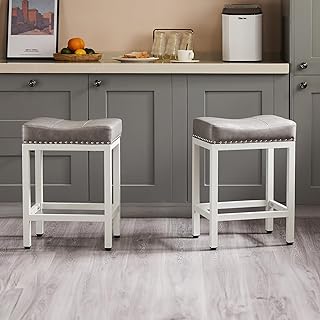
Compact 24-Inch Faux Leather Saddle Stools
This set’s narrow saddle profile and metal legs make it a practical choice where circulation space is limited. Faux leather is easy to wipe after meals, while the footrest should provide useful lower-leg support; take care during assembly to ensure the compact frame sits level and the hardware is fully tightened.
Sweetcrispy 24-Inch PU Leather Stools
Sweetcrispy’s upholstered saddle seat adds a little more cushioning than a bare wood or metal perch without creating a bulky silhouette. The metal base and integrated footrest suit everyday counter use, and the grey PU covering offers a relatively low-maintenance surface for small apartments.
HOOBRO 23.6-Inch Saddle Stools
At 23.6 inches, this HOOBRO pair is slightly lower than many 24-inch counter stools, which can help at counters with a modestly low surface. Its industrial frame and footrests emphasize stability and visual openness, although the hard saddle-style seat may be less forgiving during long meals than padded upholstery.
Signature Design by Ashley Skempton Counter Stools
The Skempton set combines a space-conscious farmhouse frame with an 18.5-inch foam-cushioned saddle seat, a useful balance for diners who want support without a full backrest. The distressed wood construction and footrest should feel substantial in daily use, while the lighter finish can make a compact kitchen appear less visually crowded.
Nalupatio Adjustable Swivel Bar Stools
Nalupatio’s backrest, faux-leather upholstery, and swivel function offer more postural support than a basic saddle stool, particularly for longer breakfasts or desk-style island work. The adjustable mechanism adds flexibility but also introduces moving hardware, so verify that the selected height fits your counter and keep the base clear of obstacles.
Frequently Asked Questions
What height counter stool is best for a standard kitchen island?
A 24-inch seat generally pairs well with a standard counter-height surface of about 36 inches. Measure the actual counter and allow enough vertical clearance for relaxed knees and easy movement.
Are backless stools better for small spaces?
Often, yes. Backless stools can tuck completely beneath an overhang and preserve sightlines, but they provide less lumbar support. If the stools will be used for extended meals, a compact backrest may be worth the extra footprint.
How many counter stools fit around a small island?
Allow approximately 24 to 28 inches of usable counter width per person, depending on seat width and armrests. Never sacrifice walkway clearance simply to add another stool.
How can I prevent counter stools from wobbling?
Assemble the frame on a level surface, tighten fasteners gradually in a crisscross pattern, and confirm that every foot contacts the floor. Recheck the hardware after several days of use, since new joints can settle.
Final Thoughts
For the smallest kitchens, the Compact 24-Inch Faux Leather Saddle Stools and Sweetcrispy 24-Inch stools offer an efficient combination of footprint, wipe-clean upholstery, and foot support. The Signature Design by Ashley Skempton set is the stronger comfort-focused choice, while Nalupatio’s swivel design makes sense when back support and flexible positioning matter most.