Our Top Picks
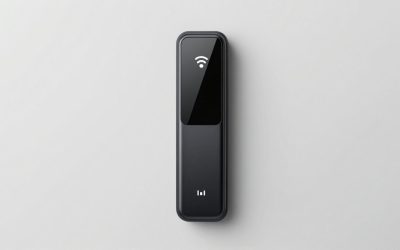
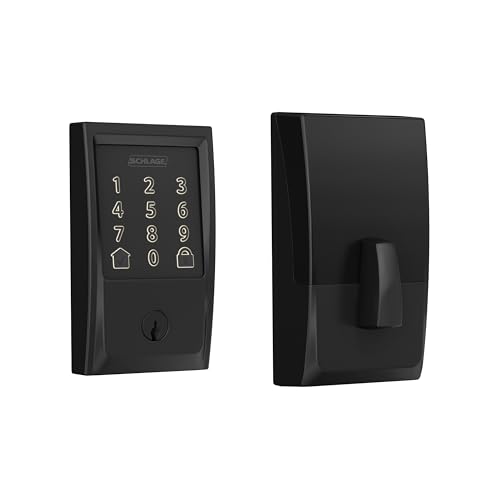 Schlage Encode Smart WiFi Deadbolt Lock with CenturyEncode0.9 x 3 x 5 inches3.4 poundsCheck on Amazon
Best Black Friday Smart Lock Deals: The Direct Answer
The best Black Friday smart lock deals cluster in two price bands: full-replacement keypad deadbolts that normally sell for $180–$280 and drop to roughly $120–$190, and retrofit locks that normally sell for $130–$230 and fall to $90–$160. The steepest percentage cuts — often 30% to 45% — land on last-generation models being cleared out and on bundles that pair a lock with a keypad, hub, or extra fobs, while current Matter-over-Thread locks usually see only 15% to 25% off. That means the most useful thing you can do before the sale is decide which design type your door actually needs, because the biggest discount on a lock that won’t fit your door is worth nothing. Everything below works through the criteria that decide the purchase — retrofit versus full replacement, door compatibility, battery life, access methods, installation time, and smart-home integration — and then maps them to specific situations and budget bands.
What Actually Counts as a Deal
Smart locks are a category where list prices are soft. A deadbolt with a “list price” of $299 that sells for $229 all year is not a Black Friday bargain at $199. The way to judge a deal is to compare the sale price against the street price you have seen for the previous two to three months, not against the manufacturer’s suggested retail price.
Schlage Encode Smart WiFi Deadbolt Lock with Century Trim, Matte Black
Included for 'Best Black Friday Smart Lock Deals' because the listing specifies Matte Black, details this guide uses to compare options.
View on Amazon
Philips WiFi Keypad Door Lock with Handle, App Control Smart Deadbolt Lock
Included for 'Best Black Friday Smart Lock Deals' because the listing specifies App Control Smart Deadbolt Lock, details this guide uses to compare options.
View on Amazon
Philips Wi-Fi Smart Front Door Lock Set, Keyless Entry Door Lock with Handle, App Remote Control, Electronic Keypad Deadbolt, Auto Lock, Supports Alexa & Google, Anti-Peeping Password, Easy Install
Included for 'Best Black Friday Smart Lock Deals' because the listing specifies Keyless Entry Door Lock with Handle and App Remote Control, details this guide uses to compare options.
View on Amazon
eufy Security Smart Lock C220, Fingerprint Keyless Entry Door Lock
Included for 'Best Black Friday Smart Lock Deals' because the listing specifies Fingerprint Keyless Entry Door Lock, details this guide uses to compare options.
View on AmazonSecond, price the whole system, not the lock. A $110 Z-Wave lock that requires a $70–$130 hub is more expensive than a $180 Wi-Fi lock with the radio built in. A $140 retrofit lock that needs a separate $50–$80 keypad is not cheaper than a $190 full-replacement deadbolt with the keypad molded into the exterior housing. Bundles that include a hub, a second keypad, or a pair of key fobs are usually the best value of the weekend precisely because the accessories carry high margins and get discounted hardest.
Third, check which generation you are buying. When a manufacturer moves a lock from Z-Wave or a proprietary bridge to Matter-over-Thread, the outgoing stock gets cleared at 35% to 45% off. That is a genuine bargain if you already own a compatible hub. It is a poor bargain if the older model depends on a cloud service or app that the manufacturer is winding down.
| Lock category | Typical list price | Typical Black Friday price | Usual discount | Who it suits |
|---|---|---|---|---|
| Retrofit lock (keeps existing deadbolt) | $130–$230 | $90–$160 | 25–35% | Renters, apartments, heritage doors |
| Entry keypad deadbolt, Wi-Fi built in | $180–$280 | $120–$190 | 25–35% | Most single-family homes |
| Matter-over-Thread deadbolt | $200–$300 | $160–$240 | 15–25% | Apple Home, Google Home, SmartThings |
| Fingerprint deadbolt | $150–$300 | $110–$220 | 20–35% | Key-free households, shared entrances |
| Video smart lock (camera + keypad) | $250–$500 | $190–$380 | 20–30% | Front doors with no doorbell camera |
| Z-Wave or Zigbee deadbolt | $150–$260 | $110–$190 | 20–30% | Hub-based smart homes |
| Commercial-grade Grade 1 deadbolt | $350–$700 | $290–$560 | 10–20% | Rental property, small business |
| Mortise or multipoint lock | $400–$900 | $340–$750 | 10–20% | European and condo doors |
Retrofit vs. Full Replacement: Pick the Design Before the Discount
A retrofit lock replaces only the interior half of your existing deadbolt and leaves the exterior key cylinder untouched. A full-replacement deadbolt swaps both halves and gives you new exterior hardware, usually with a keypad and often without any keyway at all.
The choice is not about features. It is about three practical constraints: whether you are allowed to change the exterior of the door, how much depth you can spare on the inside face, and how much you care about battery life.
| Retrofit | Full replacement | |
|---|---|---|
| What changes | Interior half only; exterior cylinder stays | Both halves; new exterior keypad and/or cylinder |
| Install time | 10–20 minutes | 20–45 minutes |
| Tools | Phillips screwdriver | Phillips screwdriver; sometimes a chisel or 2-1/8″ hole saw |
| Depth added on the inside face | 1.5–2.5 inches | 0.9–1.5 inches |
| Depth added on the outside face | None | 0.5–1.5 inches |
| Reversible for renters | Yes — the old half goes back on in 10 minutes | Usually not without landlord approval |
| Keypad | Often sold separately at $30–$80 | Usually built in |
| Battery life | Longer; the motor only turns an existing thumbturn | Shorter; the motor drives the full bolt |
| Typical price | $130–$230 | $180–$300 |
| Best for | Renters, listed buildings, anyone who wants to keep one key | Homeowners who want keypad entry and key-free options |
Retrofit locks: the low-risk option
A retrofit lock is the right answer for roughly a third of buyers, and almost all renters. Because the exterior hardware never changes, the building’s appearance, the master key system, and any condo association rules stay intact. Installation is a single Phillips screwdriver and no drilling. The trade-off is physical: the interior assembly sits proud of the door by 1.5 to 2.5 inches, and if your door opens flat against a wall with less than about 3 inches of clearance, the lock will scuff paint or stop the door from opening fully. Retrofit locks also need their own keypad if you want PIN entry, and that keypad is usually a separate Bluetooth device mounted nearby.
Full-replacement deadbolts: the mainstream choice
Most buyers should be looking here. A full-replacement deadbolt gives you an integrated exterior keypad, a cleaner silhouette, an ANSI/BHMA grade you can actually compare, and usually a mechanical key override for the day the batteries die. Installation runs 20 to 45 minutes depending on whether the existing strike plate and bolt hole line up. Budget an extra 15 minutes if you are replacing an older lock with a different backset, and be ready to chisel a slightly deeper mortise if the new bolt housing is thicker than the old one. The exterior housing adds roughly 0.5 to 1.5 inches of depth, which matters on a door that already has a storm door 1.5 inches away.
When neither works: mortise and multipoint doors
If your door uses a mortise lock body (common on older urban homes and many European doors) or a multipoint locking system with three or more locking points along the edge, neither a retrofit nor a standard full-replacement deadbolt will fit. These need purpose-built replacements or a smart cylinder that goes inside the existing mortise body. Expect $400–$900, a 1–4 hour professional installation, and far shallower Black Friday discounts of 10% to 20%. This is the one category where paying full price for the correct part beats saving 30% on the wrong one.
Measure These Seven Things Before You Buy Anything
Compatibility failures are the single most common reason a discounted smart lock ends up back in its box. A tape measure and five minutes will prevent it.
| Measurement | What you need | Why it matters |
|---|---|---|
| Door thickness | 1-3/8″ to 1-3/4″ for most locks; some support to 2-1/4″ | Thicker doors need longer mounting bolts or a thick-door kit |
| Bore hole diameter | 2-1/8″ | Some pre-1950 doors use 1-1/2″ holes and need re-boring |
| Cross bore (edge hole) | 1″ | A 7/8″ hole may not accept the bolt housing |
| Backset | 2-3/8″ or 2-3/4″ | Most locks ship adjustable; confirm before ordering |
| Door handing | Left or right | Deadbolts are usually non-handed; handle sets are not |
| Interior clearance | About 3″ of clear wall behind the fully open door | Retrofit locks add 1.5–2.5″; a flat-opening door can bind |
| Storm or screen door gap | 1.5″–2″ between the two doors | A keypad housing can foul the outer door frame |
Two more checks that do not involve a tape measure. First, look at the strike plate on the frame: if it is held by half-inch screws, replace them with 3-inch screws that reach the framing stud. That single change does more for forced-entry resistance than upgrading from Grade 3 to Grade 2. Second, confirm your Wi-Fi band. Most smart locks that connect directly over Wi-Fi use the 2.4 GHz band only and will not join a 5 GHz-only network.
Battery Life: The Number the Box Doesn’t Tell You
Battery life is where marketing claims and reality diverge most. Published figures are typically measured with the lock idle and connected to Bluetooth only. Add Wi-Fi, auto-unlock, and frequent remote access and you can cut that figure in half.
| Power source | Realistic life | Notes |
|---|---|---|
| 4 × AA alkaline | 6–12 months | Capacity falls 30–50% below 32°F |
| 4 × AA lithium | 9–15 months | Much better in cold; roughly 2–3× the price per cell |
| 8 × AA alkaline | 12–18 months | Common on motor-driven deadbolts |
| Rechargeable lithium pack | 3–6 months per charge | Convenient, but only if you remember to charge it |
| CR123A or coin cell (keypad only) | 1–2 years | Keypad-only locks draw very little current |
| Hardwired or Power over Ethernet | Not applicable | Rare; requires wiring to the jamb |
Three practical points. Retrofit locks generally last longer than full-replacement deadbolts because the motor only has to rotate an existing thumbturn rather than throw a bolt against a strike plate. Most full-replacement locks include a 9-volt emergency terminal on the outside so you can jump the lock if it dies, but many retrofit locks do not — check before you buy. And low-battery warnings typically trigger at 20% to 30% remaining, which sounds generous until you realise that in a cold snap the last 25% can disappear in a week.
Access Methods, Ranked by How Often You’ll Use Them
- Keypad PIN — the workhorse. Fast, works with gloves, no phone required, easy to give a guest a code and revoke it later.
- Mechanical key — slowest and least convenient, but the only method guaranteed to work with a dead battery.
- Fingerprint — fastest for household members, unreliable with wet, cold, or abraded fingers.
- Phone app over Bluetooth — works from 30–50 feet, takes 2–5 seconds, requires a charged phone.
- Apple Home Key or NFC tap — a tap of a phone or watch, very quick, but requires a compatible home hub.
- Auto-unlock (geofencing plus Bluetooth) — the most convenient and the most battery-hungry. Expect the geofence to fire somewhere between 100 and 300 feet from the door.
- Remote unlock over Wi-Fi — essential for deliveries and guests, and a major drain on battery.
- Voice assistants — the slowest and least reliable; useful for checking lock status, poor for actually unlocking.
- Key fobs and cards — the best option for children and for anyone who struggles with small keypads. Fobs typically cost $15–$25 each.
Installation Time: Realistic Numbers
| Design type | Time | Tools | Skill needed |
|---|---|---|---|
| Retrofit, interior half only | 10–20 min | Phillips screwdriver | None |
| Retrofit with separate keypad | 15–25 min | Screwdriver, sometimes adhesive or two small screws | None |
| Full-replacement deadbolt, same backset | 20–30 min | Phillips screwdriver | Low |
| Full-replacement deadbolt, new backset | 30–45 min | Screwdriver, chisel, hammer, possibly a 2-1/8″ hole saw | Moderate |
| Mortise lock replacement | 60–120 min | Chisels, drill, possibly a router | High |
| Multipoint lock replacement | 2–4 hours | Full carpentry kit | Professional |
Two installation realities worth knowing. First, the bolt must drop into the strike plate without binding; if it scrapes, the door has shifted on its hinges and you should adjust the hinges before blaming the lock. Second, if your door is not hung square, a motor-driven deadbolt will strain and drain batteries quickly — a thumbturn-actuated retrofit lock is more forgiving of an out-of-alignment door.
Smart-Home Integration: Which Radio You Actually Want
| Protocol | Hub needed | Typical range | Battery impact | Best for |
|---|---|---|---|---|
| Bluetooth | No | 30–50 ft | Low | App control standing at the door |
| Wi-Fi (2.4 GHz) | No | Whole home | High | Remote access without extra hardware |
| Thread | Yes — border router | 100+ ft, mesh | Low | Matter households, Apple and Google ecosystems |
| Z-Wave | Yes — hub | ~100 ft, mesh | Low | Existing Z-Wave systems |
| Zigbee | Yes — hub | ~100 ft, mesh | Low | Existing Zigbee systems |
| Matter (over Thread or Wi-Fi) | Depends on transport | Depends | Varies | Cross-ecosystem control and future-proofing |
Matter over Thread is the direction the category is moving, and it is worth paying a small premium for if you already own a Thread border router — many recent smart speakers and streaming boxes include one. If you do not own a border router, the “Matter-ready” badge on a discounted lock is worth nothing until you buy one, which can add $60–$150 to the total. Wi-Fi locks remain the simplest choice for a single-door household with no hub and no plans to build one.
The Deals, by Product Type
Discounts vary enormously by category. Here is what to expect from each, and what to check before committing.
1. Wi-Fi keypad deadbolts with no hub required
This is the largest and most competitive slice of the market, and where Black Friday discounts are most predictable. These locks replace both halves of the deadbolt, include a keypad in the exterior housing, connect directly to 2.4 GHz Wi-Fi, and offer a mechanical key override. Typical list prices run $180–$280 with sale prices of $120–$190. Look for individual user codes, a scheduled auto-lock delay of 15 to 60 seconds, an activity log, and a 9-volt emergency terminal. The main drawback is battery life: Wi-Fi radios are power-hungry, and you should expect to replace four alkaline cells every 6 to 9 months. Well-established examples in this class include the Schlage Encode line and the Kwikset Halo family. Check the exterior housing depth against any storm door before buying.
2. Matter-over-Thread deadbolts
Thread locks use a low-power mesh radio and a border router, which means far better battery life than Wi-Fi — often 12 months or more on a set of cells — plus native support for Apple Home, Google Home, and SmartThings through Matter. Discounts are shallower, typically 15% to 25%, because this is current-generation stock. Examples include the Yale Assure Lock 2 with a Matter module and the Aqara Smart Lock U300. Buy here if you already own a border router and want your lock to keep working with whatever ecosystem you switch to next. Do not buy here if you have no Thread infrastructure and no intention of adding it.
3. Retrofit locks that keep your existing key cylinder
The archetype is the August family — a lock that clamps over the interior thumbturn and leaves the outside of the door completely untouched. SwitchBot’s Lock and Lock Pro take a similar approach with a motorised thumbturn attachment. Expect $130–$230 list and $90–$160 on sale. These are the best renters’ option by a wide margin: 10 to 20 minutes to install, 10 minutes to remove. Watch the interior bulk (1.5–2.5 inches) and confirm that the adapter fits your existing thumbturn shape, since some European and older American cylinders have non-standard profiles.
4. Invisible retrofit locks
A smaller sub-category hides the entire mechanism inside the door. The Level Lock family is the best-known example: the exterior keeps its original keyway and the interior looks like a normal thumbturn, with no visible electronics. Prices run $200–$300, with sale prices of $160–$240. The trade-off is that these locks are almost always Bluetooth-only or hub-dependent, so remote access requires a separate bridge, and there is no keypad on the hardware — you add one separately or rely on the app. They are the right answer when aesthetics or a landlord’s exterior rules are the binding constraint, and the wrong answer when you want a keypad for the kids.
5. Fingerprint deadbolts
Fingerprint locks remove the key from the daily routine entirely. Ultraloq’s U-Bolt Pro family, the Aqara Smart Lock U100, and Lockly’s fingerprint models all sit in this class, with list prices of $150–$300 and sale prices of $110–$220. Fingerprint readers are fast and reliable for adults with clean, dry hands; they are noticeably less reliable in cold weather, after swimming, or for children under about six, whose fingerprints are shallow. Every fingerprint lock should also offer a keypad and a mechanical key or emergency power terminal. If it offers neither, skip it.
6. Video smart locks with built-in cameras
These combine a keypad deadbolt with a camera, motion detection, and two-way audio, replacing a separate doorbell camera. Prices run $250–$500, dropping to $190–$380. They are a good deal only if you genuinely lack a doorbell camera and your door has a clear view of the approach. Practical constraints: they are bulkier on the exterior, they need constant power or very frequent charging, and video streaming over Wi-Fi drains batteries fast. Lockly’s Vision line and Eufy’s camera-integrated models are representative. If you already have a doorbell camera, a plain keypad deadbolt plus your existing camera is cheaper and works better.
7. Z-Wave and Zigbee deadbolts for hub households
If you already run a hub, these are frequently the best value on Black Friday because they are often older stock being cleared. Expect list prices of $150–$260 falling to $110–$190, sometimes lower. Examples include Schlage’s Connect line, Kwikset’s Aura and Premis models, and Yale’s Z-Wave modules. Battery life is excellent because the mesh radio is low-power. The risk is ecosystem drift: a hub-based lock depends on your hub’s continued support and, in some cases, on a cloud service. Buy these only if your hub is already in place and you are comfortable with its long-term prospects.
8. Apple Home Key and NFC locks
A small but growing group supports Apple Home Key, which lets you unlock by tapping an iPhone or Apple Watch against the lock. It is the fastest everyday method after a fingerprint, and it works even when the phone battery is nearly flat. You need an Apple home hub in the house. These locks typically cost $200–$300 and discount to $160–$240. The feature is only useful inside the Apple ecosystem; Android users get nothing from it, so do not pay a premium for it unless everyone in the household is on iPhone.
9. Locks for renters who cannot modify the door
Renters should confine themselves to retrofit designs. The rule is simple: if the lock requires removing the exterior cylinder, it is not renter-friendly. Budget $90–$160 on sale, favour models with a separate keypad that mounts on the wall or door frame without drilling, and keep the original interior half in a drawer so you can restore the door before move-out. One caution: many leases prohibit changing locks at all, even reversibly, so check the lease first.
10. Locks for short-term rental hosts
Hosts need unique codes per stay, remote revocation, and a reliable activity log — which pushes you toward a full-replacement keypad deadbolt with Wi-Fi or a hub. Budget $150–$300 on sale. Prioritise: individual guest codes with start and end times, remote lock and unlock, a mechanical key backup for the cleaner, and a lock that keeps working when the internet drops (local code validation, not cloud-only validation). Avoid cloud-dependent locks with no offline fallback; a guest standing outside at midnight during an outage is the failure mode that costs you a review.
11. Locks for elderly users and low-dexterity hands
The priorities here are large keypad buttons, a keypad mounted between 34 and 48 inches above the floor, one-handed operation with no tight grasping or twisting, and an auto-unlock option so the door opens as the person approaches. Retrofit designs are usually better because they preserve a familiar key. Budget $110–$200. Avoid small flush keypads, recessed fingerprint readers, and any lock whose manual override requires two hands.
12. Locks for households with kids and pets
Kids need a code they can remember and a lock that re-locks itself. A 15- to 30-second auto-lock delay is the sweet spot: long enough to bring in groceries, short enough that the door is