Key takeaways
- CFM at 90 PSI, not peak output: A brad nailer sips roughly 0.3 CFM in normal use; a framing nailer driving steadily wants 2 to 2.5. Add the guns you’ll actually run at once, then add 30% headroom so the motor isn’t cycling constantly, which is what kills pumps early.
- Noise measured, not implied: Anything under 60 dB is conversation-level and safe for unprotected ears indoors. Standard pancakes sit near 78 to 90 dB, which means muffs, shouting, and genuine fatigue by hour three. Noise is an ergonomic spec, not a courtesy feature.
- Carry ergonomics over raw weight: Where the handle sits relative to the tank’s center of mass matters more than the number on the box. Look for an overmolded grip aligned above the tank axis and a roll cage that protects the regulator and gauges when the unit gets set down hard.
- Oil-free versus oil-lubricated tradeoff: Oil-free pumps need no maintenance, run cold-weather-friendly, and cost less, but their piston sleeves wear faster under heavy continuous duty. For weekend trim and furniture work, oil-free is the right call. For daily production framing, expect to treat the pump as a consumable.
- Tank material, drain access, and fittings: A bottom-mounted drain valve you can reach without tipping the unit is the single best predictor of tank life, since trapped condensate is what rusts steel from the inside. Universal quick couplers that accept multiple plug styles save you from adapter stacks that leak.
What's inside
Most nail gun problems trace back to the compressor, not the tool. A framing nailer that sinks fasteners flush for the first eight shots and then bruises the workpiece is telling you the pump can’t keep pace with the trigger. Buyers usually discover this after the box is open, halfway through a deck ledger or a run of shoe molding, at which point the only fix is waiting on recovery cycles. The other half of the problem is physical: a 45-pound tank hauled up an attic ladder by a thin steel bail, an hour of 90 dB drone in a closed garage, and a coupler that starts weeping air after two seasons of duty.
This guide looks at compressors through the lens of the two things that actually determine whether you keep using one: how it treats your body over a long session, and how its pump, tank, and fittings hold up after a few hundred hours. That means real CFM at working pressure rather than peak numbers, handle geometry and weight distribution, measured noise at the operator’s ear, and the wear points that decide longevity — motor bearings, check valves, regulator diaphragms, and quick-connects. Five machines below, covering trim work in a finished room through full framing crews running two or three guns off one manifold.
As an Amazon Associate we earn from qualifying purchases.



🛒 Best Price Today on Amazon
Prime members get fast, free shipping on everything above, plus member-only deals. New members get a 30-day free trial — cancel anytime.
How to Choose a/an Air Compressor For Nail Guns (2026)
- CFM at 90 PSI, not peak output: A brad nailer sips roughly 0.3 CFM in normal use; a framing nailer driving steadily wants 2 to 2.5. Add the guns you’ll actually run at once, then add 30% headroom so the motor isn’t cycling constantly, which is what kills pumps early.
- Noise measured, not implied: Anything under 60 dB is conversation-level and safe for unprotected ears indoors. Standard pancakes sit near 78 to 90 dB, which means muffs, shouting, and genuine fatigue by hour three. Noise is an ergonomic spec, not a courtesy feature.
- Carry ergonomics over raw weight: Where the handle sits relative to the tank’s center of mass matters more than the number on the box. Look for an overmolded grip aligned above the tank axis and a roll cage that protects the regulator and gauges when the unit gets set down hard.
- Oil-free versus oil-lubricated tradeoff: Oil-free pumps need no maintenance, run cold-weather-friendly, and cost less, but their piston sleeves wear faster under heavy continuous duty. For weekend trim and furniture work, oil-free is the right call. For daily production framing, expect to treat the pump as a consumable.
- Tank material, drain access, and fittings: A bottom-mounted drain valve you can reach without tipping the unit is the single best predictor of tank life, since trapped condensate is what rusts steel from the inside. Universal quick couplers that accept multiple plug styles save you from adapter stacks that leak.
The Best Air Compressor For Nail Guns (2026)s Reviewed
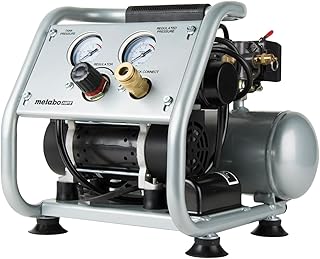
Metabo HPT EC914S 6-Gallon Pancake, 200 PSI
The 200 PSI tank rating is the durability story here: storing air at higher pressure means the regulator does more of the work and the motor cycles less often, which directly extends pump life. At 4 CFM it genuinely supports two framing nailers or a framer plus a roofer, and the caged handle and rubber feet survive being tossed into a truck bed daily.
Metabo HPT EC28M 1-Gallon Quiet Compressor
At 59 dB this is the machine for installing baseboard in an occupied house, and the low-speed induction motor that makes it quiet also runs cooler and with far less vibration transmitted through the frame. The universal quick coupler is a small detail that pays off over years of tool swaps, since it eliminates the adapter chain where leaks usually start.
Cordless Tank-Free Mini Compressor (18V Compatible)
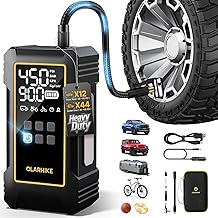
A tank-free, battery-powered pump changes the ergonomics of trim work entirely — no cord, no 25 feet of hose dragging across finished floors, no hose whip pulling your gun off the line. Output suits brad and finish nailers rather than framers, and duty cycle is the constraint to respect, but for cabinet installs and furniture assembly it’s the least fatiguing option available.
14.5-Gallon Ultra-Quiet Vertical Pancake, 8.75 CFM
This is the shop anchor: 8.75 CFM and a vertical tank that reclaims floor space while feeding three guns without hunting for pressure. At 70 dB it’s meaningfully quieter than a conventional unit of this capacity, and the oil-free pump means no drain-and-fill schedule, though you’ll want to bleed condensate weekly given the tank volume.
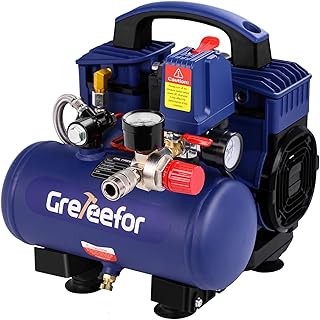
1-Gallon Ultra-Quiet Portable, 60 dB with 13-Second Fill
A 13-second recovery on a one-gallon tank means the pump barely pauses between finish nails, and 60 dB keeps it comfortable on a bench beside you. The compact footprint and light frame make it easy to reposition one-handed, which matters more than spec-sheet CFM when you’re moving around a piece of furniture rather than a wall.
Frequently Asked Questions
How many gallons do I actually need for a nail gun?
For brad, finish, and pin nailers, one gallon is sufficient because those tools use very little air per shot. Framing, siding, and roofing nailers want six gallons or more so the tank buffers rapid-fire sequences instead of leaving you waiting on the motor.
Does a quiet compressor sacrifice performance?
Not inherently. Quiet models achieve low noise with slower-turning motors and larger pump displacement rather than restricted output, so a 60 dB unit can match a loud one on CFM. They typically cost more and weigh slightly more for the same capacity.
Can I run two nail guns off one compressor?
Yes, with a splitter and adequate CFM. Two finish nailers are trivial for almost any unit; two framing nailers need roughly 4 CFM at 90 PSI and a tank large enough to absorb simultaneous firing without pressure sag that causes proud nails.
What maintenance keeps a compressor alive longest?
Drain the tank after every use — condensate is the primary cause of internal corrosion and eventual tank failure. Beyond that, keep the intake filter clean, check couplers for leaks with soapy water annually, and avoid running the pump continuously past its rated duty cycle.
Final Thoughts
For most furniture and trim work in a home shop, the Metabo HPT EC28M is the pick that respects your ears and your back without giving up the air a finish nailer needs. If you’re framing or running multiple guns, the EC914S delivers the CFM and the 200 PSI tank reserve that keep fasteners consistent, while the 14.5-gallon ultra-quiet vertical unit is the better answer for a permanent shop installation where floor space and long-session comfort both matter.