Key takeaways
- CFM at 90 PSI, not peak PSI: A framing nailer typically wants 2.0 to 2.5 SCFM at 90 PSI per gun. Sizing to delivered airflow, with headroom for a second nailer, is what keeps the pump from running duty-cycle-hot all afternoon.
- Tank volume versus carry load: Six gallons is the practical sweet spot for framing; it buffers enough air for burst sequences without pushing carry weight past the 30-to-35 pound range where single-hand transport starts straining the wrist and elbow.
- Handle geometry and balance point: A grip centered over the tank’s mass keeps the unit from swinging into your shin. Wrap-around console handles beat bolt-on straps, and a slightly raised handle reduces the shoulder shrug that causes fatigue on longer walks.
- Pump construction and service life: Oil-free induction or brushed pumps eliminate leveling and oil changes, which suits site work. Look for cast-metal cylinders, thermal overload protection, and a low-amp draw that starts reliably on a long extension cord in cold weather.
- Noise and protective shrouding: Sustained output above 80 dB adds real hearing risk and mental fatigue. Quieter pumps in the 60-to-75 dB band, paired with a steel roll cage over the gauges and regulator, protect both you and the machine.
What's inside
Framing is the one job that exposes a compressor’s weak spots. A framing nailer swallows roughly twice the air of a finish gun, and when you’re toe-nailing studs at a rhythm, tank recovery becomes the pace-setter for the whole crew. Buyers usually discover this the hard way: the pump runs nearly continuous, pressure sags below the nailer’s sink threshold, and half-driven nails start showing up in the top plate. The second discovery comes later, in the shoulders and lower back, after the fourth or fifth trip carrying an awkwardly balanced tank across a subfloor.
This guide looks at framing compressors through two lenses that spec sheets rarely address: how the machine feels over a full day of handling, and how its pump, regulator, and shell hold up after a few hundred cycles of jobsite abuse. I’ve weighed CFM delivery at 90 PSI against carry geometry, handle height, roll-cage protection, drain-valve access, and noise exposure, then narrowed the field to the units worth your money in 2026.
As an Amazon Associate we earn from qualifying purchases.



🛒 Best Price Today on Amazon
Prime members get fast, free shipping on everything above, plus member-only deals. New members get a 30-day free trial — cancel anytime.
How to Choose a Air Compressor For Framing Nail Gun (2026)
- CFM at 90 PSI, not peak PSI: A framing nailer typically wants 2.0 to 2.5 SCFM at 90 PSI per gun. Sizing to delivered airflow, with headroom for a second nailer, is what keeps the pump from running duty-cycle-hot all afternoon.
- Tank volume versus carry load: Six gallons is the practical sweet spot for framing; it buffers enough air for burst sequences without pushing carry weight past the 30-to-35 pound range where single-hand transport starts straining the wrist and elbow.
- Handle geometry and balance point: A grip centered over the tank’s mass keeps the unit from swinging into your shin. Wrap-around console handles beat bolt-on straps, and a slightly raised handle reduces the shoulder shrug that causes fatigue on longer walks.
- Pump construction and service life: Oil-free induction or brushed pumps eliminate leveling and oil changes, which suits site work. Look for cast-metal cylinders, thermal overload protection, and a low-amp draw that starts reliably on a long extension cord in cold weather.
- Noise and protective shrouding: Sustained output above 80 dB adds real hearing risk and mental fatigue. Quieter pumps in the 60-to-75 dB band, paired with a steel roll cage over the gauges and regulator, protect both you and the machine.
The Best Air Compressor For Framing Nail Gun (2026)s Reviewed
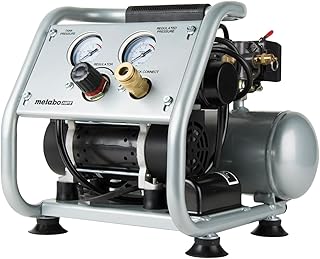
Metabo HPT EC914S 6-Gallon Pancake
With 4 CFM of flow and a 200 PSI ceiling, this is the one unit here that genuinely supports two framing or roofing nailers without pressure dropping mid-sequence. The oil-free pump and protected control panel are built for repeated truck-to-site handling, and the pancake footprint stays planted on uneven decking.
DEWALT DWFP55126 6-Gallon Pancake
At 2.6 SCFM and 165 max PSI, it delivers steady single-gun framing performance with one of the better handle-to-mass relationships in the category, which shows up as less wrist strain on repeated lifts. The high-flow regulator and dual couplers make it easy to share with a second trim gun.
Ultra Quiet 3 HP 17-Gallon
For shop-based framing, panel assembly, or long production runs, the larger tank and 71 dB output remove nearly all recovery interruptions and cut daily noise exposure meaningfully. It’s the least portable option here, so treat it as a stationary anchor rather than a carry-in unit.
BOSTITCH BTFP02012-WPK 6-Gallon Kit
A sensibly light pancake with a quieter pump than most in its class, and the included hose and accessories mean you’re framing the same day it arrives. High-flow regulator aside, keep it to one framing gun for consistent sink depth.
SENCO PC0968 Twin Tank
The twin-tank layout distributes weight along the carry axis, which balances noticeably better in one hand than a comparable single-tank unit. At 1.5 HP and 2.5 gallons it’s happiest on trim, blocking, and light framing rather than all-day wall assembly.
Frequently Asked Questions
Will a 1-gallon compressor run a framing nailer?
Not well. Compact units like the Metabo HPT EC28M are excellent for brad and finish work, where their 59 dB operation and quick coupler shine, but a framing gun will outrun that tank almost immediately.
How much CFM does one framing nailer need?
Plan on 2.0 to 2.5 SCFM at 90 PSI for steady work, and closer to 4 CFM if a second person is nailing off the same machine.
Does hose length affect nailer performance?
Yes. Every additional 50 feet of quarter-inch hose costs measurable pressure. Step up to a three-eighths-inch line for long runs, and keep the first few feet whip-hose light to spare your wrist.
What maintenance actually extends pump life?
Drain condensate after every use, keep the intake filter clean, and let the unit cool before stacking gear on it. Trapped moisture and heat kill more oil-free pumps than hours of runtime do.
Final Thoughts
For most framing work, the Metabo HPT EC914S is the strongest all-around choice thanks to its 4 CFM output and two-gun headroom, with the DEWALT DWFP55126 close behind as the more comfortable single-gun carry. If your framing happens in a shop rather than on a site, the 17-gallon ultra-quiet unit trades portability for uninterrupted airflow and a far kinder noise profile.