Key takeaways
- Tooth count vs. feed effort: More teeth mean a cleaner edge but slower material clearance, which translates to more sustained push force. Reach for 24–40 teeth when ripping thick stock and 60–80 teeth for crosscuts and sheet goods where finish matters.
- Carbide grade and tip size: Micrograin carbide with generously sized tips survives more sharpening cycles and resists the chipping that thin, budget tips suffer when they meet a hidden staple. Bigger tips also mean the blade stays usable rather than becoming disposable.
- Plate stability: A thick, laser-cut body with expansion slots and anti-vibration cutouts runs quieter and wanders less under heat. Less vibration means less hand-arm fatigue over a long session and fewer burn marks to sand out later.
- Kerf width: Thin-kerf blades remove less material and are kinder to underpowered contractor saws, reducing bogging and the temptation to force the cut. Full kerf makes sense on cabinet saws where rigidity beats efficiency.
- Coatings and arbor fit: Anti-friction or anti-stick coatings shed pitch and cut drag noticeably on resinous woods. Confirm a true 5/8-inch arbor with a snug fit, since even slight play amplifies runout and shortens blade life.
What's inside
Ask ten woodworkers why a cut went wrong and nine will blame the saw. Usually it’s the blade. A dull or poorly balanced blade forces you to push harder, and that extra feed pressure travels straight into your wrists, shoulders, and lower back. It also raises the risk of the workpiece binding and snapping back at you. From an ergonomics standpoint, the blade is the single cheapest upgrade that reduces physical strain on your body, because a sharp, well-tensioned plate does the work your arms would otherwise have to do.
This guide looks at ten 10-inch table saw blades through two lenses that rarely show up in spec sheets: how much effort they demand at the fence, and how long they hold that easy-feeding edge before they need attention. I’ve weighted carbide quality, plate flatness, vibration damping, and resharpenability over tooth-count marketing. Below you’ll find the current lineup, then a buying framework, hands-on notes on the top five, and answers to the questions that come up most in the shop.
As an Amazon Associate we earn from qualifying purchases.



🛒 Best Price Today on Amazon
Prime members get fast, free shipping on everything above, plus member-only deals. New members get a 30-day free trial — cancel anytime.
How to Choose a/an 10 Table Saw Blades (2026)
- Tooth count vs. feed effort: More teeth mean a cleaner edge but slower material clearance, which translates to more sustained push force. Reach for 24–40 teeth when ripping thick stock and 60–80 teeth for crosscuts and sheet goods where finish matters.
- Carbide grade and tip size: Micrograin carbide with generously sized tips survives more sharpening cycles and resists the chipping that thin, budget tips suffer when they meet a hidden staple. Bigger tips also mean the blade stays usable rather than becoming disposable.
- Plate stability: A thick, laser-cut body with expansion slots and anti-vibration cutouts runs quieter and wanders less under heat. Less vibration means less hand-arm fatigue over a long session and fewer burn marks to sand out later.
- Kerf width: Thin-kerf blades remove less material and are kinder to underpowered contractor saws, reducing bogging and the temptation to force the cut. Full kerf makes sense on cabinet saws where rigidity beats efficiency.
- Coatings and arbor fit: Anti-friction or anti-stick coatings shed pitch and cut drag noticeably on resinous woods. Confirm a true 5/8-inch arbor with a snug fit, since even slight play amplifies runout and shortens blade life.
The Best 10 Table Saw Blades (2026)s Reviewed
FOXBC 10-Inch 80-Tooth Ultra Finish Blade
The 80-tooth grind leaves melamine and veneered plywood with edges that barely need sanding, which saves your hands the abrasive work later. Feed slowly and steadily; this blade rewards patience rather than muscle, and the tips have held up well through repeated crosscuts in hardwood.
DEWALT DWA11040 10″ 40-Tooth Fine Finish
If you keep one blade mounted permanently, this is the one, balancing rip speed with a finish clean enough for joinery. The tungsten carbide holds its edge through mixed-material work, and the thin kerf keeps smaller saws from lugging so you’re not leaning into the cut.
WEN BL1080 10-Inch 80-Tooth Carbide-Tipped
Impressively smooth for its price bracket, with a plate that stays flat and quiet enough to notice at the end of a long day. It’s best reserved for finish cuts, since pushing it through thick rip work generates heat quickly.
WEN BL1060 10-Inch 60-Tooth Fine Finish
The 60-tooth count is arguably the smartest compromise for furniture work, clean on crosscuts without the sluggish feed of an 80-tooth. A sensible everyday blade for hobby shops that don’t want to swap tooling constantly.
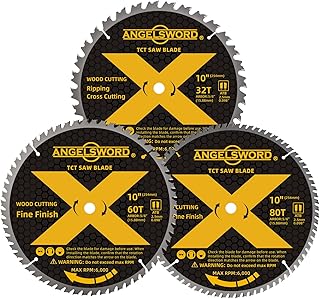
ANGELSWORD 3-Pack (32T, 60T, 80T)
Having framing, fine, and ultra-fine options on hand means you stop compromising, which is the real ergonomic win: the right blade always beats forcing the wrong one. Build quality is solid for the price, though the carbide won’t outlast premium brands.
Frequently Asked Questions
How often should I change or sharpen a blade?
Judge by feel rather than a calendar. When you notice yourself pushing harder, hearing a change in pitch, or seeing burn marks and fuzzy edges, the edge is gone. Most quality carbide blades handle two to four professional sharpenings.
Is a thin-kerf blade less durable?
Not inherently, but thin plates flex more under lateral load. Use a stabilizer and let the blade set the pace, especially on cuts deeper than an inch.
Do I need separate rip and crosscut blades?
For serious furniture work, yes. A 40-tooth combination blade covers most jobs, but dedicated blades cut faster with less strain and better results.
Can I use a table saw blade on a miter saw?
Often yes, if diameter and arbor match, though check the hook angle. Aggressive positive hook designed for table saws can grab on a sliding miter saw.
Final Thoughts
For most furniture builders, the DEWALT DWA11040 is the blade to buy first, offering the best balance of low feed effort and long-term edge retention. Pair it with the FOXBC 80-tooth for glass-smooth finish cuts, or start with the ANGELSWORD three-pack if you’d rather cover every task at once and learn which grind suits your work.