Key takeaways
- Push force over peak suction: A machine that seals too tightly against a low-pile rug becomes a plow. Look for adjustable height settings or a suction release, both of which let you dial back resistance instead of muscling through it.
- Carry weight and where it sits: Anything you lift onto a rug pad, over a threshold, or up a staircase should ideally stay under about 11 pounds, with the mass low in the body rather than perched near the handle where it multiplies wrist strain.
- Handle height and grip angle: Your forearm should stay roughly in line with the handle at mid-stroke. Fixed-height handles that force a stooped shoulder are the single most common source of fatigue in upright vacuums.
- Cord strategy: Manual cord wrapping means repeated bending and twisting at the end of every session. Auto-rewind, or a cordless design, removes that motion entirely and also spares the cord jacket from the flex fatigue that eventually causes internal breaks.
- Parts you can actually service: Washable filters, an accessible brushroll, and replaceable belts determine whether a vacuum lasts a decade or becomes landfill after a hair jam. Check that the sole plate opens without a special tool before you buy.
What's inside
Area rugs occupy an awkward middle ground in floor care. They are too plush for the sealed-suction settings that make hard floors easy, too thin to absorb the aggressive brushroll agitation that wall-to-wall carpet tolerates, and almost always bordered by an exposed edge that a vacuum wants to chew, curl, or fling across the room. Add a rug pad that shifts underfoot and you get the familiar routine: pinning a corner down with one foot while wrestling the machine with the other, which is exactly the posture that turns a ten-minute chore into a sore lower back.
This guide approaches the category the way a fixture designer would: how much force your body has to generate to move the machine, where that force lands on your wrist and spine, and which components will still be doing their job in year five. Weight distribution, handle geometry, brushroll height control, cord management, and serviceability all carry more weight here than headline suction figures. Below are the models that hold up best under that lens, followed by a selection framework and answers to the questions buyers ask most.
As an Amazon Associate we earn from qualifying purchases.


How to Choose an Area Rug Vacuum (2026)
- Push force over peak suction: A machine that seals too tightly against a low-pile rug becomes a plow. Look for adjustable height settings or a suction release, both of which let you dial back resistance instead of muscling through it.
- Carry weight and where it sits: Anything you lift onto a rug pad, over a threshold, or up a staircase should ideally stay under about 11 pounds, with the mass low in the body rather than perched near the handle where it multiplies wrist strain.
- Handle height and grip angle: Your forearm should stay roughly in line with the handle at mid-stroke. Fixed-height handles that force a stooped shoulder are the single most common source of fatigue in upright vacuums.
- Cord strategy: Manual cord wrapping means repeated bending and twisting at the end of every session. Auto-rewind, or a cordless design, removes that motion entirely and also spares the cord jacket from the flex fatigue that eventually causes internal breaks.
- Parts you can actually service: Washable filters, an accessible brushroll, and replaceable belts determine whether a vacuum lasts a decade or becomes landfill after a hair jam. Check that the sole plate opens without a special tool before you buy.
The Best Area Rug Vacuums of 2026, Reviewed
Eureka PowerSpeed NEU182B Bagless Upright
The PowerSpeed pairs a five-position height dial with a wide cleaning path, which is the combination that lets you match resistance to pile depth instead of fighting it. Its swivel steering keeps wrist rotation modest around furniture legs, and the bagless bin and washable filter mean ongoing costs stay near zero.
Hoover WindTunnel Cord Rewind Pro
The 25-foot auto-rewind cord is the durability story here: no wrapping means no repeated flex at the strain relief, historically the first thing to fail on a corded upright. Multi-cyclonic filtration holds suction steady as the bin fills, and five height settings cover everything from a flatweave to a shag border.
Eureka Airspeed NEU10AE5 Ultra-Lightweight Upright
At 7.7 pounds this is the pick for anyone with shoulder, grip, or balance limitations, and it is genuinely easy to lift onto a rug without a helper. The crevice and brush tools handle fringe and rug edges where a full-width nozzle would grab, and the washable filter keeps maintenance to a rinse.
Eureka Blaze 3-in-1 Swivel Stick Vacuum
Corded power in a stick format gives you unlimited runtime at a featherweight carry, ideal for a runner in a hallway or a rug under a dining table you clean daily. Converting to handheld mode lets you approach a bound edge from above rather than driving into it, which prevents the fraying that shortens rug life.
Shark StainStriker Portable Spot Cleaner
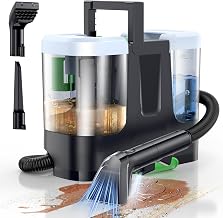
No dry vacuum resolves a wine spill, and this is the companion tool that does, with 3.5-inch stain and crevice heads sized for rug work rather than upholstery guesswork. The self-clean cycle flushes the internal lines, which is what keeps the pump and hose from degrading between uses.
Frequently Asked Questions
Will a brushroll damage my area rug?
It can, particularly on wool, viscose, or hand-knotted pieces. Use the highest height setting available or switch the brushroll off, and vacuum with the pile rather than against it.
How do I stop the vacuum from pulling the rug up?
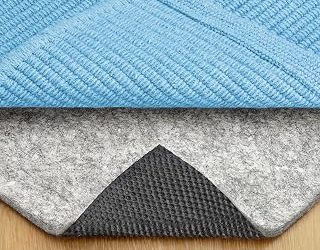
Raise the nozzle height to break the seal, add a quality non-slip pad underneath, and work inward from the center so the head never approaches an edge head-on.
Do I need a cordless model?
Not necessarily. Corded machines deliver consistent power indefinitely, and an auto-rewind cord removes most of the ergonomic penalty. Cordless makes the most sense for scattered small rugs across multiple rooms.
What actually determines how long a vacuum lasts?
Filter maintenance and brushroll hygiene, more than build quality. Rinse washable filters monthly, cut away wrapped hair before it loads the motor bearings, and replace the belt at the first sign of slippage.
Final Thoughts
For most homes, the Hoover WindTunnel Cord Rewind Pro offers the best balance of adjustable height, sustained suction, and a cord system that spares your back and outlasts hand-wrapped alternatives. Choose the Eureka Airspeed NEU10AE5 if low carry weight is the deciding factor, and keep the Shark StainStriker on hand for the spills a dry vacuum was never built to solve.