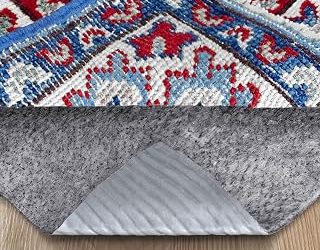
Key takeaways
- Backing chemistry first: Confirm the pad is explicitly rated for vinyl and LVP. Natural or recycled rubber that has not been formulated for PVC contact can migrate plasticizers into the wear layer and discolour it permanently. EVA, coated rubber, and food-grade silicone gripper dots are the safer families here.
- Thickness matched to the room’s job: An 1/8″ pad adds grip and a thin abrasion barrier while clearing door swings and transition strips. A 1/4″ to 1/2″ felt pad is what you want anywhere people stand for stretches — kitchen perimeters, sinks, workbenches — because compliance under load is what reduces joint fatigue, not surface plushness.
- Density over loft: Recycled felt with high fibre density recovers its shape after compression. Low-density foam bottoms out within a season under furniture legs and stays flat, which means you lose both cushioning and the protective buffer at the same time.
- Adhesive-free construction: Skip anything with tacky glue or a peel-and-stick face. On vinyl these leave residue, and on floating LVP installations they can restrict the small seasonal movement the floor needs.
- Trimmability and edge behaviour: Buy roughly an inch smaller than your rug on each side so the pad disappears under the border. Needle-punched felt and felt-rubber composites cut cleanly with a utility knife and will not unravel at the cut line.
What's inside
Luxury vinyl plank is a resilient floor, and that word does a lot of quiet work. The wear layer is thin, the core is PVC-based, and the surface is softer than it looks under a loaded chair leg or a heel strike. Two failure modes show up again and again in homes with LVP: abrasion, where grit trapped beneath a sliding rug polishes and hazes the finish, and chemical marring, where a backing containing certain plasticizers or uncured rubber compounds leaves a yellow or amber ghost that no cleaner will lift. Add the ergonomic side of things — a rug laid straight over vinyl gives almost nothing back to your knees, hips, and lower back — and the pad stops being an accessory. It is the component doing the actual work.
This guide looks at rug pads through two lenses: how the material behaves against a vinyl wear layer over years of foot traffic, and how much usable underfoot compliance you get per inch of thickness. Below you will find picks that range from a low-profile grip layer for entryways and door-clearance situations to a thick felt cushion built for standing zones, plus the selection criteria and specification details worth checking before you commit.
As an Amazon Associate we earn from qualifying purchases.


How to Choose a Rug Pad For Vinyl Plank Flooring (2026)
- Backing chemistry first: Confirm the pad is explicitly rated for vinyl and LVP. Natural or recycled rubber that has not been formulated for PVC contact can migrate plasticizers into the wear layer and discolour it permanently. EVA, coated rubber, and food-grade silicone gripper dots are the safer families here.
- Thickness matched to the room’s job: An 1/8″ pad adds grip and a thin abrasion barrier while clearing door swings and transition strips. A 1/4″ to 1/2″ felt pad is what you want anywhere people stand for stretches — kitchen perimeters, sinks, workbenches — because compliance under load is what reduces joint fatigue, not surface plushness.
- Density over loft: Recycled felt with high fibre density recovers its shape after compression. Low-density foam bottoms out within a season under furniture legs and stays flat, which means you lose both cushioning and the protective buffer at the same time.
- Adhesive-free construction: Skip anything with tacky glue or a peel-and-stick face. On vinyl these leave residue, and on floating LVP installations they can restrict the small seasonal movement the floor needs.
- Trimmability and edge behaviour: Buy roughly an inch smaller than your rug on each side so the pad disappears under the border. Needle-punched felt and felt-rubber composites cut cleanly with a utility knife and will not unravel at the cut line.
The Best Rug Pad For Vinyl Plank Flooring (2026)s Reviewed
RUGPADUSA Vinyl Lock (Felt and EVA)
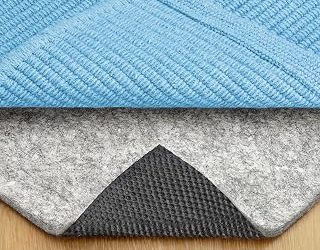
This is the most literal answer to the question, engineered with an EVA grip layer specifically so there is no rubber-to-PVC contact to worry about. The felt face gives a rug enough body to sit flat, and in the smaller sizes it suits runners and accent rugs that otherwise creep with every pass.
RUGPADUSA Basics 1/2″ Felt
The thickest option here and the one I recommend for standing comfort, since half an inch of dense recycled felt is where you start feeling real load distribution through the heel and knee. It is friction-based rather than grippy, so it belongs under heavy or furniture-anchored rugs rather than a lightweight flatweave in a hallway.
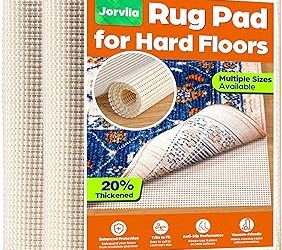
RUGPADUSA Dual Surface 1/8″ Felt + Rubber
A well-balanced composite for spaces where clearance matters: enough felt to buffer grit and enough rubber grip to stop lateral shifting on slick plank. The rubber is formulated for hard-floor use, though it is still worth cross-checking your flooring warranty language if the manufacturer is specific about backings.
1/8″ Felt Rubber Dual Surface Waterproof Pad
The waterproof layer is the differentiator, adding a moisture barrier between spills and the seams of your planks — genuinely useful in dining rooms and under pet bowls. At 3 x 5 feet it is sized for the small rugs that tend to slide most.
Veken Cushioned Gripper with Silicone Backing
Silicone dot arrays hold position without the chemical questions rubber raises, and the quarter-inch felt body delivers a noticeable step up in underfoot softness over thin gripper mats. A sensible large-format pick for living rooms at 8 x 10.
Frequently Asked Questions
Will a rug pad damage or discolour my vinyl plank?
Only if the backing is incompatible. Uncoated natural rubber and cheap PVC-based mesh are the usual culprits behind amber staining. Felt with EVA, silicone, or hard-floor-rated coated rubber is the reliable route.
How thick should the pad be?
An 1/8″ pad for grip and clearance, 1/4″ for general comfort, and 1/2″ where you stand and work. Thicker is not automatically better — a tall pad under a thin rug can feel unstable and creates a trip lip at the edge.
Do I still need a pad if my rug has a non-slip backing?
Yes, and arguably more so. Integrated rubberised backings are the ones most likely to react with vinyl, and they provide no cushioning or abrasion buffer at all.
Can I use a pad over radiant-heated LVP?
Generally yes with breathable felt, but check your heating system’s maximum surface temperature and thermal resistance guidance before layering thick padding over it.
Final Thoughts
For vinyl specifically, the RUGPADUSA Vinyl Lock is the low-risk default — its EVA grip layer sidesteps the chemistry problem entirely. If comfort is the priority in a standing zone, the RUGPADUSA Basics 1/2″ felt does the most for your joints per dollar, while the Dual Surface 1/8″ felt and rubber pad is the one to choose when door clearance and grip both matter.