Key takeaways
- Backing material: Look for vinyl-compatible rubber, EVA, or silicone formulations rather than unknown adhesives, PVC, or aggressively bonded coatings that may interact with the flooring.
- Grip without residue: The pad should resist creeping while remaining removable and residue-free. Excessive tack can make repositioning difficult and may complicate floor care.
- Thickness and cushioning: Felt and thicker constructions improve comfort, reduce rug wear, and soften impact, but excessive height can create a trip edge or interfere with doors.
- Rug dimensions: Select a pad slightly smaller than the rug—typically about 1 to 2 inches inside each edge—so it stays hidden and does not catch underfoot.
- Moisture and maintenance: In kitchens, entryways, and homes with pets, prioritize a pad that can be lifted, aired out, and cleaned without holding moisture against the LVP.
What's inside
Choosing a rug pad for luxury vinyl plank flooring is more complicated than simply buying the thickest option available. LVP can scratch, discolor, dent, or develop trapped moisture when a pad uses the wrong backing, sheds fibers, or grips too aggressively. A pad also has to balance stability with enough give to protect the floor and make walking more comfortable.
This guide evaluates the leading options through an ergonomics-and-durability lens: surface traction, cushioning, thickness, floor compatibility, edge stability, and practical maintenance. The right choice depends on whether you need a barely-there gripper, a cushioned felt layer, or a dual-surface design for a large, frequently used rug.
As an Amazon Associate we earn from qualifying purchases.


How to Choose a Rug Pad For Lvp Floors (2026)
- Backing material: Look for vinyl-compatible rubber, EVA, or silicone formulations rather than unknown adhesives, PVC, or aggressively bonded coatings that may interact with the flooring.
- Grip without residue: The pad should resist creeping while remaining removable and residue-free. Excessive tack can make repositioning difficult and may complicate floor care.
- Thickness and cushioning: Felt and thicker constructions improve comfort, reduce rug wear, and soften impact, but excessive height can create a trip edge or interfere with doors.
- Rug dimensions: Select a pad slightly smaller than the rug—typically about 1 to 2 inches inside each edge—so it stays hidden and does not catch underfoot.
- Moisture and maintenance: In kitchens, entryways, and homes with pets, prioritize a pad that can be lifted, aired out, and cleaned without holding moisture against the LVP.
The Best Rug Pad For Lvp Floors (2026)s Reviewed
RUGPADUSA Vinyl Lock
The Vinyl Lock combines felt with EVA in a format designed specifically for vinyl and luxury vinyl plank flooring. Its 2-by-8-foot profile is well suited to runners, while the relatively slim construction helps preserve clearance beneath doors and reduces the chance of a bulky transition.
RUGPADUSA Basics Felt Pad
The RUGPADUSA Basics 100% felt pad offers substantial cushioning at 3/8 inch, making it a strong choice for living rooms and other spaces where standing comfort matters. Felt is particularly effective beneath rugs that tend to wrinkle or feel thin, although this pad is better for cushioning than for solving severe sliding on its own.
Mayhawk Non-Slip Rug Gripper
Mayhawk’s thin 2-by-6-foot gripper uses a silicone-style, residue-free surface and a vacuum-inspired grip approach. It favors discreet stability over plushness, making it practical beneath a runner or low-profile rug where a thick pad could create a noticeable lip.
RUGPADUSA Dual Surface
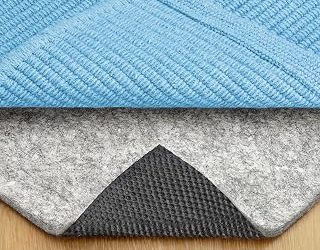
The RUGPADUSA Dual Surface pairs felt cushioning with a rubber non-slip backing in a 1/4-inch build. That combination gives large area rugs a useful balance of underfoot comfort and lateral control, while the moderate thickness is less cumbersome than a heavy cushion pad.
Jorvila Non-Slip Rug Pad Gripper
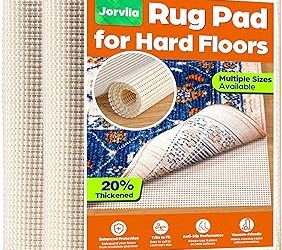
Jorvila’s 8-by-10-foot gripper is aimed at large rugs on hard surfaces, with cushioning intended to protect the floor and improve walking comfort. It is a sensible candidate for a living-room arrangement, but buyers should confirm the finished dimensions and inspect the backing periodically for trapped dust or moisture.
Frequently Asked Questions
Can I use any rug pad on LVP flooring?
No. Some pads contain materials or adhesives that can leave marks, discolor the finish, or react poorly with vinyl flooring. Choose a product explicitly labeled for vinyl or LVP, and follow both the pad and flooring manufacturers’ care guidance.
Is felt or rubber better under an LVP-area rug?
Neither is universally better. Felt provides cushioning and helps a rug feel more substantial, while rubber, EVA, and silicone-based surfaces generally provide more grip. A felt-and-rubber or felt-and-EVA combination is often the most versatile compromise.
How thick should a rug pad be on LVP?
For most rooms, 1/8 to 1/4 inch is a practical range. A 3/8-inch pad can deliver noticeably better comfort, but check door swing, transitions, and the rug’s edge before committing to a thicker profile.
How can I prevent moisture under a rug on LVP?
Lift the rug and pad periodically, especially after spills, mopping, or humid weather. Clean according to the pad’s instructions, allow both layers and the floor to dry fully, and avoid placing a rug over damp LVP.
Final Thoughts
For a runner, the LVP-focused RUGPADUSA Vinyl Lock is the most targeted choice. For large rugs, the RUGPADUSA Dual Surface offers the strongest overall balance of grip and cushioning, while the RUGPADUSA Basics is the better comfort-first option when plush support matters most.