
The moment a mat fails is easy to pinpoint: you’re three breaths into downward dog, your palms begin to creep forward, and suddenly the pose is about damage control instead of your hamstrings. That slow slide is rarely about your technique. It’s about a surface that either repels sweat instead of drinking it in, or has a slick factory finish that never wore off. Grip is the one variable that changes how a practice feels more than any other, and it’s the hardest thing to judge from a product photo.
What follows is a shortlist built around that single question: does the mat hold you when your hands get damp? From there we weighed cushioning under kneecaps, edge stability during standing sequences, packability for anyone hauling gear on a bike or a subway, and whether the thing survives past its first year. Ten mats, ten different practices — heated flow, restorative floor work, a sunrise session on a hotel carpet.
Our top picks




As an Amazon Associate we earn from qualifying purchases at no extra cost to you.

Prime
Gaiam Thick Yoga Mat with Easy-Cinch Carrying Strap
View on Amazon
July 17, 2026

Retrospec
Prime
Retrospec Solana Yoga Mat 1" Thick w/Nylon Strap for Men & Women – Non Slip Exercise Mat for Home Yoga, Pilates, Stretching, Floor & Fitness Workouts
View on Amazon
July 17, 2026

wimwum
Prime
Extra Wide Yoga Mat 72" x 32", 6mm Non Slip TPE Exercise Mat with Carrying Strap, Large Workout Mat for Yoga, Pilates, Stretching, HIIT & Home Gym
View on Amazon
July 17, 2026

YOTTOY
Prime
YOTTOY Yoga Mat,Extra Thick Yoga Mat (1/2inch),Professional TPE Exercise Mat,Non-Slip Workout Mat for Yoga, Pilates, Fitness, Barefoot Workouts, Home Gym Studio with Strap
View on Amazon
July 17, 2026

AmazonBasics
Prime
Amazon Basics Extra Thick Exercise Yoga Mat with Carrying Strap
View on Amazon
July 17, 2026
View on Amazon
never
Quick Comparison
| Mat | Thickness | Surface | Best For |
|---|---|---|---|
| Manduka PRO | 6 mm | Closed-cell PVC | Long-haul durability |
| Liforme Original | ~4.2 mm | Polyurethane over rubber | Alignment guidance |
| Jade Harmony | ~4.8 mm | Open-cell natural rubber | Raw, immediate traction |
| lululemon The Reversible Mat | 5 mm | Polyurethane / rubber base | Sweaty palms |
| B Yoga B Mat Everyday | 4 mm | Natural rubber | Wide-stance practices |
| Yoga Design Lab Combo | ~3.5 mm | Microfiber over rubber | Hot yoga, no towel |
| Manduka eKO Superlite | 1.5 mm | Natural rubber | Travel and carry-ons |
| Gaiam Dry-Grip | 5 mm | Textured PVC | Budget heated classes |
| Amazon Basics Extra Thick | 13 mm | NBR foam | Knees, stretching, rehab |
| Alo Warrior Mat | 5 mm | Polyurethane / rubber | Studio-grade grip with style |
How to Choose
- Match the surface to your sweat. Closed-cell tops repel moisture and need a towel once you’re dripping. Open-cell rubber and polyurethane absorb it and get grippier — but they also absorb everything else, so they demand real cleaning.
- Treat thickness as a tradeoff, not an upgrade. Anything past 6 mm softens the floor feedback you need for balance poses. Save the plush stuff for restorative work, kneeling drills, and physical therapy.
- Measure yourself against the mat. Standard length is 68 inches, which strands anyone over about 5’10” during savasana. Extra-long runs 71 to 85 inches, and a 26-inch width buys room for wide warriors.
- Weigh it before you commit. A 7-pound mat is a joy to unroll and a burden on a twenty-minute walk. If the mat lives in a studio cubby, weight is irrelevant; if it commutes, keep it under 4 pounds.
- Check the material against your body. Natural rubber grips beautifully but carries a distinct smell for a few weeks and contains latex proteins. TPE and PVC skip the latex question entirely.
Top Picks Reviewed
Manduka PRO
The tank of the category. Dense 6 mm closed-cell construction means your knee never bottoms out on a hardwood floor, and the surface doesn’t flake or dimple after years of use. The catch: it ships slick. A coarse salt scrub plus a few weeks of practice breaks in the top layer. Until then, use a towel and be patient — it’s the last mat most people buy.
Liforme Original Yoga Mat
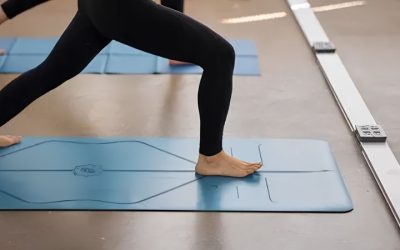
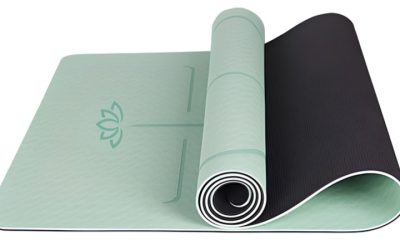
An etched center line, angled hip markers, and hand placement guides turn the mat into a quiet teacher. Useful if you practice alone and can’t tell whether your front knee tracks over the ankle. The grippy polyurethane top handles sweat well. It’s pricey and the markings won’t suit anyone who finds visual clutter distracting.
Jade Harmony
Grip with no break-in period whatsoever. Open-cell natural rubber gives that tacky, almost sticky hold from the first session, and the cushioning is forgiving for a mat under 5 mm. It wears faster than PVC and carries a strong rubber odor early on. Jade also plants a tree per mat sold.
lululemon The Reversible Mat 5mm
Two surfaces in one: the polyurethane side drinks sweat and locks your hands down, the rubber side works for dry practices and rolling around on the floor. Antimicrobial treatment keeps the smell manageable. The absorbent face picks up dirt fast, so keep it off gym carpet and wipe it after class.
B Yoga B Mat Everyday
Notably wide, with dependable rubber traction and a firmer feel than Jade. Great for taller practitioners and anyone whose feet keep landing on the floor during triangle. At 4 mm it’s still thin enough to feel grounded, and the finish holds up to daily use without polishing smooth.
Yoga Design Lab Combo Mat
A microfiber towel bonded permanently to a rubber base — no separate towel to bunch up mid-flow. Bone dry it’s slightly slippery, which is the honest tradeoff; a light mist of water fixes it. Machine washable, brightly patterned, and the most practical single-piece answer to heated classes.
Manduka eKO Superlite
Folds like a shirt into a suitcase at roughly 2 pounds. It’s 1.5 mm of natural rubber, so treat it as a grip layer over carpet, a hotel rug, or a studio’s loaner mat rather than standalone cushioning. Traction is legitimately good, which is more than can be said for most travel mats.
Gaiam Dry-Grip
The value play for heated practice. The textured PVC surface keeps hands planted better than the price suggests, and 5 mm handles kneeling comfortably. It won’t last as long as a rubber mat under six sessions a week, but for two or three classes it’s more than enough.
Amazon Basics Extra Thick Yoga Mat
Half an inch of NBR foam, aimed squarely at sore knees and floor stretching. Balance poses feel wobbly on something this soft, so don’t buy it for vinyasa. For rehab exercises, mobility work, or a Pilates-adjacent routine on a tile floor, it’s the cheapest real comfort available.
Alo Warrior Mat
Studio-caliber grip in a heavier, plusher package than most rubber mats. The polyurethane top handles moisture, the 5 mm base absorbs impact, and the moss and neutral colorways look better than the standard purple. It’s dense and weighty, which makes it a mat you leave in one place.
Frequently Asked Questions
What thickness actually suits me?
Around 4 to 5 mm is the sweet spot for flowing practices, balancing floor feedback against joint protection. Drop to 3 mm or below only for travel, and step up to 8 mm or more if your practice is mostly seated, kneeling, or supine.
Why do my hands still slide on a grippy mat?
Usually residue. Manufacturing film on a new mat, or accumulated body oil and lotion on an old one, sits between your skin and the surface. Scrub with diluted white vinegar and let it dry fully. If sliding only starts once you sweat, the mat’s surface repels moisture and needs a towel.
How should I clean it without ruining it?
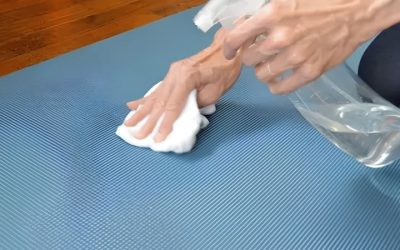
Wipe with water and a drop of mild soap, then air dry flat or hung — never folded damp. Skip alcohol and essential oils on natural rubber; both degrade it. Absorbent polyurethane tops should be wiped after every sweaty session, since they hold bacteria the way a sponge does.
How long should a mat last?
A dense closed-cell mat can run five to ten years of regular practice. Natural rubber and polyurethane typically give two to four before the grip glazes over or the surface starts shedding. Replace it when the traction stops recovering after a wash, or when worn hollows appear where your hands land.
Final Thoughts
Pick by sweat first, then by body. If your hands stay dry, a closed-cell mat like the Manduka PRO will outlive several replacements. If you leave puddles, an absorbent top — the lululemon Reversible or the Yoga Design Lab Combo — removes the towel from the equation. Tall practitioners should widen and lengthen before anything else, and anyone spending most of their time on knees or spine should just buy the thick foam and stop overthinking it. The right mat disappears underneath you. That’s the whole test.
Write Your Review
No reviews yet. Be the first to share your experience!