Our Top Picks
Pros & cons
- 660-pound capacity on a reinforced steel frame
- Eight backrest angles cover incline, decline, and flat training
- Folds in one step for compact storage
- 29.3-inch backrest may be long for smaller rooms
- Leather-style padding needs periodic wiping to resist wear
Pros & cons
- ASTM-certified for an 827-pound capacity limit
- 84 adjustable positions cover incline, decline, and flat training
- Folds down for storage under a bed or sofa
- User weight is capped lower at 330 pounds
- 28-inch backrest may be excessive for smaller spaces
For PowerBlock dumbbells, the best bench is a flat-folding adjustable model with a stated weight rating well above your body weight plus your heaviest dumbbells, a back pad that reaches at least 45 degrees, and a wide, stable base; the maker’s own PowerBench 2.0 is the obvious match, while a sturdy third-party adjustable bench works if the numbers line up. This guide explains how to judge incline range, weight rating, width and stability, and how to fit a bench into a normal room without turning it into a permanent obstacle.
What a Bench Does for Dumbbell Training
Dumbbells let you press, row and fly through a free range of motion, but most of those exercises are easier and safer when your back is supported. A bench gives you a stable surface for chest presses, shoulder presses, supported rows and seated curls. An adjustable bench adds incline positions so one piece of furniture-sized equipment covers many exercises. Because PowerBlock sets are compact and often kept in small spaces, the bench is usually the largest item in the room, so its size and storage matter as much as its features.

NICEPEOPLE Adjustable Weight Bench for Home Gym, 660LBS Capacity Workout Bench with 8 Backrests for Chest Shoulders Arms, Compact and Foldable Strength Bench for Small Space Apartment Room (XL)
Picked as a relevant option in this category.
View on Amazon
YOLEO Adjustable Weight Bench, ASTM-Certified 827LBS, 98% Pre-Assembled | Foldable Gym Bench with 84 Positions Incline Decline Flat, Wider Seat for Home Gym
Chosen because it specifies ASTM-Certified 827LBS and 98% Pre-Assembled.
View on Amazon
FLYBIRD WB5 Weight Bench, ASTM-Certified 800LBS Adjustable Weight Bench Workout Bench Foldable for Home Gym, 90° to -30° FID and 30in Extended Backrest for Bench Press Strength Training Exercise
Picked as a relevant option in this category.
View on Amazon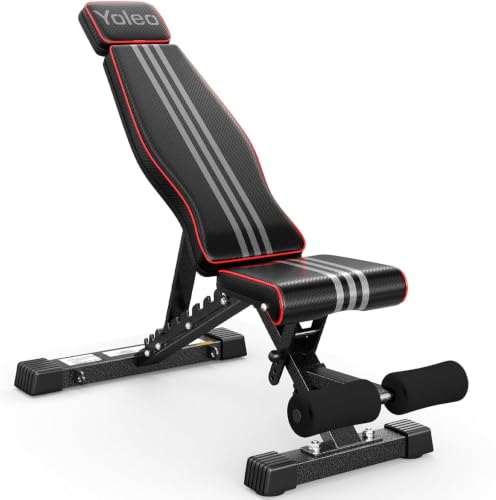
YOLEO Adjustable Weight Bench, ASTM-Certified 827LBS, Extended Backrest | Extended Head and Spine Support, 90 Positions Incline Decline Flat, 3s Fast Folding and Space Saving
Chosen because it specifies ASTM-Certified 827LBS and Extended Backrest.
View on AmazonKey Bench Features Explained
Incline range
The back pad angle changes which muscles feel the work. A flat position suits a standard press; a 30 to 45 degree incline suits upper-chest and shoulder-focused presses; a near-vertical setting supports seated overhead presses. Reviewers describe the older PowerBlock Sport Bench as having flat, 30, 45, 60 and military (near-vertical) positions. The newer PowerBench 2.0 is reported to offer flat, 15, 30, 45, 60 and 80 degree back angles, with the seat flat or at 20 degrees, for 12 positions in total. If you mainly press, a bench with a few well-spaced angles is enough; fine steps matter more to people who like to dial in a position.
Weight rating
The stated capacity should cover your body weight plus the dumbbells plus some margin for dynamic movement. A reviewer reports the Sport Bench at 550 pounds and the PowerBench 2.0 at 1000 pounds, which are the maker’s or reviewers’ stated figures. Even a fully loaded 90 pound PowerBlock pair leaves plenty of headroom on either one. For any other bench, look for an explicit stated rating, not a vague claim.
Width and pad length
A wider pad gives more support for the shoulders and feels more stable under a press, while a narrower pad leaves room for the arms to move on rows and flys. Pad length matters for taller people, who need the pad to reach from hips to upper back when flat. Compare the listed pad dimensions to your height rather than relying on a general category.
Flat height and seat
A low flat height lets shorter lifters keep their feet on the floor. Reviewers praise the Sport Bench for a flat height of about 16 inches. A seat that adjusts or tilts helps keep you from sliding down the pad during incline presses.
Stability and footprint
Look at how wide the base is, how the frame meets the floor, and whether rubber feet or end caps are included. One reviewer notes that the steel front bar ends on the Sport Bench have no rubber covers and can feel slightly unstable on some floors, which is a good reminder to put a mat underneath whatever you buy.
Bench Options at a Glance
| Bench | Stated incline positions | Stated capacity | Other stated details | Best for |
|---|---|---|---|---|
| PowerBlock PowerBench 2.0 | Back: flat, 15, 30, 45, 60, 80 degrees; seat flat or 20 degrees | 1000 lb (reviewer report) | Stands upright for storage; optional attachments for dips and other work | Buyers who want a maker-matched bench |
| PowerBlock Sport Bench (earlier model) | Flat, 30, 45, 60, military | 550 lb (reviewer report) | About 50 by 21 by 16 inches flat, about 57 lb | Used buyers, tighter budgets |
| Third-party adjustable bench | Varies; check the maker’s chart | Varies; look for a stated rating | Foldable models save space | Buyers already owning a bench or wanting more choice |
Figures above come from reviewer summaries of the maker’s specifications. The maker’s page is the best source for current dimensions and accessories, and the assembly manual for the exact steps.
PowerBlock Bench Compatibility
Dumbbells do not attach to a bench, so there is no formal compatibility. What matters is the capacity, the clearance and the layout. The block shape of PowerBlock sets means you can set them on the floor or a stand beside the bench. A bench with a narrow pad leaves more room for the blocks on either side, while a wide pad can make it harder to set the blocks down close to you at the start of a press. Many lifters use a kick-up or knee-up approach to get the dumbbells into position, and a stable bench makes that safer.
The PowerBench 2.0 is described by the maker’s reviewers as pairing with the Elite and Pro lines, and one reviewer says the older Sport Bench has plenty of capacity left even with a fully loaded 90 pound set. That is a reviewer statement rather than a guarantee, so rely on the stated capacity numbers.
Room Layout and Home Fit
An adjustable bench is longer than most people expect. When flat, reviewers list the Sport Bench at about 50 inches long, which is nearly the length of a small desk. Plan the room around the longest dimension plus working space on each side.
- Measure with the dumbbells out. You need room beside the bench to set down the blocks, plus room above for pressing without hitting a ceiling fan or shelf.
- Allow clearance for the foot end. Feet need room to plant. Placing the foot end against a wall is not ideal for most presses.
- Use a mat. A mat protects hardwood and keeps a bench from creeping. It also protects against scuffs from end caps.
- Plan storage. A bench that stands upright is easier to tuck beside a wardrobe or behind a door. The PowerBench 2.0 is reported to store upright.
- Think about ceiling height. Overhead presses on a near-vertical bench need clear space above your head and hands.
Pick This Bench If…
| Pick this if… | Choose | Reason |
|---|---|---|
| You want a bench built around PowerBlock use and plan to add accessories later | PowerBench 2.0 | Stated wider incline range and high capacity; optional attachments |
| You find a used or discounted older bench | PowerBlock Sport Bench | Five back positions and 550 lb stated capacity, but confirm condition and parts |
| You already own a foldable adjustable bench | Keep it | Make sure its stated capacity covers you plus your heaviest dumbbells |
| Space is very tight | A bench that folds or stands upright | Storage matters more than features |
| You mostly do floor presses | Possibly no bench yet | Floor presses work for lighter sessions; add a bench later |
Alternatives to Consider
- Bowflex SelectTech sets with the maker’s bench: The 552 pair is listed by the maker as 5 to 52.5 pounds and the 1090 as up to 90 pounds. The maker sells adjustable benches designed around its dumbbell range, so the bench question is similar but the brand match differs.
- Nuobell: A dial-style adjustable dumbbell that reviewers describe as fast to change. Any adjustable bench with a suitable rating works, and the maker lists its own bench options on its site.
- IronMaster: A quick-lock system that often ships with or alongside its own bench in a bundle; read the maker’s page for the bench details.
- A flat-only bench: Cheaper and sturdier for the money, but with fewer exercises. It suits buyers who mostly do rows and flat presses.
Whichever brand you pick, the bench criteria above stay the same: incline range, stated capacity, width, flat height and stability.
Care and Safety Notes
- Follow the maker’s weight limits and assembly instructions. Tighten all hardware and re-check it periodically.
- Inspect the pad, seams and pins before use. Stop using a bench with a cracked frame, loose pin or torn pad.
- Set the back pad into a locked position before you sit down, and make sure the pin is fully engaged.
- Bring dumbbells into position carefully to avoid straining your shoulders. If it hurts, stop.
- Use a spotter or choose lighter weights when trying a new incline, especially for overhead movements.
- Consult a qualified professional if you have an injury, joint issue or health condition before starting a new routine.
- Wipe the pad with a damp cloth and mild cleaner, and keep the bench dry to protect the upholstery and metal.
Buying Checklist
- Add your body weight to the heaviest dumbbell pair you expect to use and compare it with the stated capacity.
- Look for the incline angles you will actually use.
- Check the flat height against your leg length.
- Measure the room, including the clear space beside and above the bench.
- Decide how you will store the bench when not in use.
Frequently Asked Questions
Does PowerBlock make its own bench?
Yes. Reviewers describe the PowerBench 2.0 as the current maker bench, with a back pad that moves between flat and 80 degrees and a stated capacity of 1000 pounds. An earlier Sport Bench is also described by reviewers, with five back positions and a 550 pound stated capacity.
Can I use any adjustable bench with PowerBlock dumbbells?
Yes, because the dumbbells are not attached to the bench. Choose one with a stated capacity that covers your body weight and the dumbbells, a stable base and an incline range that matches your exercises.
How much incline do I actually need?
Many routines use flat, around 30 to 45 degrees, and a near-vertical seat for overhead presses. Extra positions are nice but not essential. Check the angles on the bench chart for the ones you will use most.
Will a bench fit in a small room?
A flat bench can be around 50 inches long, so measure first. Benches that fold or stand upright help in tight rooms. Leave room beside the bench for the dumbbells and above it for pressing.
Is a bench safe on hardwood or carpet?
A firm mat under the bench protects hardwood and helps keep it from sliding. On carpet, a hard mat or board prevents the legs from sinking. Make sure the bench sits level without rocking before you load it.
Should I buy the bench or the dumbbells first?
If you have limited budget, many people start with the dumbbells and train on the floor, then add a bench once they know which exercises they use. If you already know you want incline work, buying both together saves planning time.