Our Top Picks
 Sakugi 2-Tier Over the Sink Dish Drying RackStandard - 3 Baskets33 x 33 x 33 inches5.4 poundsCheck on Amazon
 Kitsure Adjustable Over The Sink Dish Drying RackLarge11 x 30 x 21.5 inches5.46 poundsCheck on Amazon
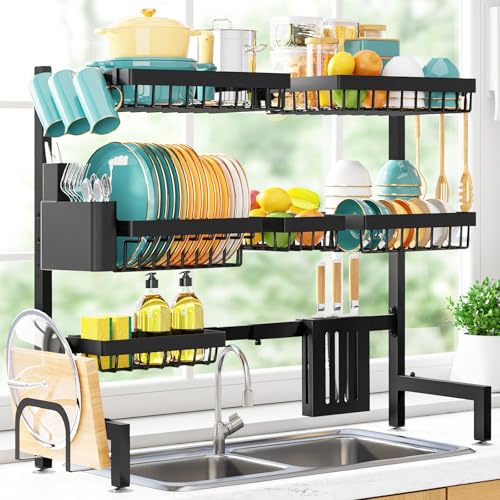 Sakugi 3-Tier Over the Sink Dish Drying RackUltra - 6 Baskets33 x 33 x 33 inches9.3 poundsCheck on Amazon
 ADBIU Over The Sink Dish Drying Rack31" - 39.4"L x 12"W x 34" - 38"H12 x 35 x 21 inches13.9 poundsCheck on Amazon
For most kitchens, an adjustable stainless steel over-the-sink rack with a utensil cup and cutting-board holder is the best fit, while compact apartments may prefer a roll-up rack that sits across the sink and those with limited counters can use a tiered or two-level frame. The deciding factors are your sink width, the weight the rack must hold and whether you want the rack to drain directly into the sink.
Over-the-Sink Dish Rack Types at a Glance
| Type | Best for | Typical stated features | Main limit |
|---|---|---|---|
| Adjustable stainless steel rack | Standard sinks and daily use | Extendable arms, utensil cup, drying space | Heavier; needs room around the sink |
| Two-tier over-sink rack | Large households and many dishes | Plate level and bowl level | Needs clearance above the sink; can wobble if overloaded |
| Roll-up (silicone or steel) rack | Small kitchens and RVs | Rolls up for storage | Lower weight limit; bowls may shift |
| Rack with cutting board or colander | Prep and drying in one | Multi-use accessories | Accessories vary and may not fit all sinks |
| Foldable or collapsible rack | Occasional use, storage-friendly | Folds flat | May feel less sturdy |
| Wall-mounted rack | Free counter space | Mounted above or beside sink | Needs secure wall mounting |
Measure Your Sink First
Measure the inside width and length of your sink, and the distance between the sink edges. Over-the-sink racks need to rest firmly on the sides of the sink or sit across the basin. Check the minimum and maximum widths the maker lists for adjustable models, and the size of the sink lip. Some sinks have rounded or sloped rims that affect stability. If you have a double-bowl sink, consider whether the rack will span both or sit on one side.
Sakugi 2-Tier Over the Sink Dish Drying Rack, 30"-33.9" L, Black | Expandable, Large Capacity, Stainless Steel, Cutlery & Utensil Holders, Kitchen Storage & Organization, 11" W x 21.5" H
Chosen because it specifies 30"-33.9" L and Black.
View on AmazonKitsure Adjustable Over The Sink Dish Drying Rack, 26.8" -33.9"x21.5" | Sink Drying Rack for Kitchen Sink, Dish Rack Over Sink with Cutlery & Utensil Holders, Kitchen Storage, Black
Chosen because it specifies 26.8" -33.9"x21.5" and Sink Drying Rack for Kitchen Sink.
View on AmazonSakugi 3-Tier Over the Sink Dish Drying Rack, 31.5"-39.5" L, Black | Expandable, XX-Large Capacity, Stainless Steel, Cutlery & Utensil Holders, Kitchen Storage & Organization, 12" W x 30.5" H
Chosen because it specifies 31.5"-39.5" L and Black.
View on AmazonADBIU Over The Sink Dish Drying Rack (Expandable Height and Length) Snap-On Design 2 Tier Large Dish Rack 31-39.4L x 12W x 34-38H inches
Picked as a relevant option in this category.
View on AmazonCheck the height above the sink to ensure the rack doesn’t hit the faucet or cabinets, especially for two-tier designs. Faucets with high-arc necks can clash with tall racks.
What to Look For
- Material: 304 stainless steel is commonly used for corrosion resistance. Lower-grade metals can rust over time if wet. Silicone and coated wire offer scratch protection for glassware but can show wear.
- Weight capacity: makers state a maximum load. Heavy cast-iron pans and stacks of plates can exceed it.
- Adjustability: expandable arms help fit different sink widths. Check that the locking mechanism holds firmly.
- Drainage: design that drains directly into the sink reduces counter mess.
- Accessories: utensil holder, cup holders, knife slots and a cutting-board holder add convenience; check whether they are removable.
- Assembly: some racks need screws and assembly; others ship ready to use.
- Feet and pads: rubber or silicone feet protect the sink and reduce sliding.
Materials and Care
Stainless steel is the most common choice for over-sink racks. Wipe it dry occasionally and avoid abrasive pads that may scratch. Coated steel and wire racks can chip in the coating, and chipped areas may rust. Silicone mats and roll-up racks are heat resistant according to some makers, but follow the stated temperature limit before placing hot pans. Bamboo components can warp if kept constantly wet, so use them only where the maker says they are suitable.
Keep the rack clean to avoid mold or mildew. Wash the rack with warm soapy water on a regular basis and let it dry completely. Look for removable trays or utensil cups that can go in the dishwasher if the maker allows.
Brands and Lines Commonly Discussed
Several brands are regularly cited in roundups. Simple Houseware, Sakugi, Seville Classics, Joseph Joseph, Rubbermaid, Kingrack and Mdesign list over-sink and roll-up racks, with stainless steel and silicone designs. IKEA sells several sink-side drying solutions, and Umbra and Oxo are known for compact dish drainers. Lineups change often, so read the maker’s current product page for dimensions, load rating and material details. Independent outlets such as Wirecutter, Good Housekeeping and Real Simple periodically test dish racks and describe real-life stability, drainage and rust issues.
Budget Tiers
| Tier | What to expect | Trade-offs |
|---|---|---|
| Budget | Coated wire or thin steel, basic adjustability, few accessories | Lower weight limit, coating can chip and rust |
| Mid-range | Stainless steel, adjustable arms, utensil cups and cutting-board holders | Heavier; assembly may be needed |
| Premium | Heavier-gauge stainless, tested joints, modular accessories, strong warranties | Larger investment; may be overkill for small kitchens |
Safety and Practical Notes
- Do not exceed the maker’s stated weight limit; heavy pots can cause a rack to shift or tip.
- Keep sharp knives in a dedicated slot or holder with the blade facing down or away from the user, as the maker suggests.
- Check the rack regularly for loose screws or bent arms and tighten or replace if needed.
- Place glassware where it will not fall into the sink if the rack shifts.
- Avoid placing the rack where water could drip onto electrical outlets or appliances.
- If you spot persistent rust, replace the rack, as rust can mark dishes and the sink.
Pick X If… Decision Table
| Pick this | If |
|---|---|
| Adjustable stainless rack | You want durability and a fit for most standard sinks |
| Two-tier rack | You cook for many people and have height clearance |
| Roll-up rack | Space is tight and you want something you can store away |
| Rack with cutting-board holder | You prep and dry in the same area |
| Foldable rack | You need occasional extra drying space |
| Wall-mounted rack | You want clear counters and can securely mount the rack |
Alternatives
- Countertop dish rack with a drainboard: a traditional option for kitchens with extra counter space.
- Dish drying mat: a simple towel or silicone mat for a few items.
- Dishwasher: if available, it removes the need for hand-drying racks, though some items still need air drying.
Common Mistakes When Choosing a Rack
The most common mistake is not measuring the sink and rim. An adjustable rack that is near the limit of its range can feel unstable, and sinks with rounded rims can let a rack slide. Another mistake is overloading: stacks of plates and heavy pans can exceed the maker’s stated weight limit, causing the rack to bend or shift. A third is overlooking faucet clearance, since tall racks can hit high-arc faucets and block the swing of the spout.
Reviewers also note that racks with many small parts can be harder to clean. Look for removable cups and trays, and avoid designs with crevices where water collects. If you wash by hand often, a drain-to-sink design reduces counter mess, while those who dry only a few items may prefer a simple roll-up.
Making the Most of an Over-Sink Rack
Load plates vertically with space between them so air can flow, and place bowls and glasses upside down on the upper level if there is one. Keep knives in the dedicated slot with blades down, and place wet utensils handle-down in the cup so they drain. Wipe down the rack weekly and rinse away soap residue to prevent film. If the rack sits above the faucet, take care when opening the tap so water does not splash dishes. Some owners place a small towel under the arms to prevent scratching a porcelain or composite sink. Always follow the maker’s directions for cleaning, and replace the rack if the coating peels or the metal rusts.
Frequently Asked Questions
Will an over-the-sink dish rack fit my sink?
Measure the inside width and length of your sink, and compare them with the minimum and maximum dimensions the maker lists. Rounded rims and double-bowl layouts can affect stability, so read the product details carefully.
How much weight can an over-the-sink rack hold?
Makers state weight limits on their pages, and these vary a great deal. Stacks of heavy plates and pans can exceed a lightweight rack, so check the limit and spread items evenly.
Do stainless steel racks rust?
Good-quality stainless steel is designed to resist rust, but it can still develop spots from standing water or harsh cleaners. Dry the rack periodically and avoid chlorine-based cleaners unless the maker allows them.
Can I put hot pots on a roll-up rack?
Some silicone and steel roll-up racks list a heat tolerance, but this varies. Follow the maker’s temperature rating, and let very hot items cool before placing them.
How do I keep my rack from getting moldy?
Let dishes drain fully, wipe standing water, and wash the rack regularly with warm soapy water. Make sure it dries completely between uses and avoid trapping moisture in cups or trays.
Is a roll-up rack better than a fixed rack?
Roll-up racks store easily and suit small kitchens, while fixed racks are usually more stable and hold more. Choose based on how many dishes you dry and how much storage space you have.
More from Amazon
Programs that pair well with the guide above. Offers and eligibility are set by Amazon and may change.
Collect the home and kitchen items you want in one registry that guests can shop from.
Create a wedding registrySet up recurring deliveries of everyday items on eligible products. Terms and savings are set by Amazon.
Explore Subscribe & SaveFree shipping on eligible items, Prime Video and more. Eligible new members can start with a free trial.
Start a Prime free trialAudiobooks and podcasts to listen to on the go. Eligible new members can start with a free trial.
Try Audible freeAs an Amazon Associate we earn from qualifying purchases.