Our Top Picks
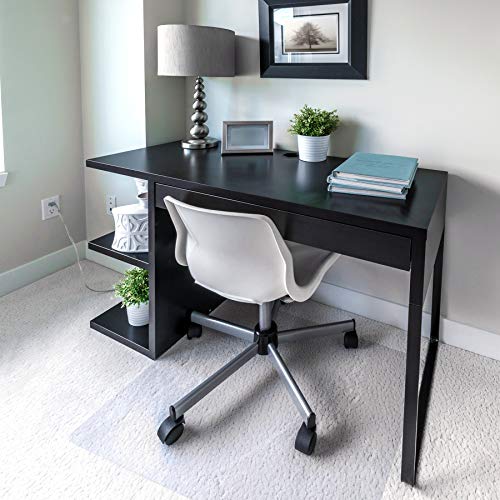 Floortex Polycarbonate Chair Mat 47" x 35" for35" x 47"35 x 47 x 0.09 Inches6.75 poundsCheck on Amazon
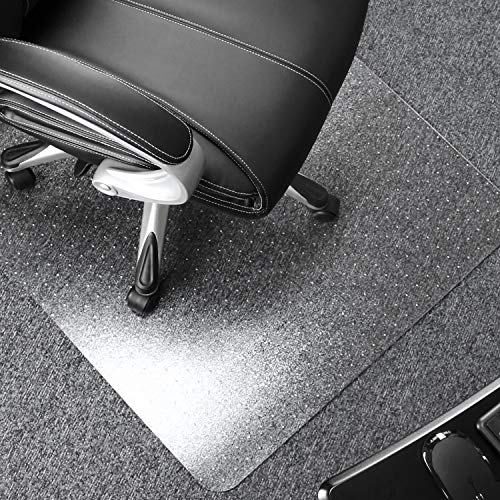 Floortex® Ultimat® Strong Polycarbonate Rectangular Chair Mat for48" x 60"60 x 48 x 0.11 inches12.45 PoundsCheck on Amazon
 Floortex® Ultimat® Strong Polycarbonate Lipped Chair Mat for35" x 47" Ships Flat47 x 35 x 0.08 InchesCheck on Amazon
The plastic matters more than the size or shape: a polycarbonate floor protector lasts years under a desk chair, while a thin PVC (vinyl) one usually dimples, curls or cracks within a year of daily rolling. If you see only “plastic” or “vinyl” in a description with no thickness listed, assume it is the cheaper PVC type.
This is a material-first guide: what each plastic is, how it behaves on carpet versus hard floors, what thickness to look for, and the failure signs that tell you a plastic pad is about to start damaging the floor instead of protecting it.
Floortex Polycarbonate Chair Mat 47" x 35" for Low/Medium Pile Carpets, Clear
Chosen because it specifies Clear.
View on AmazonFloortex® Ultimat® Strong Polycarbonate Rectangular Chair Mat for Deep Pile Carpets - 48" x 60"
Chosen because it specifies 48" x 60".
View on Amazon
Floortex® Ultimat® Strong Polycarbonate Rectangular Chair Mat for Hard Floor - 35" x 47"
Chosen because it specifies 35" x 47".
View on AmazonFloortex® Ultimat® Strong Polycarbonate Lipped Chair Mat for Hard Floor - 35" x 47" - Ships Flat
Chosen because it specifies 35" x 47" and Ships Flat.
View on AmazonThe Four Plastics Used in Chair Protectors
| Plastic | Common thickness | Stiffness | Odor out of box | Cold-room behavior | Typical lifespan | Typical price (36 x 48 in) |
|---|---|---|---|---|---|---|
| PVC (vinyl) | 1.5-3 mm | Flexible | Often noticeable for days | Gets brittle; cracks below about 50°F | 6-18 months | $20-$50 |
| PET (polyester) | 1.5-2.5 mm | Semi-rigid | Low | Stable | 1-3 years | $30-$60 |
| Polypropylene (PP) | 1.5-2.5 mm | Semi-rigid, slightly waxy | Low | Can crack when cold | 1-2 years | $25-$55 |
| Polycarbonate (PC) | 1.5-3.5 mm | Rigid, very tough | Very low | Stable | 4-10 years | $60-$150 |
Polycarbonate is the same family of plastic used in shatter-resistant safety glazing, which is why it resists cracking under a caster load. PVC is cheaper because it is softer, and that softness is exactly what lets casters press permanent dimples into it.
Carpet vs Hard Floor: Different Plastics Fail Different Ways
On carpet
The plastic floor cover sits on a soft surface, so it flexes with every roll. Thin PVC protectors bend into the pile, form a “bowl” around the caster, and eventually split along that line. For carpet you need:
- Cleats (small spikes) on the underside to grip the pile and stop creep.
- Rigidity: polycarbonate or thick, rigid PVC (3 mm or more) for medium pile.
- A rating that matches your pile: low pile (under 1/4 in), medium (1/4-1/2 in) or high (over 1/2 in).
On hardwood, laminate, tile and vinyl plank
Here the floor is rigid, so the risk is not flexing but scratching and trapped grit. Use a smooth-backed protector – never a cleated one, which dents wood and laminate. Some soft PVC backings can also leave a hazy mark on polyurethane finishes if left for a long time, especially in warm rooms; PET and polycarbonate are less prone to this.
| Floor | Backing | Best plastic | Minimum thickness |
|---|---|---|---|
| Low-pile carpet / office carpet | Short cleats | PC, PET or rigid PVC | 2 mm |
| Medium-pile carpet | Cleats | PC or rigid PVC | 3 mm (PVC) / 2.5 mm (PC) |
| High-pile or shag | Long cleats | PC (or a hard board base) | 3 mm+ |
| Hardwood / laminate | Smooth | PC or PET | 1.5 mm |
| Tile or stone | Smooth, anti-slip | PC or PET | 1.5-2 mm |
How to Tell What You Are Buying
Listings often blur the terms. A few practical tells:
- “Vinyl” or “PVC” is always the softer, cheaper type. “Heavy-duty PVC” still dimples, just more slowly.
- “Polycarbonate” or “PC” is usually stated clearly because it is a selling point and costs more.
- “Eco,” “BPA-free,” “PET” or “recycled” often signals PET.
- Shipping: PVC mats usually arrive rolled. Polycarbonate often ships flat or loosely rolled because it is stiffer.
- Weight: a 36 x 48 inch, 2 mm mat weighs around 4-7 lb. If a mat that size feels floppy and very light, it is thin PVC.
Flattening a Rolled Plastic Protector
- Unroll it with the curl facing down.
- Let it sit at room temperature (68-75°F) for 24-48 hours.
- Put books or flat heavy objects on the corners and edges.
- For stubborn curl, roll it gently the opposite direction for an hour, then lay it flat again.
- Do not use a heat gun or hair dryer on PVC; it can warp or stretch the surface.
Signs a Plastic Protector Needs Replacing
- Deep caster dimples you can feel with your hand – the chair starts to “drop” into them.
- Hairline cracks, especially near the front edge where you push off.
- Edges curling up more than 1/4 inch – a trip hazard and a sign the plastic is tired.
- Cloudy or yellowed haze on clear protectors from sunlight (PVC yellows faster than PC).
- Grit or broken plastic pieces under a hard-floor mat, which can scratch the finish.
Plastic Covers, Pads and Small Protectors
Plastic floor cover vs mat
“Plastic floor cover” and “plastic pad” are usually the same product as a chair mat, but sometimes refer to thin, cheap sheets meant for temporary use (moving, painting). Those are too soft for an office chair.
Small pads
Small plastic pads around 30 x 36 inches suit a chair that hardly moves, like at a vanity or a child’s desk. Office chairs that roll back regularly need 36 x 48 inches minimum and often 45 x 53 inches.
Non-plastic alternatives
Tempered glass (very durable, heavy), bamboo roll-up mats (natural look, less smooth roll), and felt or cork mats (quiet, best on hard floors) all avoid plastic entirely. Soft polyurethane casters also reduce scratching on hard floors but do not prevent carpet crushing.
Bottom Line by Situation
| Situation | Pick | Why |
|---|---|---|
| Renter, carpet, daily work | Polycarbonate, cleated | Avoids permanent pile crushing; lasts multiple moves |
| Hardwood, budget | PET, smooth back | Low odor, stable, cheaper than PC |
| Cold garage office or basement | Polycarbonate | PVC cracks in cold |
| Short-term or occasional use | PVC | Cheapest, fine for light use |
| Heavy gaming chair (50 lb+) or heavier user | Thick polycarbonate or tempered glass | Resists dimpling and cracking |