Our Top Picks
 SEDETA Farmhouse 70.9" Executive Desk70.9" Executive Desk21.7 x 70.9 x 29.9 inches112.4 PoundsCheck on Amazon
 SEDETA Fluted L Shaped Executive Electric Standing Desk69" x 21.7" x 28.3"21.7 x 69 x 28.3 inches198 poundsCheck on Amazon
Pros & cons
- Four drawers plus open shelving add generous storage
- Three memory presets simplify switching sit-stand heights
- Built-in charging station powers up to six devices
- At 198 pounds, the desk needs a solid delivery plan
- Large L-shape footprint needs a sizable room corner
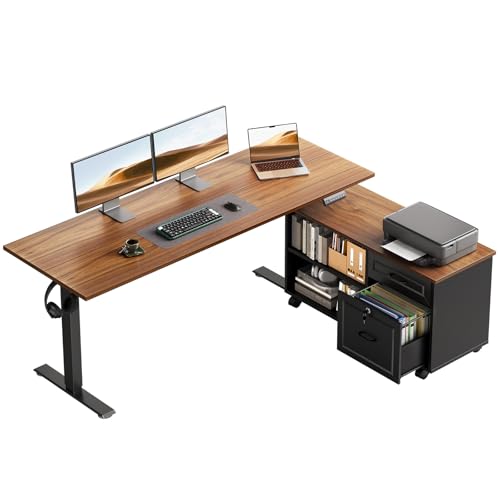 OffiGo 55" L Shaped Electric Standing Desk with55 Inch23.6 x 55.1 x 28.4 inches88.1 PoundsCheck on Amazon
The right office desk furniture for your space comes down to three measurements — your available footprint, your clearance for chair movement, and your working height — matched to a desk type and material that fits how you actually work.
Measure Your Space Before You Shop
Most buying mistakes happen before the desk arrives. A desk that fits through the doorway but leaves no room to push back your chair will make any office unusable.
SEDETA Farmhouse 70.9" Executive Desk, Home Office Desk with File Drawers and Storage Cabinet, Computer Desk with Power Outlet for Home Office, Work Study Writing, Black+Brown
Chosen because it specifies Home Office Desk with File Drawers and Storage Cabinet and Computer Desk with Power Outlet for Home Office.
View on Amazon
63" Farmhouse L Shaped Desk with Drawers & Printer Shelf for Home Office
Picked as a relevant option in this category.
View on AmazonSEDETA Fluted L Shaped Executive Electric Standing Desk with 4 Drawers
Picked as a relevant option in this category.
View on AmazonOffiGo 55" L Shaped Electric Standing Desk with Cabinet Sets, Walnut/Black
Chosen because it specifies Walnut/Black.
View on AmazonUse these minimums when measuring:
- Chair push-back clearance: 36 to 42 inches behind the desk edge to the wall or furniture behind you. 30 inches is the absolute minimum for a non-rolling chair, but it feels cramped.
- Side clearance: 30 to 36 inches on at least one side for getting in and out if the desk is against a wall. For a desk in the middle of a room, leave 36 inches on all traffic sides.
- Knee space: 24 inches deep and 30 inches wide under the desk for comfortable leg room. Standard desk height is 29 to 30 inches, which fits most adults with a task chair that has a seat height of 17 to 19 inches.
- Doorway and hallway width: Standard interior doorways are 29 to 32 inches wide. Boxed desks are often 50 to 60 inches long and 28 inches wide in the box – measure your tightest turn, including stairwells and elevators.
Room-size fit examples:
| Room Size | What Fits Comfortably | Max Recommended Desk Size | Layout Tip |
|---|---|---|---|
| 6 x 8 ft nook / small bedroom corner | Wall-mounted, folding, or 40-inch compact desk | 40″ W x 20″ D | Place desk against the short wall to preserve 36″ of walkway |
| 8 x 10 ft small office | 48-inch writing desk or small L-shaped (50″ x 50″) | 48″ W x 24″ D or L-shape 60″ x 50″ | Use vertical storage instead of wide pedestals |
| 10 x 12 ft standard home office | 60-inch executive or standing desk plus storage | 60-72″ W x 30″ D | Center the desk or float it 36″ from the wall for dual access |
| 12 x 14 ft+ dedicated office | U-shaped or L-shaped with return and file cabinet | 72″ W x 72″ D (total footprint) | Leave 42-48″ between desk return and opposite wall for chair rolling |
If your room is under 100 square feet, prioritize depth over width. A 24-inch deep desk takes up 20% less floor area than a 30-inch deep model and still fits a laptop, monitor, and keyboard without crowding the room.
Match Office Desk Furniture Types to How You Work
Desk types are not just about style. They determine usable surface, storage, cable management, and how you move during the day.
Writing and Computer Desks
The basic rectangular desk, usually 42 to 60 inches wide and 20 to 30 inches deep. Best for laptop work, writing, and single-monitor setups. Usually $150–$400 for engineered wood, $400–$900 for solid wood. Look for a modesty panel if it will float in a room, and a cable grommet or tray if you have a desktop computer.
Standing and Sit-Stand Desks
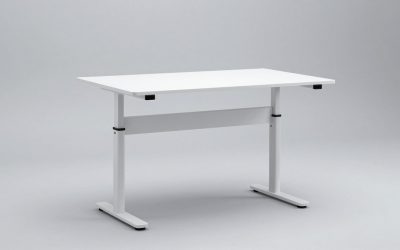
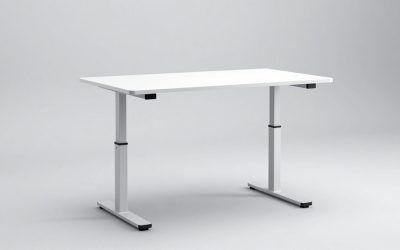
Electric height-adjustable frames adjust from about 27 inches to 47 inches high, covering seated and standing ergonomics for users from 5’0″ to 6’4″. Manual crank models are cheaper but slower. Usually $300–$700 for an electric base with laminate top, $700–$1200 for solid wood or larger tops. Weight capacity is typically 180 to 300 pounds for dual-motor frames – enough for two monitors and accessories. Check under-desk clearance if you use a treadmill or desk bike.
L-Shaped and U-Shaped Desks
L-shaped desks use a corner efficiently and separate computer work from paperwork. A compact L is about 50 x 50 inches per wing; a full-size is 60 x 60 inches. U-shaped adds a bridge and credenza, needing at least a 10 x 10 ft room. Ideal if you need to spread out or run dual monitors. Make sure the corner joint is supported by a leg or pedestal, not just hardware.
Executive Desks
Larger rectangular desks, typically 60 to 72 inches wide and 30 to 36 inches deep, often with integrated drawers or file pedestals. Built for permanent offices where storage and a formal look matter. Heavier – often 120 to 200 pounds assembled – and harder to move through narrow doors.
Compact, Floating, and Ladder Desks
Wall-mounted or ladder-frame desks are 30 to 40 inches wide and 16 to 20 inches deep. They save floor space in apartments and rentals but limit weight to 35 to 75 pounds and rarely support more than one monitor. Good for occasional work, not for 8-hour days with multiple devices unless paired with wall shelving.
Materials and Construction: What Holds Up
Material determines weight, stability, durability, and how the surface handles heat, moisture, and scratches.
| Material / Construction | Average Weight (60″ Desk) | Durability | Trade-offs | Best For |
|---|---|---|---|---|
| Solid wood (oak, walnut, maple) | 90–160 lbs | 15–25+ years; refinishable, resists sagging | Heaviest, most expensive, can expand/contract with humidity; needs coasters for drinks | Permanent home office, wants long-term furniture |
| Engineered wood with veneer or laminate (MDF, particleboard) | 55–95 lbs | 5–10 years; surface resists stains but edges chip, sags over 48″ without support | Affordable and lighter, but not moisture resistant; cam-lock joints loosen if moved often | Budget setups, short-term rentals, light use |
| Steel or aluminum frame + wood/laminate top | 60–110 lbs | 10–15 years; frame very stable, top dependent on material | Strong and modern looking, but metal legs transmit vibration; cold to touch | Standing desks, heavy dual-monitor setups |
| Tempered glass top with metal frame | 50–80 lbs | Glass resists scratches but shows fingerprints; frame lasts | Visually light, easy to clean, but limited weight capacity (often 80–120 lbs) and no drawer options | Small spaces, design-focused rooms with light use |
| Bamboo | 65–100 lbs | Hard and moisture-resistant, comparable to hardwood | Mid-range price, limited stain colors, can be hard to repair if cracked | Eco-conscious buyers wanting solid-wood alternative |
Construction details matter more than marketing names. Look for: 0.75-inch or thicker top for spans over 48 inches, steel corner brackets or dowels plus cam locks, adjustable leveling feet for uneven floors, and a finished back if the desk will not be against a wall. Foam or felt pads under the top protect the frame and reduce wobble on height-adjustable models.
Storage, Ergonomics, and Height Fit
Before adding drawers, decide if you need storage in the desk at all. A pedestal or filing cabinet adds 15 to 20 inches of width and makes a compact room feel boxed in. Alternatives like a nearby bookshelf or rolling file cart keep the desk lighter and easier to move.
- One drawer for supplies is enough for most laptop users. Two to three drawers or a box/file pedestal suits paper-heavy work.
- Keyboard trays should sit 26 to 28 inches from the floor for most adults when seated, about 1 to 2 inches below standard desk height. If the desk is 30 inches high without a tray, a chair with adjustable arms helps keep elbows at 90 degrees.
- Monitor height: top of screen at or just below eye level, 20 to 30 inches from eyes. A desk 24 inches deep forces the monitor too close; 30 inches deep gives proper viewing distance without a monitor arm.
- Weight limits: check both the desktop and any drawer slides. Typical specs are 100 to 150 pounds for a fixed desk top, 35 to 50 pounds per drawer, and 180 to 300 pounds for a standing desk frame. Overloading a long engineered-wood top causes permanent sag in the center.
Decision Matrix: Pick by Your Situation
| If This Is Your Situation | Best Desk Choice | Why It Works |
|---|---|---|
| Small apartment, under 8 x 10 ft, need floor space | 42–48″ writing desk or 40″ floating desk with wall shelves | Shallow depth preserves walkway; wall storage replaces pedestal |
| Work from home 6–8 hours, dual monitors | 60″ electric sit-stand desk, 30″ deep, steel frame | Depth for monitor distance, height range for posture changes, high weight capacity |
| Renters who move every 1–2 years | Metal frame + laminate top, no integrated hutch | Disassembles cleanly, lighter boxes, cam locks survive moves better than solid-wood glue joints |
| Back pain or need to alternate positions | Dual-motor standing desk with memory presets | Precise height control from 27″ to 47″ accommodates sitting and standing without manual adjustment |
| Kids and pets at home | Solid wood or high-pressure laminate with rounded corners and powder-coated metal legs | Resists scratches, dents, and sticky spills; no glass; stable against bumps |
| Heavy paperwork and filing | 60–72″ executive or L-shaped with box/file pedestal | Built-in letter/legal file storage keeps paper off the work surface |
| Corner room or need to separate tasks | L-shaped 60″ x 60″ | Corner placement frees wall space; two zones for computer and writing |
Assembly, Moving, and What Wears Out First
Office desk furniture often arrives flat-packed in one or two boxes weighing 45 to 120 pounds each. A 60-inch engineered-wood desk in one box can be 65 to 85 pounds and requires two people to carry up stairs. Solid wood and executive desks often split into two boxes but still need assembly of 60 to 120 minutes with a drill and included Allen keys.
Check these realities before buying:
- Box dimensions vs. access: measure elevator interior (often 36″ x 48″) and any 90-degree hallway turns. A 72-inch top in one piece will not make a tight turn.
- Assembly complexity: standing desks add motor wiring and control box mounting. L-shaped and U-shaped models have 30 to 60 fasteners and alignment is critical at the joint – a second person helps level the corner.
- What fails first: on engineered wood, the cam-lock inserts and edge banding; on standing desks, the hand controller and motor cables snag if not clipped; on any desk, drawer slides and keyboard tray glides loosen within 2 to 4 years of daily use if overloaded.
- Moving again: engineered wood desks often do not survive a second disassembly without stripped holes. If you move frequently, choose a bolt-through metal frame where hardware threads into steel, not particleboard, and keep the original hex keys and instructions.
For long-term durability, tighten all fasteners after two weeks of use as wood settles, use felt pads under monitors and lamps to prevent surface wear, and avoid placing desks in direct sunlight or next to heaters which dries and warps solid wood. A desk with replaceable top and standard frame – common with sit-stand systems – lets you refresh the surface without replacing the entire piece.