
Key takeaways
- Target Audience: Adult
- Recommended Uses For Product: Endurance, Exercise and Fitness, Speed
- Item Length: 280 Centimeters
The claim that ten minutes of rope work equals thirty minutes of running gets repeated constantly, and it is roughly half true in a way that matters for how you should buy. Rope work does push heart rate into zone four quickly, often within 90 seconds, because it recruits calves, shoulders, and forearms simultaneously while demanding constant coordination. What it does not do is replicate the sustained aerobic base-building of a long easy run, because almost nobody can hold rope cadence for 45 continuous minutes without technique collapsing.
That makes the rope an interval tool first and a steady-state tool second, and it changes which model is right for you. If you want short, brutal, heart-rate-driven sessions, a fast cable with reliable bearings serves you. If you want 20 minutes of controlled zone-two conditioning while watching something, a weighted rope at a slower cadence is the more realistic purchase. The six options below are sorted by the kind of cardiovascular work they actually enable, not by which spins fastest on paper.
Our top picks
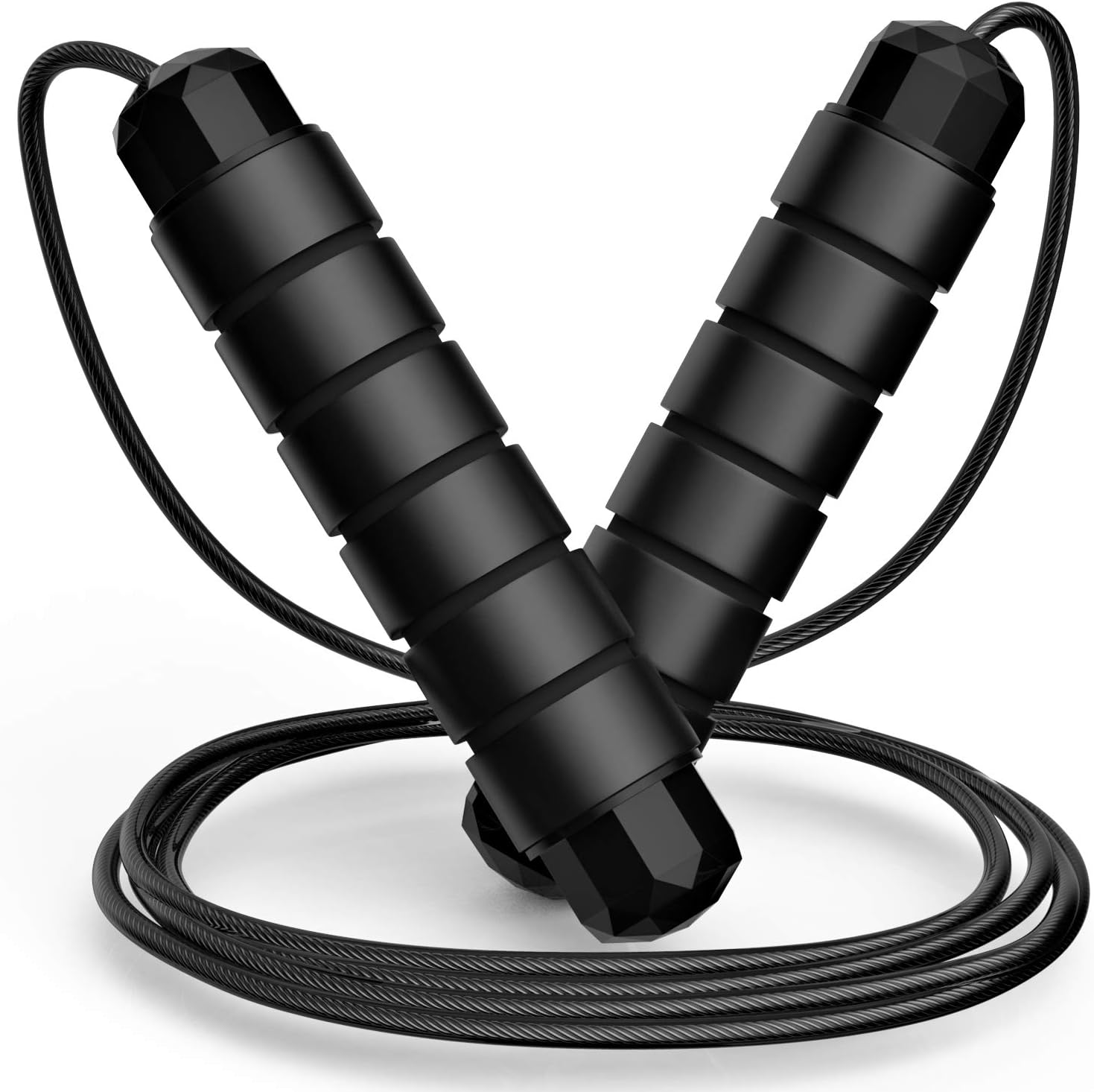 Jump Rope
- Target Audience: Adult
- Recommended Uses For Product: Endurance, Exercise and Fitness, Speed
- Item Length: 280 Centimeters
Ball bearings help the rope spin smoothly and tangle-free
Foam handles add a non-slip, moisture-wicking grip
Adjustable length suits kids, teens, and adults alike
Steel-wire PVC rope is firmer than fabric speed ropes
Portable design means a thinner build than weighted ropes


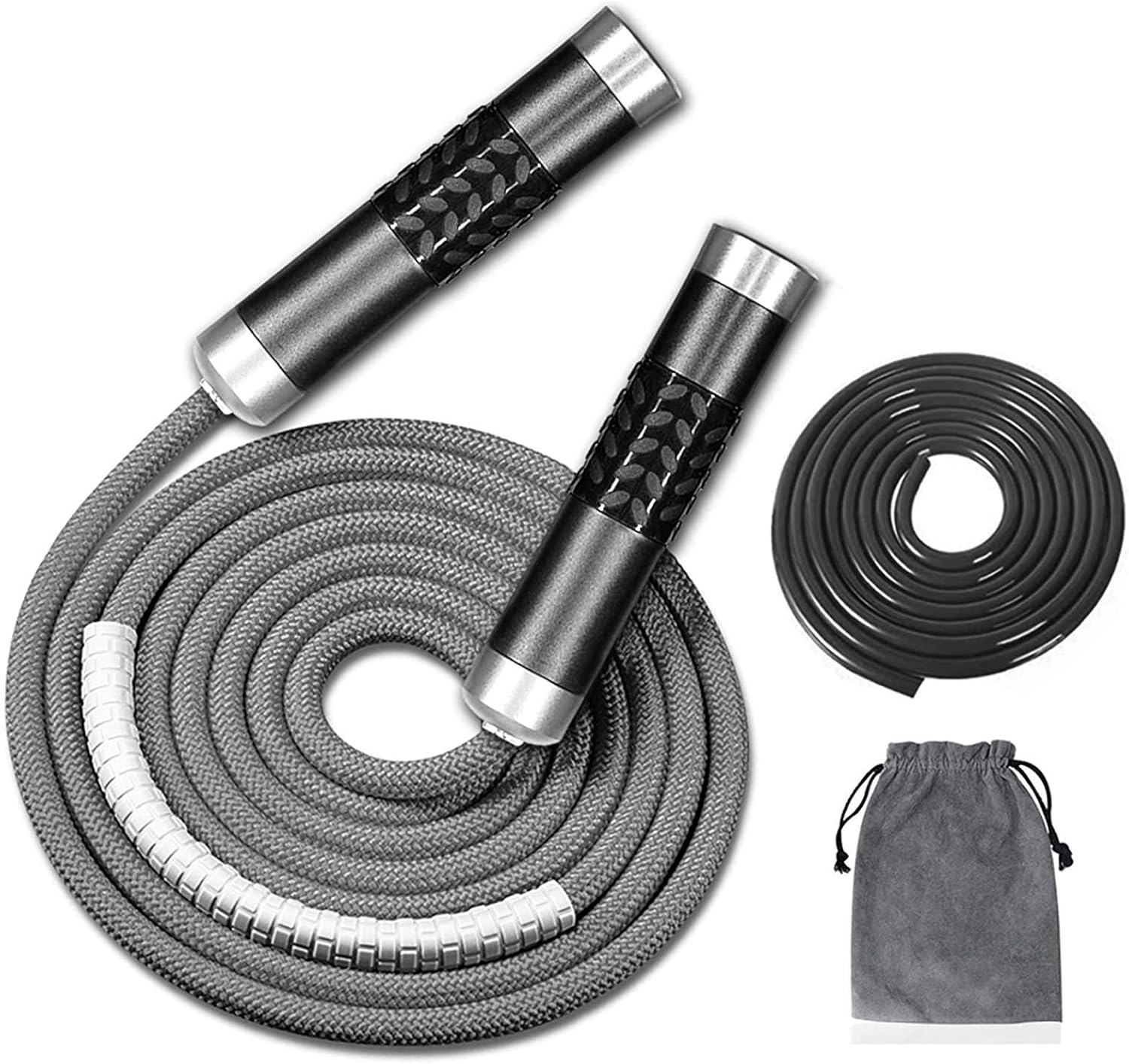 Redify Weighted Jump Rope for Workout Fitness
- Target Audience: Adult
- Item Length: 120 Inches
- Handle Diameter: 1 inches
Combination cotton and PVC rope extends usable lifespan
Double ball bearings aid tangle-free, smooth rotation
Adjustable length fits different user heights
At about 1 pound, it is heavier than standard speed ropes
Aluminum handle adds weight versus plastic-handled ropes
 BOOMIBOO Jump Rope
- Target Audience: Adult, Kid
- Recommended Uses For Product: Exercise and Fitness
- Item Length: 9.2 Feet
Ball bearings aid smooth, tangle-free rotation
Foam handles stay non-slip and moisture-wicking during use
Adjustable 9.2-foot rope suits both kids and adults
Steel-core PVC rope feels firmer than fabric ropes
Fixed foam handle design offers no weighted option
As an Amazon Associate we earn from qualifying purchases at no extra cost to you.
Quick Comparison
| Product | Best For | Standout Feature | Watch Out For |
|---|---|---|---|
| Tangle-Free Rapid Speed Rope | Short high-intensity intervals | Bearings sustain 160+ rotations per minute | Heart rate spikes faster than beginners expect |
| SPORTBIT Adjustable Rope | Mixed-intensity sessions | Length tuning shifts intensity without new gear | Requires re-setting between different users |
| Honor Athletics Pro Boxing Rope 3.0 | Three-minute round structure | Cord mass supports sustained round pacing | Demands more space than interval work needs |
| KUTIZE Adjustable Weighted Rope | Raising effort at lower cadence | 1 lb handles lift heart rate without more speed | Upper body fatigue can cap the session early |
| Pre-Sized 1 lb Weighted Rope | Repeatable session conditions | Fixed geometry makes pacing consistent | Cannot be shortened for higher-cadence work |
| 1 lb Heavy Weighted Rope | Longer steady-state sessions | Sustainable rhythm for 15 to 20 minutes | Cannot reach true high-intensity cadence |
How to Choose
- Interval versus steady state: If your sessions will be 30 seconds on and 30 off, a speed cable is right. If they will be continuous 15-minute blocks, buy weighted and slower.
- Heart rate honesty: Rope work drives heart rate high fast. Anyone building an aerobic base should deliberately hold back rather than chasing maximum effort every session.
- Upper body contribution: Weighted handles recruit shoulders and grip, raising effort at a given foot speed. Useful for intensity, limiting for duration.
- Time budget: A realistic rope workout including warm-up runs 15 to 25 minutes. If you cannot commit that, the equipment choice matters less than the schedule.
- Complementary training: Rope work pairs well with strength days and poorly with heavy leg days, because calves and Achilles need recovery between both.
Top Picks Reviewed
Best for Intervals: Tangle-Free Rapid Speed Rope
Sustained high cadence is what drives heart rate into the upper zones, and the bearing swivel is what makes that cadence possible without the cable kinking. For 30-on, 30-off work, this is the most effective option here.
The intensity arrives faster than most people plan for. Expect to be genuinely winded inside two minutes, and structure rest intervals accordingly rather than treating them as optional.
Most Adaptable: SPORTBIT Adjustable Rope
You can run it long for a slower conditioning block and short for a speed finisher, which effectively gives you two training tools in one purchase. That flexibility is worth more than a marginal difference in bearing quality.
In a shared household the constant re-adjusting becomes a chore, and a rope set for someone else is worse than no rope at all when you are mid-session.
Best Round Structure: Honor Athletics Pro Boxing Rope 3.0
Three-minute rounds with one minute rest is a proven conditioning format, and the 5.3mm cord holds a consistent, readable rhythm across that duration. Boxing gyms use this format because it produces both aerobic and anaerobic adaptation.
The arc is wide, which means you need a genuinely open space. Cramped interval work with this cord ends in clipped furniture and broken rounds.
Best Intensity Per Rotation: KUTIZE Weighted Rope
Adding a pound per handle raises oxygen cost noticeably at the same rotation speed. If your ankles limit how fast you can go, this is how you get the heart rate you want anyway.
Shoulders and grip will fail before your lungs do in the first few weeks, which caps session length regardless of your cardiovascular fitness.
Most Repeatable: Pre-Sized 1 lb Weighted Rope
Consistent length means consistent effort, which makes week-to-week progress readable. If you track sessions at all, removing the adjustment variable makes the data mean something.
You cannot shorten it to chase higher cadence later, so it locks you into the intensity band it was designed for.
Best for Longer Sessions: 1 lb Heavy Weighted Rope
The steady cadence this cord enforces is sustainable for 15 to 20 continuous minutes, which is where meaningful aerobic work happens. It is the closest thing in this group to a steady-state cardio machine.
You will never hit true high-intensity numbers with it. For sprint-style conditioning it is simply the wrong tool.
Frequently Asked Questions
How many calories does jumping rope burn?
At a moderate continuous pace, most adults land somewhere between 10 and 15 calories per minute, comparable to a brisk run. Weighted ropes push the upper end of that range.
How long should a rope cardio session be?
Fifteen to twenty minutes including warm-up is productive for most people. Beyond that, technique degradation usually costs more than the extra minutes gain.
Can jumping rope replace running entirely?
For conditioning and calorie expenditure, largely yes. For long-duration aerobic base and for anyone training for a road race, it complements running rather than replacing it.
How often per week is reasonable?
Three to four sessions on non-consecutive days suits most people. Calves and Achilles tendons need the recovery days more than your cardiovascular system does.
Final Thoughts
Decide what kind of cardio you are actually going to do before choosing a rope. Interval training rewards a fast bearing-equipped cable; sustained conditioning rewards weight and a slower, holdable rhythm. The rope that matches your real schedule and intensity preference will always outperform the one that looks best on paper.
Write Your Review
No reviews yet. Be the first to share your experience!