
Mat thickness is where comfort and stability fight each other, and hot yoga makes the fight worse. A 6 mm mat feels wonderful under your knees in a low lunge and actively unhelpful in tree pose, because the foam compresses unevenly under your standing foot and your ankle spends the whole pose making corrections. Go thinner and balance improves while your knees start complaining on a hard floor. There is no thickness that wins both arguments.
The usual resolution is 4 to 5 mm, which gives enough padding for most joints without turning standing balances into a wobble. But the right answer depends on your practice and your body: someone with sensitive knees doing a lot of floor work should accept less stability, while someone doing a standing-heavy vinyasa should accept less padding. Length matters too — standard mats are 68 inches, which puts a five-foot-eleven practitioner’s hands on the floor in downward dog. Size and thickness decisions should come before grip comparisons, because a mat that does not fit your body will not be used regardless of how well it grips.
Our top picks


As an Amazon Associate we earn from qualifying purchases at no extra cost to you.
Quick Comparison
| Product | Best For | Standout Feature | Watch Out For |
|---|---|---|---|
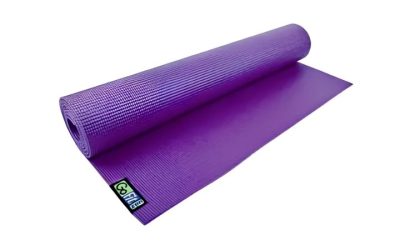
| Gaiam Dry-Grip Mat | Balanced thickness and grip | 5 mm with sweat-activated traction | High maintenance surface |
| Gruper Non-Slip Mat | General home practice | Comfortable cushion, carry strap | Grip drops in heavy sweat |
| Breling Suede Yoga Towels | Adding grip without thickness | Thin layer, no stability penalty | Needs moisture to grip |
| Gruper Eco Yoga Mat | Standing-heavy flows | Firm feel underfoot | Less padding for knee work |
| Heathyoga TPE Mat | Sensitive knees and wrists | Thicker TPE plus alignment marks | Less stable in balance poses |
| IUGA Anti-Tear Mat | Taller practitioners | 72 in length, durable surface | Requires a towel when sweaty |
How to Choose
- Match thickness to your practice: Standing-heavy vinyasa favours 3 to 4 mm for stability; restorative and floor-based practice favours 6 mm or more. Around 5 mm is the compromise if your sessions mix both.
- Check length against your height: Standard mats are 68 inches. If you are taller than about five foot nine, a 72 inch mat keeps your hands and feet on the surface in extended poses, which is where slips happen.
- Test firmness, not just depth: A dense 4 mm mat can feel more supportive than a soft 6 mm one, and it will be far more stable. Density matters as much as the number on the box.
- Consider a towel instead of thickness: If your only problem is grip, adding a thin towel solves it without the stability penalty that comes with a thicker mat.
- Factor in weight for transport: Thicker mats are heavier. A 6 mm mat carried to and from a studio several times a week becomes a genuine nuisance, which is why studio regulars gravitate to thinner options.
Top Picks Reviewed
Best Balance: Gaiam Dry-Grip Yoga Mat
At 5 mm this sits precisely where most mixed practices want to be — enough padding that a kneeling pose is comfortable, firm enough that standing balances do not feel like they are happening on a mattress. The moisture-activated surface adds grip that improves rather than degrades as a session heats up.
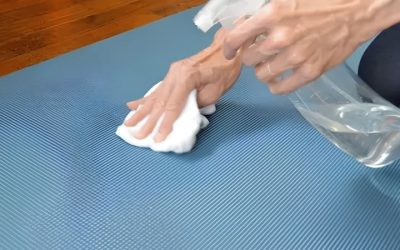
That surface needs looking after. It absorbs skin oils along with sweat, and without a wipe-down after each use it develops a film that undermines the grip you bought it for.
Best Everyday Mat: Gruper Non-Slip Yoga Mat
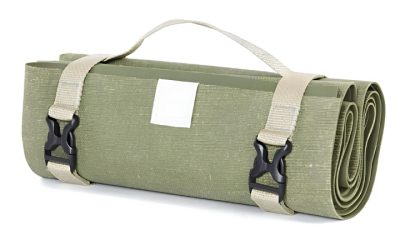
A comfortable middle thickness, a well-textured surface and an included strap make this the easy default for home practice. It is stable enough for standing work and forgiving enough for floor sequences, without demanding anything unusual in the way of care.
Its grip is texture-based rather than absorbent, so in a genuinely hot session it eventually gives way to sweat. For warm home practice that rarely matters; for a heated studio class it does.
Best Grip Without Bulk: Breling Suede Yoga Towels
The elegant solution to the thickness dilemma is to keep the mat thin for stability and add grip as a separate layer. A suede microfibre towel adds almost no height, grips harder as it absorbs, and washes in a machine, which no mat here does.
It needs moisture to work. On a dry mat at the start of a session the towel slides, so a light mist of water before you begin is part of the routine rather than an optional extra.
Best for Standing Work: Gruper Eco Yoga Mat
The firmer feel underfoot makes this the more stable of the two Gruper options for balance-heavy sequences. Warrior variations and tree pose feel planted rather than spongy, which is exactly what standing practice needs.
That firmness costs you comfort in kneeling and supine positions. If your practice includes long floor sequences, you will want a folded blanket under the knees.
Best Cushioning: Heathyoga TPE Yoga Mat
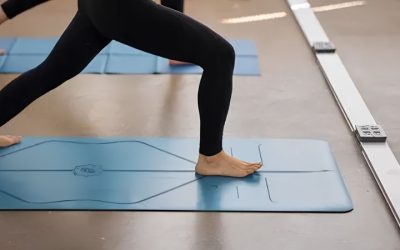
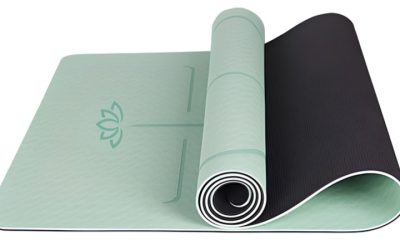
For anyone with sensitive knees or wrists, the additional TPE thickness makes a real difference to how long you can hold loaded positions. The alignment markings are a genuinely helpful addition for home practitioners without an instructor’s eye.
Stability is the tradeoff. In single-leg balances the extra compression under the standing foot creates a small amount of wobble that thinner mats do not have. It is manageable, but it is noticeable.
Best for Tall Practitioners: IUGA Anti-Tear Yoga Mat
The 72 inch length solves a problem that most mat comparisons ignore entirely: taller people running out of mat in downward dog and extended poses, and putting a sweaty hand on a bare floor as a result. The tear-resistant construction also survives toe pressure that punctures thinner mats.
Grip is texture-based, so it needs a towel once you are properly sweating. As a long, durable foundation under a washable layer, though, it is hard to beat.
Frequently Asked Questions
What thickness yoga mat should I buy?
Around 4 to 5 mm suits most mixed practices. Choose thinner for standing-heavy vinyasa where stability matters most, and thicker for restorative or floor-based work where joint comfort is the priority.
Does a thicker mat mean better grip?
No — grip comes from the surface material and texture, not from thickness. A thick mat with a slippery surface will still slide, and a thin mat with an absorbent top layer can be extremely secure.
How long should a yoga mat be?
Standard is 68 inches, which works up to roughly five foot nine. Beyond that, a 72 inch mat keeps your hands and feet on the surface in extended poses and is worth seeking out specifically.
Will a thick mat hurt my balance?
Somewhat, yes. Compressible foam under the standing foot makes single-leg poses less stable, and the effect is more noticeable above 6 mm. If balance work is central to your practice, prioritise firmness over depth.
Final Thoughts
For most people, the Gaiam Dry-Grip Yoga Mat at 5 mm strikes the right balance between joint comfort and standing stability while solving the sweat problem. If your knees need more than that, the Heathyoga TPE Yoga Mat provides real cushioning at the cost of a little balance. And taller practitioners should start with the IUGA Anti-Tear Yoga Mat, whose 72 inch length removes a problem no amount of grip technology can fix.
Write Your Review
No reviews yet. Be the first to share your experience!