Key takeaways
- Shoulder load and drape: Weight should fall down your back, not pull forward off your neck. Sherpa-backed throws in the 50×70 range typically land between three and five pounds — heavy enough to feel substantial, light enough to avoid forward head posture over a long evening. If a blanket has sleeves, check that the armhole sits low and roomy so it doesn’t bind when you reach for a mug.
- Wire routing versus flex zones: The elements that fail first are the ones crossing your elbow crease, the shoulder fold, or the foot pocket opening. Look for element channels that run in broad horizontal passes and stay clear of hems and cuffs. Foot pockets should be heated through the base panel, not by wires wrapped around the opening.
- Controller placement and cord reach: An inline controller you can find without looking beats a fancier one buried in a seam. Measure the cord: anything under six feet limits you to one chair. Magnetic or breakaway connectors are worth prioritizing — they protect the plug housing when you stand up while still connected.
- Heat levels and shut-off range: Six settings is the practical minimum; eight gives you a genuine low for shoulder-season use. More important is a shut-off window that matches your habits. A one-to-ten or one-to-twelve hour range covers overnight use, while a fixed two-hour cutoff means waking up cold.
- Washability and long-term structure: Confirm the controller detaches fully and that the blanket is machine washable, not spot-clean only. Check the perimeter: double-stitched or bound edges resist the fraying that opens up around the foot pocket and cuffs after a dozen washes.
What's inside
Most wearable heated blankets are sold on softness alone, which is why so many end up folded in a closet by February. The failure points are rarely the fabric — they’re structural. A throw that hangs from your shoulders puts every ounce of its weight on your trapezius, and a heating element that crosses a fold line gets bent thousands of times before spring. Add a controller that dangles at knee height and a cord that tethers you three feet from the outlet, and you have a garment you stop reaching for.
This guide evaluates 2026’s wearable heated throws the way I’d assess any worn product: load distribution across the shoulders and neck, where wiring sits relative to flex zones, seam and hem construction at high-abrasion points, controller reachability while seated, and how the whole assembly survives repeated wash cycles. Below are the models that hold up under daily use, plus the specs worth checking before you buy.
As an Amazon Associate we earn from qualifying purchases.


🛒 Best Price Today on Amazon
Prime members get fast, free shipping on everything above, plus member-only deals. New members get a 30-day free trial — cancel anytime.
How to Choose a Wearable Heated Blanket in 2026
- Shoulder load and drape: Weight should fall down your back, not pull forward off your neck. Sherpa-backed throws in the 50×70 range typically land between three and five pounds — heavy enough to feel substantial, light enough to avoid forward head posture over a long evening. If a blanket has sleeves, check that the armhole sits low and roomy so it doesn’t bind when you reach for a mug.
- Wire routing versus flex zones: The elements that fail first are the ones crossing your elbow crease, the shoulder fold, or the foot pocket opening. Look for element channels that run in broad horizontal passes and stay clear of hems and cuffs. Foot pockets should be heated through the base panel, not by wires wrapped around the opening.
- Controller placement and cord reach: An inline controller you can find without looking beats a fancier one buried in a seam. Measure the cord: anything under six feet limits you to one chair. Magnetic or breakaway connectors are worth prioritizing — they protect the plug housing when you stand up while still connected.
- Heat levels and shut-off range: Six settings is the practical minimum; eight gives you a genuine low for shoulder-season use. More important is a shut-off window that matches your habits. A one-to-ten or one-to-twelve hour range covers overnight use, while a fixed two-hour cutoff means waking up cold.
- Washability and long-term structure: Confirm the controller detaches fully and that the blanket is machine washable, not spot-clean only. Check the perimeter: double-stitched or bound edges resist the fraying that opens up around the foot pocket and cuffs after a dozen washes.
The Best Wearable Heated Blankets of 2026, Reviewed
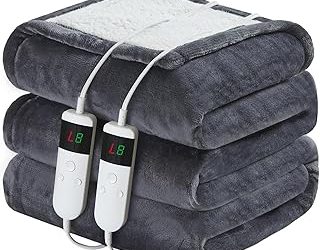
Westinghouse Wearable Heated Blanket with Foot Pocket
The flannel-to-sherpa build gives you a stable, evenly weighted drape that stays put without constant readjustment, and the 18-inch foot pocket is deep enough for a size 12 without stretching the opening. Its two-to-ten-hour shut-off range is the most versatile in this group, covering a short warm-up or a full night.
ESTINGO Wearable Heated Blanket with Foot Pocket
A lighter-feeling option in a light beige that reads more like loungewear than bedding, with six heat levels that step up gradually rather than jumping from tepid to hot. The one-to-four-hour auto-off is its main limitation, so treat this as an evening or desk blanket rather than an overnight one.
Sherpa Wearable Heated Robe with Sleeves and Foot Pocket
The full-sleeve robe cut is the best choice if you want your hands free while staying covered, and the 52×72 panel gives extra coverage across the shoulders where most throws come up short. Overheat protection plus a 12-hour timer makes this the most forgiving pick for anyone who falls asleep in a chair.
Sealy Wearable Electric Blanket with Foot Pocket
Reversible flannel and sherpa let you flip to the smoother face when the sherpa side runs too warm, which meaningfully extends the usable season. Construction quality at the hems and pocket seam is a step above generic imports, and the two-to-ten-hour shut-off matches the Westinghouse.
Hooded Wearable Heated Throw with Sleeves
The hood is the differentiator here, trapping heat at the neck where most wearable throws leak it, and eight heat settings give you a genuinely low low. The one-to-ten-hour shut-off and sleeve-plus-pocket layout make it the most complete coverage in the roundup.
Frequently Asked Questions
Are wearable heated blankets safe to sleep in?
Models with overheat protection and an auto shut-off are designed for extended use, but sleeping in one increases wear at fold points and reduces airflow. If you plan to nod off regularly, choose a longer timer, keep the setting low, and avoid tucking the blanket tightly around the cord.
How much electricity do they use?
Most draw well under 200 watts on high, considerably less than a space heater. Because they warm your body directly rather than the room, they’re an efficient way to lower your thermostat a few degrees.
Can I put one in the washing machine?
Nearly all current models allow machine washing once the controller and cord are detached. Use cold water and a gentle cycle, skip the wringing, and air dry flat — heat and tumbling are what stress the internal wiring, not the water.
Sleeves, or a plain throw with a foot pocket?
Sleeves keep your arms covered while you type or read but add bulk at the armholes and create extra flex points. If you mostly sit still, a sleeveless throw drapes better and tends to last longer.
Final Thoughts
For most buyers the Westinghouse is the balanced choice, pairing a well-distributed drape with the widest practical shut-off range. Choose the Sherpa Heated Robe if you want sleeves and the longest timer, or the Sealy if a reversible face and tidy seam work matter more than extra coverage.