Key takeaways
- Fence accuracy: Choose a fence that locks firmly, stays parallel to the blade, and offers enough support for repeatable rips. A precise fence is more valuable than headline motor speed.
- Table stability: Look for a rigid tabletop and a stand that resists rocking. Even small movement can telegraph into uneven edges, inaccurate miters, and poor glue joints.
- Cut capacity: A larger rip capacity helps with cabinet sides and wide shelving, while generous cutting depth is useful for thick hardwood stock. Confirm the dimensions against your typical projects.
- Ergonomics: Accessible height controls, smooth bevel adjustment, clear scales, and a comfortable power switch reduce fatigue during repeated cuts. A well-designed stand also saves your back during setup and storage.
- Dust and durability: Prefer enclosed blade housings, effective dust ports, sturdy adjustment mechanisms, and replaceable wear components. These details influence both workshop cleanliness and service life.
What's inside
Furniture making demands more from a table saw than occasional construction work. A saw that is merely powerful may still frustrate you with a narrow table, rough fence movement, excessive vibration, or a stand that flexes during long rips. Those weaknesses show up quickly when cutting cabinet panels, shelving, hardwood components, and repeatable joinery.
This guide evaluates the listed saws from an ergonomics-and-durability perspective: control layout, fence support, portability, stability, cutting capacity, and the practical demands of building furniture at home. It includes compact options for limited workshops as well as fuller-size jobsite saws for serious sheet-goods and hardwood work.
As an Amazon Associate we earn from qualifying purchases.



🛒 Best Price Today on Amazon
Prime members get fast, free shipping on everything above, plus member-only deals. New members get a 30-day free trial — cancel anytime.
How to Choose a Table Saw For Furniture Making (2026)
- Fence accuracy: Choose a fence that locks firmly, stays parallel to the blade, and offers enough support for repeatable rips. A precise fence is more valuable than headline motor speed.
- Table stability: Look for a rigid tabletop and a stand that resists rocking. Even small movement can telegraph into uneven edges, inaccurate miters, and poor glue joints.
- Cut capacity: A larger rip capacity helps with cabinet sides and wide shelving, while generous cutting depth is useful for thick hardwood stock. Confirm the dimensions against your typical projects.
- Ergonomics: Accessible height controls, smooth bevel adjustment, clear scales, and a comfortable power switch reduce fatigue during repeated cuts. A well-designed stand also saves your back during setup and storage.
- Dust and durability: Prefer enclosed blade housings, effective dust ports, sturdy adjustment mechanisms, and replaceable wear components. These details influence both workshop cleanliness and service life.
The Best Table Saw For Furniture Making (2026)s Reviewed
DEWALT DWE7491RS 10-Inch Table Saw
The DWE7491RS is the strongest all-around choice for furniture makers who regularly break down plywood or work with wide boards. Its 32-1/2-inch rip capacity, rolling stand, and rack-and-pinion fence make setup and repeat cuts notably manageable, while the large work surface provides welcome support for cabinet parts. It is heavier than compact saws, but that mass improves confidence and control during long rips.
DEWALT DWE7485 8-1/4-Inch Compact Jobsite Saw
The DWE7485 suits smaller workshops and builders who value accurate portability over maximum cutting depth. Its compact footprint is easier to store and maneuver, yet the 15-amp motor gives it useful capacity for common furniture stock and sheet goods. The reduced blade size is a limitation for thick hardwood, but the saw’s proportions and controls are friendly to frequent setup and teardown.
DOVAMAN DTS10A 10-Inch Table Saw with Stand
The DOVAMAN DTS10A offers a practical combination of a 10-inch blade, integrated stand, and extendable support for furniture projects that need more workspace than a benchtop saw provides. Its copper motor and stated 3.35-inch maximum depth at 90 degrees suggest useful versatility, although buyers should carefully check fence alignment and stand rigidity before demanding cabinet-grade repeatability. It is an appealing value-oriented option when capacity matters.
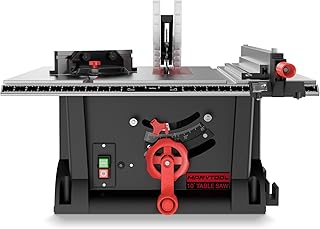
15-Amp Portable 10-Inch Table Saw
This compact 10-inch portable saw is aimed at DIY furniture makers who need a straightforward machine for shelving, small tables, and general workshop cuts. Its 36-tooth blade, 4,600 RPM motor, and bevel range cover common tasks, while the benchtop format keeps storage simple. Because compact saws provide less outfeed and side support, use auxiliary support when handling large panels and verify the fence before precision work.
10-Inch 15-Amp Table Saw with Stand and Cover
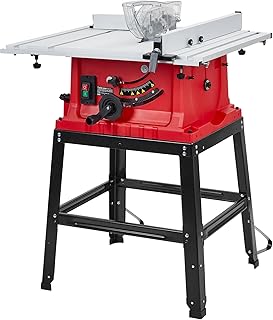
This model emphasizes a full-size 36-by-25-inch tabletop, stand, protective cover, and adjustable cutting depth. That combination can be useful for a mixed home workshop where wood, plastic, and other materials occasionally share the workload. Its appeal is convenience and broad functionality, but furniture makers should prioritize careful calibration and test cuts, particularly when accuracy matters more than raw 5,000-RPM speed.
Frequently Asked Questions
Is a 10-inch table saw best for furniture making?
Usually, yes. A 10-inch saw offers broad blade availability, useful cutting depth, and enough capacity for most furniture lumber and sheet goods. An 8-1/4-inch model can still be preferable when portability and storage space are the main concerns.
How important is rip capacity for furniture projects?
Rip capacity matters most when cutting wide cabinet panels, shelves, and table components. If you mainly work with narrow hardwood parts, fence accuracy and table stability may matter more than an exceptionally wide extension.
Can a portable table saw produce furniture-quality cuts?
Yes, provided the fence is aligned, the blade is sharp, and the work is adequately supported. Portable saws can be precise, but they demand more attention to setup because their lighter stands and smaller tables offer less inherent stability.
What safety features should I expect?
Look for a blade guard, riving knife, anti-kickback protection, stable footing, and an easy-to-reach power switch. Keep the guard installed whenever possible, support large workpieces, and never reach over or behind a moving blade.
Final Thoughts
The DEWALT DWE7491RS is the best fit for demanding furniture work and wide stock, while the compact DEWALT DWE7485 is the more ergonomic choice for space-conscious makers. The DOVAMAN DTS10A is worth considering when you want 10-inch capacity and a supplied stand without moving to a larger workshop machine.