Our Top Picks
The best santoku knife for most home cooks is a 7-inch, 50–60 HRC stainless-steel model with a comfortable full-length handle, a relatively thin blade, and a price around $40–$150; choose a 5–6-inch version for small hands or limited counter space, and a heavier 7–8-inch knife if you regularly prepare large vegetables and boneless proteins.
What makes a santoku different?
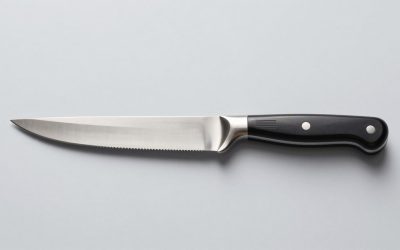
A santoku is a Japanese-style all-purpose kitchen knife designed for slicing, dicing, and chopping. Its broad blade usually has a flatter edge than a Western chef’s knife, while the rounded tip is useful for controlled downward cuts rather than extended rocking motions. Many santoku knives have granton, or hollow-ground, indentations intended to reduce sticking when cutting potatoes, cucumbers, apples, or other moist foods.

HOSHANHO 7 Inch Japanese Chef Knife, Ultra Sharp Kitchen Santoku Knives
Chosen because it specifies Ultra Sharp Kitchen Santoku Knives.
View on Amazon
HOSHANHO 5 Inch Japanese Chef Knife, Ultra Sharp Kitchen Santoku Knives
Chosen because it specifies Ultra Sharp Kitchen Santoku Knives.
View on AmazonCompared with a typical 8-inch chef’s knife, a santoku is often lighter, shorter, and easier to control close to the cutting board. It is especially effective for vegetables, boneless meat, fish, herbs, and everyday meal preparation. It is not the ideal tool for cutting through bones, frozen food, hard squash with force, or large joints of meat.
Best santoku knives by situation
| Cooking situation | Best specification | Why it fits | Typical market range |
|---|---|---|---|
| Small kitchen or smaller hands | 5–6-inch blade, about 100–150 g | Easier to maneuver and store; less tiring for short prep sessions | $25–$100 |
| General family cooking | 7-inch blade, 50–60 HRC stainless steel | Best balance of cutting area, control, and maintenance | $40–$150 |
| Large vegetables and frequent batch prep | 7–8-inch blade, broad heel, 150–220 g | More knuckle clearance and cutting capacity without chef’s-knife length | $70–$250 |
| Maximum edge retention | Powder or high-carbon stainless steel, approximately 60–64 HRC | Stays sharp longer but may be less forgiving of twisting and impact | $120–$350 |
| Low-maintenance household | Stainless steel around 56–59 HRC | Resists staining and is easier to sharpen after everyday misuse | $25–$120 |
Blade length: 5, 6, or 7 inches?
5- to 6-inch santoku knives
A compact santoku suits cooks with smaller hands, shallow counters, or limited storage. It is quick for garlic, onions, carrots, boneless chicken, and lunch-sized portions. The shorter edge also reduces the chance of the tip extending beyond a small cutting board. The trade-off is less room for slicing large cabbage, eggplant, melons, or several chicken breasts at once.
7-inch santoku knives
Seven inches is the most versatile size for a shared household kitchen. It provides enough edge length for a large onion or zucchini while remaining noticeably more compact than an 8-inch chef’s knife. A broad 7-inch blade can also make transferring chopped food easier, provided the knife is not so tall that it feels awkward in a smaller hand.
8-inch santoku knives
An 8-inch santoku is useful for batch cooking and larger vegetables, but it is not automatically better. Its extra weight and height can slow precise work, particularly for cooks who use a pinch grip or have shorter fingers. Check the complete knife weight, not just blade length; two knives with the same stated size can feel very different.
Steel types and edge retention
| Steel category | Typical hardness | Edge retention | Main trade-off |
|---|---|---|---|
| Basic stainless steel | 54–57 HRC | Moderate | Usually easier to sharpen and more tolerant of rough handling |
| High-carbon stainless steel | 58–61 HRC | Good to very good | Can stain if neglected; brittle edges are possible if overheated during sharpening |
| VG-10-type stainless steel | 59–61 HRC | Good | Sharp and corrosion resistant, but can chip under twisting or hard impact |
| Powder or premium tool steel | 60–64 HRC | Very good to excellent | Higher cost and more demanding sharpening; greater risk of chipping when abused |
Hardness is only part of the story. Heat treatment, blade geometry, edge angle, and sharpening quality have a major effect on performance. A thin, well-treated 58 HRC blade may cut more easily than a thick 62 HRC blade. Harder steel generally keeps a refined edge longer, but it does not make a knife immune to damage.
For a practical everyday choice, look for stainless or high-carbon stainless steel in the 56–61 HRC range. Carbon-steel santoku knives can take an exceptionally keen edge, but they require immediate drying and occasional oiling to prevent discoloration and rust. Stainless steel is usually the better fit for a busy household or anyone who does not want extra maintenance.
Handle comfort matters more than decoration
Hold the knife in a pinch grip, with the thumb and index finger around the blade just ahead of the handle. Your remaining fingers should wrap around the handle without squeezing. The handle should not force your wrist sharply upward or make the blade feel front-heavy.
- Western-style handles: Often heavier and more familiar, with rivets and a shaped grip. They can provide good balance but may feel bulky to smaller hands.
- Japanese wa handles: Usually lighter and often made from wood, composite, or synthetic material. They can make the blade feel agile, though balance may feel unusual at first.
- Textured synthetic handles: Practical for damp kitchens and frequent washing. Avoid deep grooves that trap food or become uncomfortable during prolonged prep.
- Full tang construction: The blade steel extends through the handle, usually adding strength and balance. It is desirable, but handle fit and steel quality still matter more than the tang visible at the butt.
Look for a smooth bolster transition, no sharp edges around rivets, and enough clearance for your knuckles. A handle that is comfortable for five minutes may become tiring after preparing a large meal, so weight distribution is as important as total weight.
Match the knife to your food-prep tasks
- Vegetables: A thin 6- or 7-inch blade excels at onions, carrots, celery, leafy greens, and herbs.
- Boneless meat and poultry: Choose a 7-inch model with a sharp, stable edge. Clean the knife promptly after cutting raw proteins.
- Fish: A lighter, thinner santoku works well for portioning boneless fillets, but it is not a substitute for a flexible fillet knife.
- Fine slicing: A thin blade with a polished edge gives cleaner cuts through tomatoes, fruit, and cooked meat.
- Hard foods: Use a sturdy chef’s knife or cleaver for bones, frozen ingredients, hard shell, and very dense squash. Do not twist a santoku to force it through resistance.
- Rocking cuts: If you frequently mince herbs with a rocking motion, a Western chef’s knife with a more curved profile may suit you better.
Notable santoku types to consider
Established makers offer useful reference points, although the exact model matters more than the logo. Victorinox provides practical, relatively forgiving stainless-steel options. Mercer’s budget-oriented lines are often appealing for first-time buyers or shared kitchens. Tojiro is known for thin Japanese-style blades at accessible prices, while MAC offers lightweight santoku designs with a strong focus on cutting performance. Shun and Wüsthof occupy higher price tiers with different approaches: Shun commonly emphasizes Japanese-style geometry and layered construction, while Wüsthof generally offers a heavier Western feel.
Expect a dependable entry-level santoku to cost about $25–$60, a well-made midrange model about $60–$150, and premium or artisan options roughly $150–$350 or more. A higher price should buy better geometry, fit, finishing, or steel—not merely decorative cladding.
How to choose and maintain your santoku
- Measure your cutting board and storage space. Allow at least 2 inches of safe clearance beyond the blade when working, and confirm that the handle will not collide with a backsplash or knife block.
- Choose length by workload. Select 5–6 inches for compact prep, 7 inches for general use, and 8 inches only if you regularly prepare large quantities.
- Prioritize balance and grip. A comfortable handle is more valuable than a decorative bolster or unusually high hardness rating.
- Use the right surface. Wood, composite, or quality plastic boards are kinder to an edge than glass, stone, ceramic, or hard bamboo.
- Wash and dry by hand. Even corrosion-resistant steel benefits from prompt drying. Dishwashers can damage handles, dull edges, and cause contact with other utensils.
- Sharpen before the edge becomes difficult to use. A whetstone gives the most control; professional sharpening is useful for harder premium steels. A honing rod can realign some edges but cannot replace sharpening.
Bottom line
For the broadest range of home cooking, choose a 7-inch stainless or high-carbon stainless santoku with a thin blade, a secure handle, and hardness around 58–61 HRC. Downsize to 5–6 inches when control and storage matter most; choose a heavier 7–8-inch model for batch preparation. Edge retention is valuable, but the best knife is the one whose length, balance, maintenance needs, and cutting profile match the way you actually prepare food.