Our Top Picks
Best Uncapping Knives for Honey Harvesting: Which Type Fits Your Apiary?
The best uncapping knife for honey harvesting depends on how many frames you process: choose a thermostatically controlled electric knife for regular, high-volume work, or a long, sharp manual knife for a small apiary where low cost and simple cleanup matter most.
Heated vs. Manual: The Practical Difference
Both knives remove the thin wax cappings that seal honey in the comb. A heated blade warms as it cuts, helping it pass through cappings with less sawing. A manual knife relies on a sharp edge and your technique. Neither replaces a cappings fork, which is useful for lifting wax from uneven areas the blade misses.
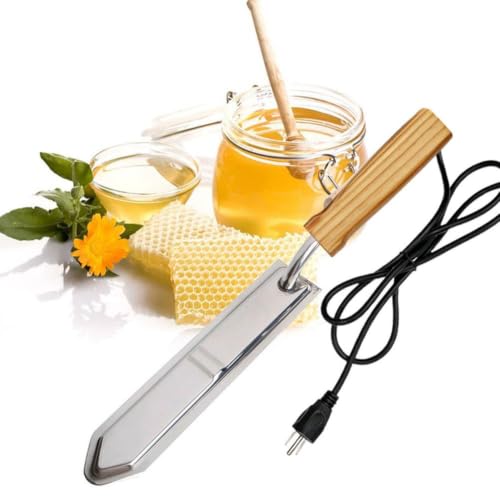
Electric Uncapping Knife for Honey Harvesting,Honey Cutter Scraper
Chosen because it specifies Honey Cutter Scraper.
View on Amazon
Electric Honey Uncapping Knife, Heated Beekeeping Knife with 10 Inch Stainless Steel Serrated Blade, Fast Heating Honeycomb Cutter Scraper with Wooden Handle for Bee Hive Honey Harvesting
Picked as a relevant option in this category.
View on Amazon| Decision point | Heated electric knife | Manual uncapping knife |
|---|---|---|
| Typical blade length | About 10–12 in | About 10–12 in |
| Best workload | Frequent harvests or several supers | A few hives or occasional harvests |
| Cutting effort | Lower when temperature is well controlled | More hand pressure and skill required |
| Temperature management | Needs a suitable controller or careful monitoring | No heat setting or electrical supply |
| Cleanup | Wait for the blade to cool; protect electrical parts | Usually simpler; wash and dry promptly |
| Common trade-off | Faster work, but more setup and electrical care | Simple and affordable, but slower for large batches |
These are typical dimensions and use patterns, not guarantees for every model. Check the maker’s blade dimensions, voltage, controller requirements, and cleaning instructions before buying.
What to Look for Before You Buy
Blade length and usable cutting edge
A blade around 10–12 inches long suits many standard frames because it can cover much of the comb face in a pass. The cutting edge matters as much as the overall length: a long handle or blunt tip does not add useful reach. A shorter blade can feel easier to control, while a longer one may reduce repeated strokes. If your frames or uncapping setup differ from standard dimensions, measure the comb face and working clearance first.
Stainless-steel construction
Stainless steel resists corrosion in a damp honey room and is straightforward to clean. Look for a smooth, continuous blade surface without hard-to-reach crevices around the handle joint. A thin blade can slice cleanly but may flex if pushed sideways; a thicker or stiffer blade feels more stable but can require more effort, especially when used cold. Keep any knife dry between harvests, and follow the manufacturer’s food-contact and care guidance.
Temperature control, not just heat
With an electric knife, a controller gives you a way to manage heat rather than relying only on an on/off switch. Too little heat can make the blade drag; excessive heat can soften or smear wax and make the cut less tidy. Actual blade temperature can vary with room temperature, how quickly you work, and how long the knife rests against the comb. Start at the manufacturer’s recommended setting and adjust gradually. Never leave a heated knife unattended, and keep the cord and controller away from honey and wash water.
Handle comfort and balance
Uncapping involves repeated wrist and shoulder movements, so handle shape and balance matter over a full session. A secure, comfortable grip helps you guide the blade with a shallow, steady cut instead of pressing hard. Check that the handle stays cool enough for the intended use and that the cord exits without pulling the knife off line. If possible, consider the weight and grip in person; otherwise, compare the listed weight and handle dimensions with a knife you already use comfortably.
Cleanup and storage
Honey and wax residue are easiest to deal with before they harden. For an electric model, disconnect it, let it cool completely, then clean the blade without immersing the handle, wiring, or controller unless the instructions explicitly allow it. A manual knife is less complicated to wash, but still needs prompt drying to protect the edge and steel. Store either type with the blade covered and away from loose tools that could dull it.
Choose by Apiary Workload
| Your situation | Better fit | Why |
|---|---|---|
| One or two hives, one short harvest | Manual knife, roughly 10–12 in | Low setup burden; speed gains from heat may not justify the added equipment. |
| Several hives harvested in one session | Heated knife with temperature control | Warm cutting can reduce effort across many frames, provided you manage the heat safely. |
| Uncapping away from reliable power | Manual knife | No outlet, controller, or extension cord is needed. |
| Comb with uneven or missed patches | Either knife plus an uncapping fork | A fork can lift stubborn cappings without forcing the knife deeper into the comb. |
| New beekeeper learning the cut | Manual knife or controlled-heat electric model | A simple tool makes technique easier to understand; avoid excessive pressure or heat. |
A heated knife is not automatically the better choice for every beekeeper. If you process only a small number of frames, a sharp manual knife may be the more dependable purchase. For repeated, long harvest sessions, reduced cutting effort can be worth the electrical setup—especially when the blade has a suitable controller and comfortable balance.
How to Get a Cleaner Cut
- Secure the frame over a tray or uncapping tank so wax and honey have somewhere to fall.
- Hold the frame steadily and slice just beneath the cappings, keeping the blade as close to the comb surface as your frame allows.
- Use controlled, even strokes rather than forcing the knife. On an electric model, let the heat do the work; on a manual one, keep the edge sharp.
- Turn the frame and repeat on the other face. Use an uncapping fork for remaining sealed patches instead of repeatedly gouging the comb.
- Pause to clear buildup safely. Disconnect and cool an electric knife before cleaning, and keep hands clear of the edge.
Bottom Line
For a small apiary, the best uncapping knife for honey harvesting is often a sharp, comfortable manual model with a blade long enough for your frames. For larger or more frequent harvests, choose a stainless-steel electric knife with a suitable temperature controller, manageable cord placement, and clear cleaning instructions. Prioritize fit, control, and safe handling over heat alone.