Key takeaways
- Lumbar alignment: Look for a backrest that supports the natural inward curve of the lower spine without forcing it forward. An adjustable lumbar pillow or independently adjustable backrest is particularly useful because body proportions vary.
- Seat dimensions: Your feet should rest securely on the floor when seated, with a small gap behind the knees. Extra-wide models provide room to reposition, but an overly deep or broad seat can leave smaller users unsupported.
- Recline control: Independent backrest and footrest movement gives you more ways to relieve pressure than a single synchronized mechanism. Infinite-position and zero-gravity settings can be helpful for distributing load across the back and legs.
- Lift performance: A powered lift should raise the seat smoothly rather than pitching the user forward abruptly. Check the stated weight capacity, available floor space, and whether the chair can fully recline without striking a wall.
- Long-term practicality: Examine the frame capacity, motor design, upholstery, warranty, and ease of cleaning. Heat and vibration may feel soothing, but they should complement—not replace—sound support and a properly fitted seating position.
What's inside
Back pain can make an ordinary lounge chair surprisingly difficult to use. A seat that is too deep may leave the lower back unsupported, while a soft cushion can allow the pelvis to roll backward and increase slouching. For older adults and anyone with limited mobility, standing up can be just as demanding as sitting down.
This guide evaluates power recliners through an ergonomics-and-durability lens: adjustability, lumbar support, seat geometry, lift assistance, upholstery practicality, and useful features such as heat, massage, and charging ports. These chairs are comfort aids—not substitutes for medical advice—so persistent or severe pain should be assessed by a qualified clinician.
As an Amazon Associate we earn from qualifying purchases.



🛒 Best Price Today on Amazon
Prime members get fast, free shipping on everything above, plus member-only deals. New members get a 30-day free trial — cancel anytime.
How to Choose a Recliner Chair For Back Problems (2026)
- Lumbar alignment: Look for a backrest that supports the natural inward curve of the lower spine without forcing it forward. An adjustable lumbar pillow or independently adjustable backrest is particularly useful because body proportions vary.
- Seat dimensions: Your feet should rest securely on the floor when seated, with a small gap behind the knees. Extra-wide models provide room to reposition, but an overly deep or broad seat can leave smaller users unsupported.
- Recline control: Independent backrest and footrest movement gives you more ways to relieve pressure than a single synchronized mechanism. Infinite-position and zero-gravity settings can be helpful for distributing load across the back and legs.
- Lift performance: A powered lift should raise the seat smoothly rather than pitching the user forward abruptly. Check the stated weight capacity, available floor space, and whether the chair can fully recline without striking a wall.
- Long-term practicality: Examine the frame capacity, motor design, upholstery, warranty, and ease of cleaning. Heat and vibration may feel soothing, but they should complement—not replace—sound support and a properly fitted seating position.
The Best Recliner Chair For Back Problems (2026)s Reviewed
MAHOMICO Power Lift Recliner
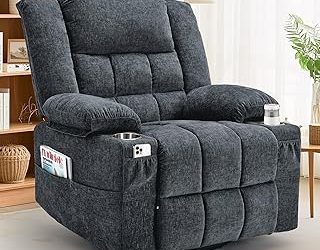
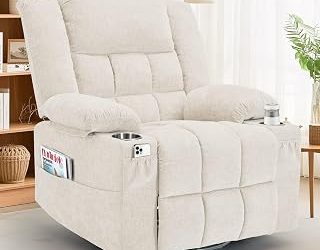
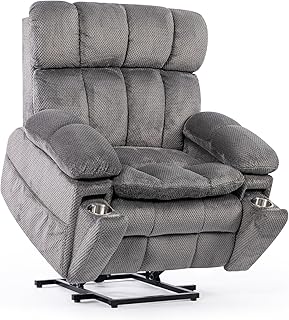
The MAHOMICO combines lift assistance with lumbar heating and vibration massage, making it a practical choice for users who want several comfort functions in one chair. Its side pocket, cup holders, and USB port are sensible ergonomic details because they reduce repeated reaching and unnecessary trips across the room. Before buying, confirm that the seat depth and lift height suit the intended user.
Dual Motor Extra-Wide Zero-Gravity Lift Chair
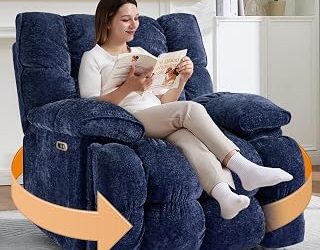
This 26-inch dual-motor model is aimed at larger users who need more shoulder and hip room, with a lay-flat recline, headrest, heat, massage, and zero-gravity positioning. The independent motor arrangement should offer more precise positioning than a basic lift recliner, although extra-wide chairs can feel less supportive for petite users unless cushions are added carefully.
EONIX 3-Motor Power Lift Recliner
The EONIX stands out for its three-motor configuration, which separates backrest, footrest, and headrest adjustment. That degree of control is valuable when back comfort depends on fine positioning, and the extended footrest may better support taller users. Its 400-pound capacity and included lumbar pillow add versatility, but buyers should still measure doorways and the chair’s fully extended footprint.
Dual Motor Infinite-Position Lift Recliner
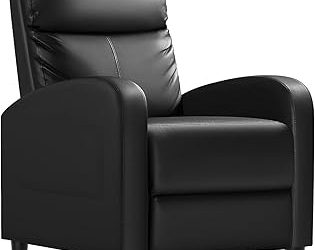
This brown leather-style chair focuses on flexible positioning, with an extended footrest, independent-style dual-motor operation, heat, massage, and USB charging. The breathable upholstery and noise-free motor description are appealing for everyday use, while the lumbar pillow can help fill excess space for some users. Support will depend heavily on fit, so compare the listed dimensions with your seated height.
MCombo Power Lift Recliner 7040
The MCombo 7040 is a strong all-around option for shoppers who value established sizing choices and practical organization. Its heat and massage functions, USB and Type-C charging, cup holders, and side pockets are well suited to extended sitting, while FSC certification is a useful materials and sourcing consideration. Selecting the correct size is essential: a properly fitted medium chair is generally more supportive than an oversized model used without adequate back support.
Frequently Asked Questions
Can a recliner help with lower-back pain?
A well-fitted recliner can reduce discomfort by supporting the back, changing hip and knee angles, and allowing pressure to shift during the day. Results vary, however, and a recliner should not be used to ignore new, severe, or worsening symptoms.
Is heat or massage good for back problems?
Heat may temporarily relax tight muscles, while gentle vibration can feel comfortable for some users. Use these functions conservatively and follow the manufacturer’s guidance, particularly if you have reduced sensation, circulation concerns, implanted medical devices, or another relevant health condition.
Should I choose a lift recliner if I do not need help standing?
Not necessarily. The lift mechanism adds cost, weight, and moving parts, so it is most valuable for people who benefit from powered standing assistance. If lifting is unnecessary, a simpler power recliner may offer the positioning you need with less mechanical complexity.
How should a recliner fit my body?
Your head should meet the headrest, your lower back should feel supported, and your heels should remain supported when the footrest is raised. Avoid a seat that leaves a large gap behind the knees or forces your feet to dangle, since either condition can undermine comfort and stability.
Final Thoughts
The EONIX 3-Motor Power Lift Recliner is the most adaptable choice for users who need precise head, back, and leg positioning, while the MCombo 7040 is a balanced everyday option with useful sizing and convenience features. For larger users, the Dual Motor Extra-Wide Zero-Gravity Lift Chair offers the roomiest design; in every case, accurate measurements and proper fit matter more than massage settings alone.