Key takeaways
- Hide grade over hide vocabulary: Top-grain and full-grain leather develop patina and resist abrasion where your elbows and shoulders land. “Air leather,” “leather gel,” and “leather match” describe polyurethane-coated substrates or panels where only the contact surfaces use real hide. Coated materials look identical for two years, then delaminate. Prioritize genuine hide on seats, backs, and arms — the three highest-wear zones.
- Seat depth and lumbar contact: Measure from backrest to front edge. Anything over 22 inches leaves shorter sitters perched with an unsupported lumbar curve; under 20 inches puts pressure behind the knees. Pair this with backrest height — a high ergonomic backrest only helps if the shoulder blades actually reach it.
- Motor and mechanism pedigree: Named actuators (Okin, Limoss) have replaceable parts and published cycle ratings. Unbranded motors often mean the whole mechanism gets scrapped when one component fails. Ask about the mechanism warranty separately from the frame warranty; they’re rarely the same length.
- Foam density and frame joinery: Look for 1.8 lb/ft³ or higher in the seat cushions, and kiln-dried hardwood with corner blocking at stress points. Low-density foam compresses into a hammock within 18 months, which then loads the reclining hinge unevenly.
- Wall clearance and travel path: Wall-hugger designs need 4 to 6 inches; conventional mechanisms need 12 or more. Measure the fully extended footprint, not the closed dimension, and confirm the power cord reaches an outlet without tension.
What's inside
A power reclining sofa fails in one of two ways, and neither shows up on delivery day. Either the upholstery gives out — surface coating flaking off the seat cushions inside of three years — or the geometry was wrong from the start, leaving you with a headrest that pushes your chin toward your chest and a footrest that stops short of your heels. Both problems trace back to specs that are easy to skim past: hide grade, foam density, actuator quality, and the seat dimensions that determine whether your lower back is supported or bridging a gap.
This guide evaluates six current power reclining sofas through those two lenses: how the body sits in them over a two-hour stretch, and how the materials and mechanisms hold up over a decade of daily cycles. Below you’ll find the picks, a checklist for reading spec sheets critically, and answers to the questions that come up most often once buyers start comparing genuine leather against the coated fabrics marketed as “air leather.”
As an Amazon Associate we earn from qualifying purchases.


🛒 Best Price Today on Amazon
Prime members get fast, free shipping on everything above, plus member-only deals. New members get a 30-day free trial — cancel anytime.
How to Choose a Power Reclining Leather Sofa (2026)
- Hide grade over hide vocabulary: Top-grain and full-grain leather develop patina and resist abrasion where your elbows and shoulders land. “Air leather,” “leather gel,” and “leather match” describe polyurethane-coated substrates or panels where only the contact surfaces use real hide. Coated materials look identical for two years, then delaminate. Prioritize genuine hide on seats, backs, and arms — the three highest-wear zones.
- Seat depth and lumbar contact: Measure from backrest to front edge. Anything over 22 inches leaves shorter sitters perched with an unsupported lumbar curve; under 20 inches puts pressure behind the knees. Pair this with backrest height — a high ergonomic backrest only helps if the shoulder blades actually reach it.
- Motor and mechanism pedigree: Named actuators (Okin, Limoss) have replaceable parts and published cycle ratings. Unbranded motors often mean the whole mechanism gets scrapped when one component fails. Ask about the mechanism warranty separately from the frame warranty; they’re rarely the same length.
- Foam density and frame joinery: Look for 1.8 lb/ft³ or higher in the seat cushions, and kiln-dried hardwood with corner blocking at stress points. Low-density foam compresses into a hammock within 18 months, which then loads the reclining hinge unevenly.
- Wall clearance and travel path: Wall-hugger designs need 4 to 6 inches; conventional mechanisms need 12 or more. Measure the fully extended footprint, not the closed dimension, and confirm the power cord reaches an outlet without tension.
The Best Power Reclining Leather Sofas (2026) Reviewed
THSUPER Top Grain Leather Reclining Sofa and Loveseat Set
The strongest material story here: genuine top-grain hide on the wear surfaces plus a genuinely high backrest that supports cervical alignment rather than forcing forward head posture. The drop-down table and USB port are practical, but the reason to buy this set is that the upholstery will still look intentional in year eight.
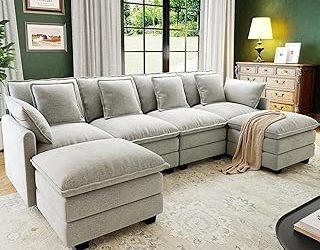
L-Shape Power Reclining Sectional with Multi-Media Console
The adjustable headrests are the ergonomic differentiator — independent head positioning lets two people of different heights share the same backrest angle without compromise. Air leather keeps the price accessible, so treat this as a five-to-seven-year piece and site it away from direct sun.
Bonzy Home Power 3-Seat Recliner Sofa
A well-resolved home theater layout, with the flip-down console keeping wireless charging and Type-C ports within reach without breaking the seating plane. Faux leather means the surface is the limiting factor, though the frame and recline travel are more composed than the price suggests.
Multifunction Air Leather Recliner Sofa Set with LED Lights
Three pieces with coordinated storage and USB access make this the sensible choice for furnishing a media room in one order. The LED accenting is decorative rather than functional; evaluate it on the seat geometry and storage layout, which are both handled competently.
Ashley Boyington Power Reclining Sofa with Heat and Massage
The zero-gravity position is the standout feature for anyone managing lower back load — it distributes weight across the whole posterior chain instead of concentrating it at the lumbar spine. Heat and air massage are genuine therapeutic additions, and Ashley’s parts network makes long-term service realistic.
Frequently Asked Questions
How long should the reclining motors last?
A quality actuator handles 10,000 to 20,000 cycles, roughly a decade of twice-daily use. Failures usually stem from the control board or wiring harness rather than the motor, and those are inexpensive to replace if the manufacturer stocks parts.
Is “air leather” actually leather?
No. It’s a breathable polyurethane composite designed to mimic hide texture. It performs acceptably in low-traffic rooms but won’t develop patina and will eventually crack at flex points where the cushion meets the frame.
What happens during a power outage?
Most powered mechanisms lock in their current position. A battery backup pack — usually an inexpensive accessory — will return the sofa to upright, which matters if anyone in the household has limited mobility.
Can I put a power recliner against the wall?
Only if it’s specified as a wall-hugger. Standard mechanisms drive the backrest rearward as the footrest extends, and forcing that travel against drywall stresses the hinge and scuffs the paint.
Final Thoughts
For buyers who want the sofa to outlast the trend cycle, the THSUPER top-grain set is the durability pick — real hide where it matters, with backrest geometry that supports rather than fights your spine. The Ashley Boyington earns its place for anyone with back concerns, thanks to zero-gravity positioning and serviceable parts, while the Bonzy Home 3-seat recliner delivers the most sensible home theater ergonomics at its price.