Key takeaways
- Film build per coat: Dining tops need real thickness to resist plate drag and cutlery scuffs. Self-leveling high-build formulas reach protective depth in fewer passes; thin-bodied products need three to four coats to match, so budget your time accordingly.
- Sheen versus tactile comfort: Gloss maximizes perceived depth and wipes cleanest, but it mirrors overhead fixtures and shows every fingerprint. Satin and semi-gloss diffuse glare at seated eye level and hide micro-scratches, which is why they age more gracefully on a surface people look at every day.
- Water-based versus oil-based: Water-based finishes stay crystal clear and are ideal over maple, ash and white-toned or painted bases. Oil-based versions amber slightly over time, warming walnut and oak, and generally deliver a marginally tougher, more heat-tolerant film.
- Recoat and cure windows: Fast-dry products let you stack coats in a single day, which reduces dust contamination. Full cure is the number that matters, though: plan on several days before the table returns to daily service, regardless of how dry it feels.
- Repairability: Wipe-on and brushable finishes let you refresh a worn elbow zone without stripping the whole top. Thick one-coat systems look superb but are less friendly to localized touch-ups, so weigh that against your tolerance for future refinishing.
What's inside
A dining table lives a harder life than almost any other piece of furniture in a home. It absorbs forearm pressure at every meal, takes the drag of ceramic plates, gets wiped down two or three times a day, and periodically hosts a sweating glass that nobody moves for an hour. From a durability standpoint, that combination of abrasion, moisture and localized point loading is why so many tabletops fail at the finish long before the joinery gives up. Buyers usually discover this the hard way: a beautiful surface that turns cloudy under a water ring by month four, or a film that scuffs into a dull halo exactly where people rest their elbows.
This guide looks at polyurethane through an ergonomics-and-durability lens rather than a purely aesthetic one. Film hardness matters, but so does how the cured surface feels under a bare forearm, how much glare it throws back under a low pendant light, and how forgiving it is when you eventually need to spot-repair a high-traffic zone. Below are six well-supported finishes for dining tables in 2026, followed by the selection criteria that actually predict long-term performance.
As an Amazon Associate we earn from qualifying purchases.


🛒 Best Price Today on Amazon
Prime members get fast, free shipping on everything above, plus member-only deals. New members get a 30-day free trial — cancel anytime.
How to Choose a Polyurethane For Dining Table (2026)
- Film build per coat: Dining tops need real thickness to resist plate drag and cutlery scuffs. Self-leveling high-build formulas reach protective depth in fewer passes; thin-bodied products need three to four coats to match, so budget your time accordingly.
- Sheen versus tactile comfort: Gloss maximizes perceived depth and wipes cleanest, but it mirrors overhead fixtures and shows every fingerprint. Satin and semi-gloss diffuse glare at seated eye level and hide micro-scratches, which is why they age more gracefully on a surface people look at every day.
- Water-based versus oil-based: Water-based finishes stay crystal clear and are ideal over maple, ash and white-toned or painted bases. Oil-based versions amber slightly over time, warming walnut and oak, and generally deliver a marginally tougher, more heat-tolerant film.
- Recoat and cure windows: Fast-dry products let you stack coats in a single day, which reduces dust contamination. Full cure is the number that matters, though: plan on several days before the table returns to daily service, regardless of how dry it feels.
- Repairability: Wipe-on and brushable finishes let you refresh a worn elbow zone without stripping the whole top. Thick one-coat systems look superb but are less friendly to localized touch-ups, so weigh that against your tolerance for future refinishing.
The Best Polyurethanes For Dining Tables (2026) Reviewed
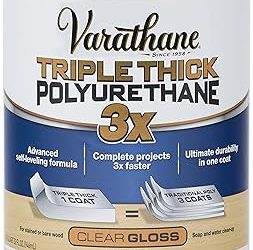
Varathane Triple Thick Polyurethane Gloss
The strongest single-product answer for a dining top: one self-leveling coat lays down roughly the film thickness of three conventional applications, producing a deep, glass-like surface with genuine resistance to scratching and staining. Apply it flat and dust-free, and keep in mind the high gloss will reflect your light fixture straight back at seated guests.
Minwax Fast Drying Polyurethane, Clear Semi-Gloss
An oil-based workhorse that remains the default recommendation for hardwood dining tables, largely because the semi-gloss sheen strikes an unusually good balance between easy wipe-down and low glare. Three thin coats with light sanding between builds a tough, warm-toned film that hides the micro-abrasion dining tables inevitably collect. The Warm Satin version is the same formula in a softer, lower-reflectance sheen if you prefer a more matte, contemporary look.
Minwax Polycrylic Protective Finish, Satin
The safest choice over light woods, whitewash and painted bases, since the water-based formula won’t yellow the substrate. Its thinner film means more coats for dining-level durability, but low odor, fast recoats and simple soap-and-water cleanup make it very manageable in an occupied home.
Varathane Water-Based Ultimate Gloss Polyurethane
Crystal clear, quick to build and hard-wearing, with a coverage-per-container figure best suited to smaller projects, repairs or a single bistro-sized top. Excellent as a non-yellowing gloss option when you want depth without the amber shift of an oil-based finish.
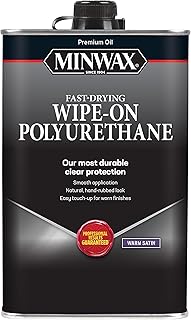
Minwax Oil-Based Wipe-On Polyurethane, Satin
The most controllable product here and the one I reach for on refinishing work: cloth-applied, brush-mark free, and essentially immune to runs on vertical edges and aprons. Film build is slow, so treat it as a finishing or maintenance coat rather than the sole protection on a heavily used table.
Frequently Asked Questions
How many coats does a dining table really need?
Three to four coats for standard-viscosity polyurethane, or one to two for a high-build formula like Triple Thick. The tabletop should receive more coats than the legs, since abrasion is concentrated on the horizontal surface.
How long before we can eat on it?
The film may feel dry within hours, but chemical cure takes considerably longer. Wait several days before regular use, and hold off on placemats, tablecloths or anything left sitting on the surface for up to two weeks to avoid blocking and imprinting.
Will polyurethane handle hot dishes and spills?
It resists water, alcohol and household spills well once cured, and oil-based films tolerate warmth better than water-based ones. Neither is heatproof, so trivets remain non-negotiable for pans straight off the stove.
Do I need to sand between coats?
Yes. A light scuff with fine abrasive knocks down dust nibs and gives each coat mechanical grip, which is what prevents delamination in the areas that see the most rubbing.
Final Thoughts
For most hardwood dining tables, Varathane Triple Thick Gloss delivers the most protection for the least labor, while Minwax Fast Drying Polyurethane in Clear Semi-Gloss remains the more forgiving, lower-glare choice for a surface you sit at daily. If your table is maple, ash or painted, Minwax Polycrylic Satin keeps the color true without any risk of ambering.