Key takeaways
- Material: HDPE tubing paired with aluminum outlet blocks offers a practical balance of corrosion resistance, low weight, and workshop-friendly installation. Avoid materials not specifically rated for compressed air.
- Diameter: A 3/4-inch line is a strong general-purpose choice for many home shops because it can support useful airflow over longer runs with less restriction than narrow tubing.
- Pressure rating: Choose a system rated comfortably above your compressor’s operating pressure. A 200 PSI rating provides useful headroom, but every fitting and component must be installed according to its instructions.
- Layout: Count outlet blocks, tees, elbows, and manifolds before buying. Multiple outlets reduce hose dragging and let you position tools where the work happens rather than beside the compressor.
- Installation ergonomics: Favor push-fit or similarly straightforward connections, clear labeling, and tubing that can be cut cleanly. A system that is easy to alter is more useful when benches and machines move.
What's inside
Choosing pipe for an air-compressor line is less straightforward than choosing a hose. The wrong material can sag, restrict flow, collect moisture, or become difficult to modify once your shop layout changes. In a garage or home workshop, durability and comfortable installation matter just as much as maximum pressure.
This guide evaluates six 3/4-inch compressed-air piping kits with an ergonomics-and-durability focus. We look at tubing size, outlet design, fitting convenience, pressure ratings, expansion potential, and how well each system suits a practical home furniture workshop.
As an Amazon Associate we earn from qualifying purchases.




🛒 Best Price Today on Amazon
Prime members get fast, free shipping on everything above, plus member-only deals. New members get a 30-day free trial — cancel anytime.
How to Choose a/an Pipe For Air Compressor Lines (2026)
- Material: HDPE tubing paired with aluminum outlet blocks offers a practical balance of corrosion resistance, low weight, and workshop-friendly installation. Avoid materials not specifically rated for compressed air.
- Diameter: A 3/4-inch line is a strong general-purpose choice for many home shops because it can support useful airflow over longer runs with less restriction than narrow tubing.
- Pressure rating: Choose a system rated comfortably above your compressor’s operating pressure. A 200 PSI rating provides useful headroom, but every fitting and component must be installed according to its instructions.
- Layout: Count outlet blocks, tees, elbows, and manifolds before buying. Multiple outlets reduce hose dragging and let you position tools where the work happens rather than beside the compressor.
- Installation ergonomics: Favor push-fit or similarly straightforward connections, clear labeling, and tubing that can be cut cleanly. A system that is easy to alter is more useful when benches and machines move.
The Best Pipe For Air Compressor Lines (2026)s Reviewed
3/4-Inch HDPE 200-Foot System with Aluminum Outlets
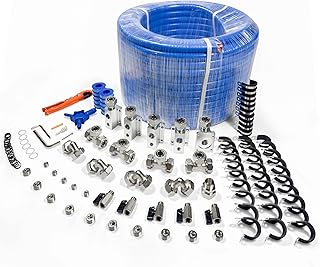
The Compressed Air Piping System with 3/4 Inch ID x 200 feet HDPE Tubing and Aluminum Outlet Blocks is suited to a larger garage or workshop layout. Its generous tubing length and 53-piece configuration make it a flexible choice for routing air around several work areas, while the 200 PSI rating provides a substantial operating margin. The main consideration is planning: measure the run and outlet locations carefully before cutting, because excess capacity is useful only when the layout is organized.
3/4-Inch 100-Foot Pressure-Gauge Line Kit
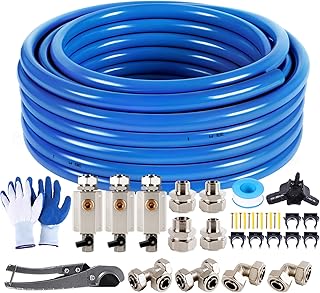
The 3/4" × 100FT Pressure Gauge Shop Air Line Kit combines HDPE-aluminum piping with tee and elbow fittings and a pressure gauge. That combination is helpful for a compact workshop where monitoring pressure at the distribution point is more convenient than walking back to the compressor. Its 100-foot length keeps the system manageable for a single-car garage, and the leak-proof design emphasis is reassuring, provided connections are prepared and seated correctly.
3/4-Inch 100-Foot, 37-Piece Air Piping System
The Compressed Air Piping System with 3/4 inch x 100 feet HDPE Tubing and Aluminum Outlet Blocks is a sensible mid-size option for a home furniture shop with one or two primary tool zones. The 37-piece package avoids the bulk of a large installation while retaining aluminum outlet blocks for a durable, tidy distribution setup. It is particularly appealing when you want a permanent line around a bench or wall without oversizing the project.
100-, 200-, or 300-Foot Rapid Air System
The Shop Air Line Kit 3/4"×100&200&300ft Compressed Air Piping System stands out for offering several tubing-length choices. That makes it easier to match the purchase to the actual shop footprint instead of forcing a short kit into a long run or paying for unnecessary tubing. Right-angle and tee fittings support a clean perimeter installation, while the leak-proof, easy-installation design should help reduce awkward overhead work during assembly.
3/4-Inch 300-Foot System with Gauged Five-Way Manifold
The Compressed Air Piping System with 3/4 Inch ID x 300feet 5-Way Multi-Outlet Aluminum Manifolds is the most distribution-oriented choice in this group. Its five-way manifold and individual pressure gauges are useful when several stations need air and you want quick visual checks at the outlets. The long tubing run favors larger workshops, but the system demands careful support and routing so the installation remains accessible rather than becoming a difficult-to-service network.
Frequently Asked Questions
Is HDPE suitable for compressor air lines?
HDPE can be suitable when the tubing is specifically manufactured and rated for compressed air. Confirm the pressure rating, temperature limits, fitting compatibility, and installation requirements before use; ordinary water or utility tubing is not automatically appropriate.
Why use 3/4-inch pipe for a home workshop?
The larger internal diameter can reduce pressure drop across longer runs and during higher-demand tool use. It also gives a distribution system more breathing room than a narrow line, although compressor output and tool requirements still determine real-world performance.
Should air lines slope toward a drain?
A planned slope can help direct accumulated moisture toward a drain or low point. Add suitable drains and avoid low pockets that trap water. Separating moisture at the compressor with an appropriate filter or dryer is also important.
Can these systems be expanded later?
Many modular kits can be extended with compatible tubing, tees, elbows, and outlet blocks. Keep spare capacity in the layout, verify that added components share the same specifications, and depressurize the system completely before modifying it.
Final Thoughts
For a broad garage installation, the 200-foot HDPE system with aluminum outlets is a well-balanced starting point. Smaller shops may prefer the 100-foot pressure-gauge kit or the 37-piece system, while the 300-foot five-way manifold kit is the stronger choice for multiple workstations and frequent pressure checks.