Key takeaways
- Cushion construction over cushion thickness: Moulded or cold-cure foam holds its shape for years; shredded or cut-sheet foam compresses into a hard pad within months. A 3-inch moulded pad outlasts a 5-inch soft one, so look for the word “moulded” before you look at the depth number.
- Height range against your desk: Measure from floor to desk underside. Kneeling chairs sit you taller than a task chair, so you want roughly 8–10 inches of clearance above your thighs. Chairs with a short gas-lift travel range simply will not work under a fixed 29-inch desk if you are over six feet.
- Shin pad angle and depth: The knee rest should be wide enough to support the full shin, not just below the kneecap. Narrow pads concentrate pressure and cause numbness, which is the single most common reason people abandon these chairs.
- Frame material and load rating: Welded steel handles daily transitions better than bolted tube; bent plywood rockers give a softer feel but need dense laminate to avoid flex. Check the stated weight capacity and treat anything unrated as unproven.
- Casters versus a static base: Braked casters are worth having if you move between monitors, but only if the brake actually locks. Rocking bases suit people who need constant micro-movement; fixed bases suit anyone who wants stability while typing.
What's inside
Kneeling chairs get bought for the wrong reason and returned for the right one. Most people order one after a rough week of lower-back ache, expecting the tilted seat to fix a posture problem that actually comes from an eight-hour desk session in any single position. The seat pan does genuinely open the hip angle and shift some load off the lumbar discs and onto the shins and glutes, which is a real biomechanical benefit. But shin-loading has its own tolerance limit, and cheap foam, thin steel frames, and gas lifts with no travel range are what turn a promising chair into a two-week experiment.
This guide looks at office kneeling chairs from a build-quality and long-term-comfort perspective rather than a feature-list one: how the cushions are constructed, whether the height range actually fits normal desk heights, how the casters behave on hard floors, and which models hold up past the first year of daily sitting. Below are the picks worth considering in 2026, followed by the specifications that separate a durable chair from a disposable one.
As an Amazon Associate we earn from qualifying purchases.


🛒 Best Price Today on Amazon
Prime members get fast, free shipping on everything above, plus member-only deals. New members get a 30-day free trial — cancel anytime.
How to Choose an Office Kneeling Chair (2026)
- Cushion construction over cushion thickness: Moulded or cold-cure foam holds its shape for years; shredded or cut-sheet foam compresses into a hard pad within months. A 3-inch moulded pad outlasts a 5-inch soft one, so look for the word “moulded” before you look at the depth number.
- Height range against your desk: Measure from floor to desk underside. Kneeling chairs sit you taller than a task chair, so you want roughly 8–10 inches of clearance above your thighs. Chairs with a short gas-lift travel range simply will not work under a fixed 29-inch desk if you are over six feet.
- Shin pad angle and depth: The knee rest should be wide enough to support the full shin, not just below the kneecap. Narrow pads concentrate pressure and cause numbness, which is the single most common reason people abandon these chairs.
- Frame material and load rating: Welded steel handles daily transitions better than bolted tube; bent plywood rockers give a softer feel but need dense laminate to avoid flex. Check the stated weight capacity and treat anything unrated as unproven.
- Casters versus a static base: Braked casters are worth having if you move between monitors, but only if the brake actually locks. Rocking bases suit people who need constant micro-movement; fixed bases suit anyone who wants stability while typing.
The Best Office Kneeling Chair (2026)s Reviewed
Ergonomic Kneeling Chair, Adjustable Stool with Brake Casters
The moulded foam here is the standout: it recovers overnight rather than staying dented, which is exactly what you want from a chair used five days a week. Braked casters make it practical in a real office layout, and the angled seat sets a hip opening that feels natural within a day or two of adjustment.
Kneeling Chair with Backrest, Adjustable Linen
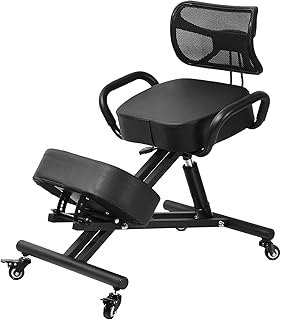
Adding a backrest changes the use case entirely, giving you something to lean into during calls or reading rather than holding an active posture continuously. The linen upholstery breathes better than vinyl in warm rooms, though it will need occasional brushing to stay clean.
Ergonomic Kneeling Chair with Adjustable Seats and 5-Year Warranty
Independent seat and knee-pad adjustment is the feature that makes a kneeling chair fit a specific body rather than an average one, and this model gets it right. A 250-pound rating paired with a five-year warranty signals real confidence in the frame welds.
Easyego Kneeling Chair, Gray
The bent-wood rocking base delivers gentle sway that keeps circulation moving through the legs, which helps if shin pressure is your main complaint. Padding is soft rather than firm, so it suits shorter sessions and lighter frames better than eight-hour marathons.
Kneeling Chair with Back Support and 4″ Cushion
A genuinely deep cushion plus lumbar support makes this the most forgiving option for anyone easing into kneeling posture after years in a conventional chair. The wide height range also makes it a sensible shared-desk or reception choice.
Frequently Asked Questions
How long should I sit in a kneeling chair each day?
Start with 20 to 30 minutes at a time and build up over two weeks. Most ergonomists recommend alternating between a kneeling chair and a standard task chair rather than committing to one all day.
Will a kneeling chair fix my back pain?
It can reduce lumbar compression by opening the hip angle, but it is not a treatment. Persistent pain needs a clinician, not furniture.
Why do my shins go numb?
Usually the knee pad is too narrow, too firm, or positioned too high. Lower the seat slightly and shift your weight rearward onto the seat pan.
Do kneeling chairs work with standing desks?
Yes, and they pair well. Set the desk a few inches above your normal seated height to match the taller kneeling position.
Final Thoughts
For daily eight-hour use, the Adjustable Seats model with its five-year warranty offers the best combination of fit range and structural confidence, while the Brake Casters version is the stronger pick if cushion longevity and floor mobility matter most. If you want a gentler introduction to kneeling posture, the 4-inch cushion chair with back support is the most forgiving of the group.