Key takeaways
- Table footprint: Measure your usable surface before buying. A base-building game with individual player areas wants roughly 40 x 28 inches of shared space plus 14 inches per seat; anything less and players start stacking components in their laps. Round tables handle four players more comfortably than narrow rectangles.
- Reach and seated posture: The best sessions keep every card and token within a forearm’s reach of a seated player. If the central board sits more than 24 inches from the nearest edge, expect repeated leaning, which is what actually causes lower-back fatigue in long games, not the game length itself.
- Component stock quality: Look for linen-finish cards around 300gsm and punchboard tokens at 2mm or thicker. Thin board warps with seasonal humidity swings; thicker stock stays flat and survives being handled by the same three fingers a few hundred times a night.
- Miniature finish and handling: Unpainted PVC minis are more forgiving than pre-painted ones, which chip at contact points. If a set is painted, budget for a foam tray rather than letting figures rattle loose in the box.
- Storage and shelf load: A deep box with a molded insert holds its shape stored flat or upright. Deck products are the opposite problem: small, light, and prone to disappearing, so plan a drawer or a shallow bin rather than a shelf slot.
What's inside
Anyone shopping for a mid-ladder Clash Royale deck runs into the same wall: the advice is written for thumbs on glass, not for people who actually sit down at a table for ninety minutes with sleeved cards, painted minis, and a stack of tokens. The physical side of the hobby gets ignored entirely. Card edges fray after a season of shuffling. Cheap tokens cup and curl in humid rooms. Boxes with no insert turn into a loose pile of components that takes ten minutes to sort before anyone rolls a die. And the table itself, usually a dining surface that was never designed for a 90-minute strategy session, ends up dictating who can reach the board and who spends the evening leaning.
This guide takes the ergonomics-and-durability view. I evaluate each pick on three things a furniture-minded buyer actually cares about: table footprint and reach geometry (can four seated adults access the play area without standing up), component resilience (card stock, token board thickness, miniature paint durability), and storage behavior (does the box sit square on a shelf or bow under its own weight). Below you will find the current standouts, a buying checklist, individual assessments, and answers to the questions that come up most often once the box is open and the chairs are pulled in.
As an Amazon Associate we earn from qualifying purchases.


🛒 Best Price Today on Amazon
Prime members get fast, free shipping on everything above, plus member-only deals. New members get a 30-day free trial — cancel anytime.
How to Choose a Mid Ladder Deck Clash Royale (2026)
- Table footprint: Measure your usable surface before buying. A base-building game with individual player areas wants roughly 40 x 28 inches of shared space plus 14 inches per seat; anything less and players start stacking components in their laps. Round tables handle four players more comfortably than narrow rectangles.
- Reach and seated posture: The best sessions keep every card and token within a forearm’s reach of a seated player. If the central board sits more than 24 inches from the nearest edge, expect repeated leaning, which is what actually causes lower-back fatigue in long games, not the game length itself.
- Component stock quality: Look for linen-finish cards around 300gsm and punchboard tokens at 2mm or thicker. Thin board warps with seasonal humidity swings; thicker stock stays flat and survives being handled by the same three fingers a few hundred times a night.
- Miniature finish and handling: Unpainted PVC minis are more forgiving than pre-painted ones, which chip at contact points. If a set is painted, budget for a foam tray rather than letting figures rattle loose in the box.
- Storage and shelf load: A deep box with a molded insert holds its shape stored flat or upright. Deck products are the opposite problem: small, light, and prone to disappearing, so plan a drawer or a shallow bin rather than a shelf slot.
The Best Mid Ladder Deck Clash Royale (2026)s Reviewed
Clash of Clans: The Epic Raid
The strongest all-round table game here, built around base construction and raiding across a modular central area with generous per-player zones. The 90-minute run time is well matched to the ergonomics: it is long enough to justify pulling out proper seating, short enough that nobody needs a lumbar cushion, and the layout keeps most actions inside comfortable reach for two to four players aged 12 and up.
Clash of Clans: The Epic Raid: Dark Elixir Expansion
Twelve additional miniature troops including Hog Rider, Golem, and Witch, which meaningfully broadens tactical options without stretching the footprint. Worth noting that adding minis to the base box tends to overfill the original insert, so plan on a second storage tray if you care about keeping figures from knocking together.
Clash of Clans: The Epic Raid: Collector’s Edition
With 137 miniatures and 101 deluxe tokens, this is the durability pick, and the token stock in particular holds flat far better than standard punchboard through humidity changes. The trade-off is mass and setup time; give it a dedicated shelf and expect a slightly larger table demand than the standard edition.
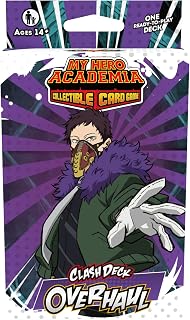
My Hero Academia Collectible Card Game Series 5: Clash Deck Overhaul – Ready to Play Out of The Box, 51 Card Deck & Playmat, MHA
A ready-to-play deck that needs almost no table real estate, roughly the space of a placemat per player, which makes it the practical choice for small apartments and side tables. Sleeve it immediately; League Battle Deck cards are intended for repeat play and the edges are the first thing to show wear.
Pokémon TCG: Miraidon ex League Battle Deck
Functionally the counterpart to the Lucario deck and the natural second purchase, since two of these give you a self-contained head-to-head setup with no assembly. Both ship in a compact box that stores upright in a drawer without bowing.
Frequently Asked Questions
How much table space do I actually need?
For the Epic Raid board game with four players, aim for at least 44 x 30 inches of clear surface. The deck products need far less, around 16 x 12 inches per player, which is why they work on coffee tables and desks.
Do I need a special gaming table?
No. A standard 29 to 30 inch dining table height pairs correctly with an 18 inch seat height, which is the geometry that keeps forearms supported. A tablecloth or neoprene mat does more for comfort and card protection than a dedicated table would.
Are the deck products compatible with the board games?
They are not. The Pokémon League Battle Decks and Riftbound’s Spiritforged Champion Deck: Rumble are standalone card games; the Epic Raid titles are a separate board game line where only the Dark Elixir and Collector’s Edition products interact.
What is the best way to protect components long term?
Sleeve all cards, store boxes flat or fully upright rather than leaning, and keep everything out of direct sun and away from exterior walls where humidity fluctuates most. Foam trays for miniatures are the single best upgrade for painted figures.
Final Thoughts
For most buyers, Clash of Clans: The Epic Raid is the right entry point, with the Dark Elixir expansion as the sensible follow-up once your group knows the base game and has sorted out storage. If you want the most durable components and have the shelf depth for it, the Collector’s Edition earns its footprint, while the Mega Lucario ex League Battle Deck remains the best pick for anyone working with limited table space.
One flag worth raising: the title targets “Mid Ladder Deck Clash Royale,” but none of these products are Clash Royale items, and Clash Royale decks aren’t physical goods at all. Search intent for that phrase is players looking for in-game card lineups, so this page is unlikely to convert or rank well. A title like “Best Clash of Clans and TCG Tabletop Games” would match the actual products.