Key takeaways
- Match CFM to the tool, not the PSI badge: Brad nailers and staplers sip air and run happily on 0.5 to 2 CFM, while spray guns and impact wrenches want 3 CFM or more at 90 PSI. Pressure ratings are cheap to print; sustained airflow is what stops a compressor from cycling constantly and cooking its motor.
- Treat decibels as an ergonomic spec: Anything in the 55 to 70 dBA range lets you work through a conversation and skip hearing protection. Older 85 dBA universal-motor units are fatiguing indoors and effectively unusable in an apartment or a finished basement.
- Inspect the carry interface: Look for a wide, radiused handle centered over the tank’s mass so the load hangs straight rather than twisting your wrist. Weight matters less than balance, a well-centered 30 pounds carries easier than a nose-heavy 22.
- Favor oil-free pumps with real steel tanks: Oil-free heads eliminate drain-and-refill maintenance, and steel tanks tolerate the condensation cycle far better over the years. Check that there’s an accessible drain valve at the bottom; rust from trapped water is what ends most budget tanks.
- Count the reach and the fittings: A 9 to 10 foot DC cord reaches all four tires without moving the car, and brass or metal chucks survive being dropped on concrete. Plastic threaded connections are the single most common failure point on cheap inflators.
What's inside
Low-cost air compressors fail in predictable ways, and almost none of them are about raw pressure. What actually breaks first is the stuff you touch: a handle that digs into your palm, a stubby cord that forces you to lift the unit onto a car seat, a rubber foot that walks the tank across the garage floor, a plastic chuck that cracks the third winter you use it. Buyers get lured in by a 150 PSI number on the box and end up replacing the tool in eighteen months, not because the pump quit but because using it became a chore.
This guide looks at budget compressors the way a furniture buyer looks at a chair frame: joints, materials, contact points, and how the thing feels on hour three. Below you’ll find picks that split into two camps, small 12V and cordless inflators for tires and sports gear, and quiet tank compressors suited to nailing trim, spraying finish, and light auto work in a shared living space. Both categories are covered because most households genuinely need one of each, and neither has to cost much.
As an Amazon Associate we earn from qualifying purchases.


🛒 Best Price Today on Amazon
Prime members get fast, free shipping on everything above, plus member-only deals. New members get a 30-day free trial — cancel anytime.
How to Choose a Low Cost Air Compressor (2026)
- Match CFM to the tool, not the PSI badge: Brad nailers and staplers sip air and run happily on 0.5 to 2 CFM, while spray guns and impact wrenches want 3 CFM or more at 90 PSI. Pressure ratings are cheap to print; sustained airflow is what stops a compressor from cycling constantly and cooking its motor.
- Treat decibels as an ergonomic spec: Anything in the 55 to 70 dBA range lets you work through a conversation and skip hearing protection. Older 85 dBA universal-motor units are fatiguing indoors and effectively unusable in an apartment or a finished basement.
- Inspect the carry interface: Look for a wide, radiused handle centered over the tank’s mass so the load hangs straight rather than twisting your wrist. Weight matters less than balance, a well-centered 30 pounds carries easier than a nose-heavy 22.
- Favor oil-free pumps with real steel tanks: Oil-free heads eliminate drain-and-refill maintenance, and steel tanks tolerate the condensation cycle far better over the years. Check that there’s an accessible drain valve at the bottom; rust from trapped water is what ends most budget tanks.
- Count the reach and the fittings: A 9 to 10 foot DC cord reaches all four tires without moving the car, and brass or metal chucks survive being dropped on concrete. Plastic threaded connections are the single most common failure point on cheap inflators.
The Best Low Cost Air Compressors (2026) Reviewed
California Air Tools CAT-1P1060S
At 56 dBA this is the quietest thing in its price bracket, and the single-gallon steel tank keeps the whole package light enough to carry up stairs one-handed without shoulder strain. The low-RPM oil-free pump runs cooler and wears slower than high-speed budget motors, which is why these units tend to still be working a decade later.
MZB 2.4 Gallon Ultra Quiet
The 5.65 CFM rating and twin steel tanks give it enough recovery for spray painting and sustained carpentry work, a genuine step up from single-tank hobby units. At 70 dB it’s louder than the California, but the tradeoff buys you real duty-cycle headroom for auto repair.
VEVOR 6.3 Gallon
This is the pick if you’re driving impact tools or a HVLP gun, since 3.35 CFM at 90 PSI is the practical threshold where air tools stop stuttering. It’s the heaviest option here, so check that the wheel-and-handle geometry suits your floor before committing to frequent moves.
AstroAI L7 Cordless
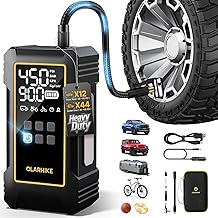
Going cordless removes the worst ergonomic problem in tire inflation, kneeling at a wheel while managing a tangled 12V lead. The digital gauge and auto shut-off mean you set a target and let go, and it’s compact enough to live under a bike seat or in a glovebox.
AstroAI AIRUN H
The 9.8-foot cord is the detail that earns its place, reaching every tire from a single socket instead of forcing you to reposition the unit four times. Corded 12V units also avoid battery degradation, which makes this the more reliable choice for a car kit that sits unused for months.
Frequently Asked Questions
Can a small compressor run a brad nailer for trim work?
Yes. A one-gallon tank at around 0.6 HP handles 18-gauge brads and finish nailers comfortably, since each shot uses a tiny volume of air. You’ll only notice limits if you fire rapidly for long stretches.
Is oil-free actually better, or just cheaper?
For intermittent household use it’s better: no oil checks, no spills, and no risk of oil carryover contaminating a finish. Oil-lubricated pumps still win on lifespan under heavy daily loads, but that isn’t the budget use case.
How loud is too loud for indoor use?
Above roughly 75 dBA you’ll want hearing protection and you’ll irritate anyone in the next room. The 56 to 70 dBA units in this roundup are usable in a garage attached to living space.
Do I need to drain the tank after every use?
Draining after each session is ideal, and weekly is the realistic minimum. Condensation pools at the tank bottom and corrodes it from the inside, which is the failure mode that retires most inexpensive compressors.
Final Thoughts
For most homes, the California Air Tools CAT-1P1060S is the smartest low-cost buy, quiet enough for indoor projects and built around a slow-turning pump that ages well. Step up to the MZB 2.4 Gallon if you’re spraying or doing regular auto work, and keep the AstroAI AIRUN H in the trunk, since its long cord and metal-chuck durability make it the one you’ll actually be glad to have at the roadside.