
Key takeaways
- Set Name: Expandable Set
- Item Dimensions L x W: 4.88"L x 1.78"W
- Handle Diameter: 1 inch
Leg training with dumbbells fails for a boring reason: people pick one exercise, load it as heavy as their grip allows, and call it a workout. Meanwhile the lower body runs on five distinct movement patterns — squat, hinge, split stance, single-leg balance, and ankle-driven push — and each one has a different tolerance for load. A goblet squat might feel right at 25 pounds while a Romanian deadlift wants twice that and a Cossack squat collapses under anything past 15. Treating “leg day” as a single loading problem is why so many home setups stall out after six weeks.
The fix is thinking in kits rather than in single dumbbells. A pair of 8s for tempo work and warm-up sets, a pair in the mid-teens for lunges and step-ups, something heavier for hinges and holds. Neoprene-coated hand weights make this practical because they stack in a corner without a rack, don’t gouge hardwood when a rep goes sideways, and stay put on a mat instead of rolling toward the wall. Below, the Amazon Basics neoprene pair gets matched to each pattern, with honest notes on where a coated fixed-weight dumbbell stops being the right tool.
Our top picks

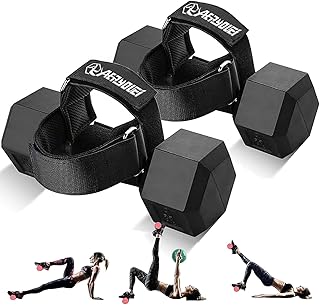

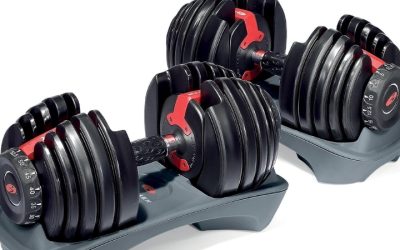
 Amazon Basics Neoprene Dumbbell Hand Weights for
- Set Name: Expandable Set
- Item Dimensions L x W: 4.88"L x 1.78"W
- Handle Diameter: 1 inch
 Women's Health The Woman's Guide To Strength
- Target Audience: Adult
- Recommended Uses For Product: Health & Fitness
- Format: Notebook
 YOLEO Adjustable Weight Bench for Home Gym
ASTM-certified for an 827-pound capacity limit
84 adjustable positions cover incline, decline, and flat training
Folds down for storage under a bed or sofa
User weight is capped lower at 330 pounds
28-inch backrest may be excessive for smaller spaces


As an Amazon Associate we earn from qualifying purchases at no extra cost to you.
Quick Comparison
| Movement Pattern | Go-To Dumbbell Move | Load Priority | Neoprene Kit Note |
|---|---|---|---|
| Squat | Goblet squat, heels-elevated dumbbell squat | Moderate load, deep range | One dumbbell held vertically at the chest; hex-ish coated ends resist rolling between sets |
| Hinge | Romanian deadlift, single-leg RDL | Heaviest pattern by far | Grip becomes the limit before hamstrings do; pair the two heaviest weights you own |
| Split Stance | Reverse lunge, Bulgarian split squat, step-up | Light to moderate, high volume | Ideal zone for neoprene pairs — 10 to 20 lb hits hard when reps climb |
| Single-Leg Balance | Cossack squat, skater squat, lateral step-down | Very light; stability is the stimulus | A 5 or 8 lb pair as a counterweight often improves depth |
| Ankle Push | Standing calf raise, tibialis-loaded holds | Heavy, short range, slow tempo | Two dumbbells at the sides; textured coating helps on long time-under-tension sets |
How to Choose
- Buy pairs by pattern, not by number. Map your three or four staple lifts first, then buy the weights those lifts actually need. Most home lifters get more out of 8s, 12s, and 20s than a single pair of 15s.
- Check the coating, not just the poundage. Neoprene over cast iron gives you friction when palms get damp and protects floors during floor-based hip work. Bare iron in an apartment is a noise complaint waiting to happen.
- Measure your grip span. Handle diameter grows with weight on fixed dumbbells. If you have small hands, test whether the heaviest pair you’re eyeing lets your fingers wrap fully — that’s the difference between a set that ends in your hamstrings and one that ends in your forearms.
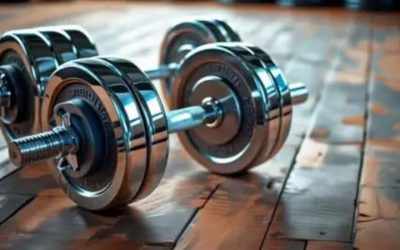
- Prioritize floor footprint. Coated fixed weights with flat-faced ends stand upright and stack in a closet. Round chrome dumbbells need a rack or they migrate across the room.
- Plan the jump before you need it. Fixed dumbbells force you to add reps, tempo, or range instead of weight. Decide now whether your progression will run through volume or through buying the next pair up.
Top Picks Reviewed
Amazon Basics Neoprene Dumbbell Hand Weights for Exercise and Muscle Toning
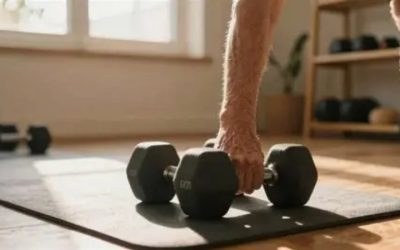
These are the unglamorous workhorses of a home leg setup. The construction is cast iron under a neoprene shell, with flat-sided ends that keep them from rolling and color-coded weights that make grabbing the right pair mid-circuit effortless. Where they earn their keep is the split-stance pattern: reverse lunges, step-ups, and Bulgarian split squats punish you well below the loads you’d use for a barbell squat, so a pair in the 10-to-20 pound range covers serious training territory. Hold them at your sides for full-range lunges, or press one to the chest for a goblet-style split squat that forces your torso upright.
For hinging, they work up to a point. A pair of the heaviest option makes a credible Romanian deadlift, especially with a three-second lowering phase and a pause at the stretch, and single-leg RDLs stay challenging at surprisingly modest loads because balance eats into your capacity. Past a certain strength level, though, fixed neoprene weights top out and your hamstrings will want more than your kit can offer — that’s when a bar or heavier plate-loaded dumbbells enter the picture. The neoprene itself is grippy without being sticky and shrugs off sweat, though it will pick up chalk and scuff marks over time. Dropped hard on tile, the coating dents; it isn’t armor.
The real argument for this pick is friction-free storage and floor safety. They sit quietly next to a couch, don’t dimple hardwood during Cossack squats or hip thrust setups, and let you keep two or three pairs within arm’s reach so you can superset a heavy hinge with a light balance drill. For anyone building a first leg kit or filling the light-and-medium gaps around an existing barbell, this is the cheap, sensible foundation.
Frequently Asked Questions
Can dumbbells alone build real leg strength?
Yes, provided you exploit leverage instead of chasing load. Single-leg work halves the weight you need for the same muscular demand, and adding tempo — three seconds down, one-second pause — turns a modest pair into a brutal set. The honest ceiling is on bilateral squats and hinges, where advanced lifters will outgrow fixed dumbbells and need a barbell or plate-loaded option.
What weights should I start with for legs?
A useful starting trio for most beginners is a light pair for balance and warm-ups, a medium pair for lunges and step-ups, and the heaviest pair you can control for hinges and calf raises. If budget forces one purchase, buy for the split-stance pattern — it sits in the middle of your loading range and transfers well up and down.
Is neoprene coating actually better than bare iron?
For home use, generally yes. It quiets the inevitable clanks, prevents floor damage during floor-level exercises, and gives your hands more purchase when sweat shows up. Bare iron and rubber hex have advantages for heavier gym loads, but for the light-to-moderate range that dominates dumbbell leg training, coated weights are the more livable choice.
How do I keep progressing without buying more weights?
Cycle through four levers: add reps, slow the eccentric, increase range of motion, and reduce rest. A goblet squat at 20 pounds with a pause at the bottom and a five-second descent is a different exercise from the same weight moved quickly. When all four levers are maxed out, that’s your genuine signal to buy the next pair up.
Final Thoughts
Strong legs at home come from covering patterns, not from owning impressive numbers. Squat, hinge, split stance, balance, and ankle push each ask for a different load, and a small ladder of coated dumbbells covers four of the five outright while making the fifth workable with tempo tricks. The Amazon Basics neoprene pair is the honest entry point: quiet, floor-friendly, easy to stash, and available in enough increments to build a genuine kit over a few purchases rather than one expensive leap. Pick the pattern you neglect most, buy the weight that pattern needs, and let the rest of the collection grow around your actual training.
Write Your Review
No reviews yet. Be the first to share your experience!